
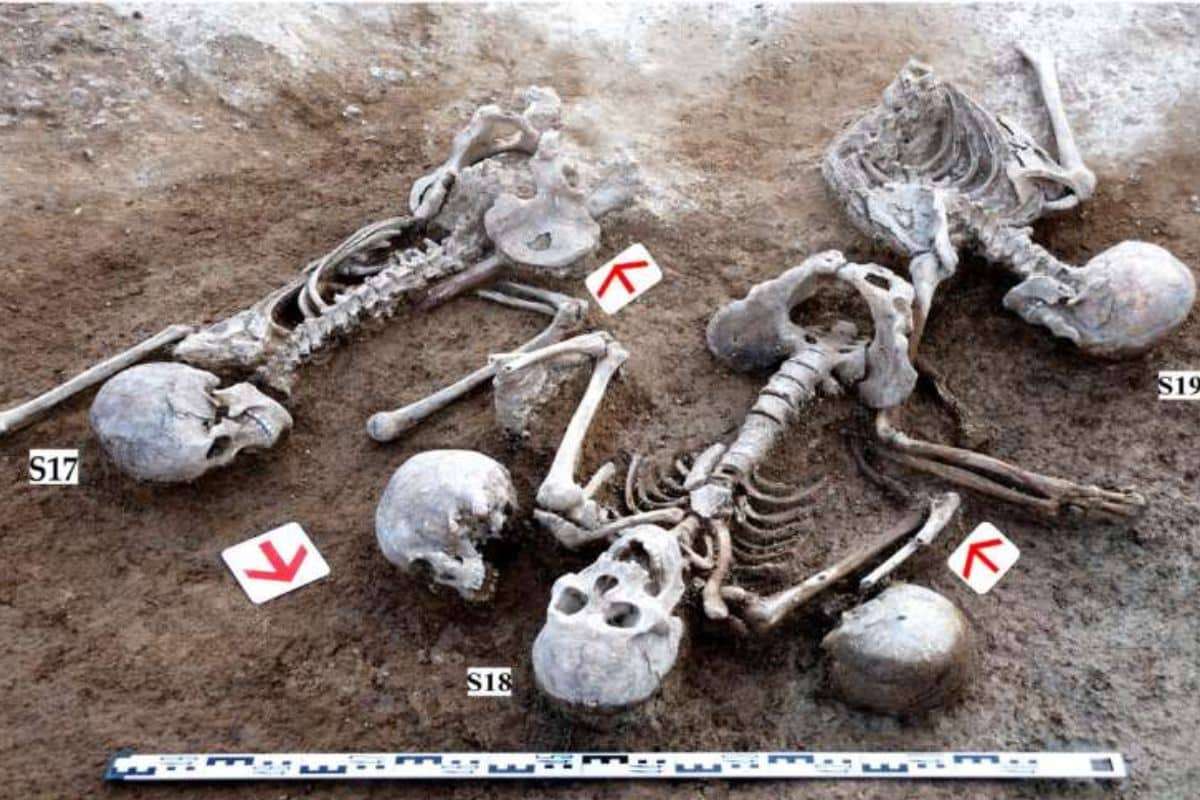
Researchers examining a 2,100-year-old burial site in Mongolia have shed new light on the fate of Han dynasty soldiers stationed on the empire's northern borders. Through a combination of genetic, isotopic, and archaeological analyses, the team discovered that these warriors were originally from northern China rather than Mongolia.
The remains, uncovered at the Bayanbulag location, reveal a complex narrative involving warfare, migration, and possible execution during the Han-Xiongnu conflicts.
Revealing a Hidden Military Outpost
The struggle between the Han Empire and the Xiongnu confederation, a dominant nomadic alliance in the Mongolian steppes, defined much of the region's history. This prolonged war led to the establishment of fortified outposts and defense lines along the empire’s northern edge.

First discovered in 1957, the Bayanbulag site remained largely unexcavated until 2009 when archaeologists conducted extensive digs. They uncovered a fortified complex along with artifacts such as iron implements, ceramics, bronze crossbow triggers, and a clay seal attributed to a Han official. These findings imply that this site may correspond to Shouxiangcheng, a military fortification established in 104 BC to manage relations with the Xiongnu tribes.
Underneath the fortifications, a grim find awaited: a mass burial containing over 20 fragmented skeletons. Evidence of violent injuries and decapitations appeared in some skeletons, while others were arranged in kneeling postures, possibly reflecting ritualized execution or punishment.
Identifying the Soldiers’ Origins
A research team from Jilin University in China used state-of-the-art bioarchaeological methods—including DNA sequencing, and strontium and carbon isotope analyses—to determine the soldiers' provenance. Their findings, documented in the Journal of Archaeological Science, offered crucial clues about these men.
- DNA results from 14 dental samples confirmed all were male, with 11 closely matching the genetic profile of ancient and modern Han Chinese populations from northern China.
- Strontium isotope analysis of their teeth indicated they had not originated in Mongolia but hailed from the Ordos Plateau and Central Plains—areas under Han dynasty control.
- Carbon isotope data reflected a diet primarily made up of millet and wheat, staple crops of Han agricultural communities, contrasting with the meat- and dairy-rich diet typical of the Xiongnu nomads.
The Soldiers’ Mysterious End: Battle Deaths or Execution?
While their Han identity is clear, how these soldiers died remains uncertain. The existence of severed limbs and kneeling burials suggests they may have been executed prisoners—either killed by the Xiongnu or as a form of internal punishment within the Han forces.
One hypothesis is that they were taken captive during battle and executed as a warning or as part of a ritual by their enemies. Alternatively, they might have been detained and executed by their own commanders in response to incidents like rebellion, desertion, or factional disputes within the military outpost.
Moreover, this research sheds light on Han strategies, implying the empire favored temporary military garrisons to assert influence rather than permanent occupation of Xiongnu territories. Bayanbulag likely served as one such tactical base, staffed by troops dispatched from rural regions in China.
- Categories:
- Science









0 comments
Sign in to Comment