
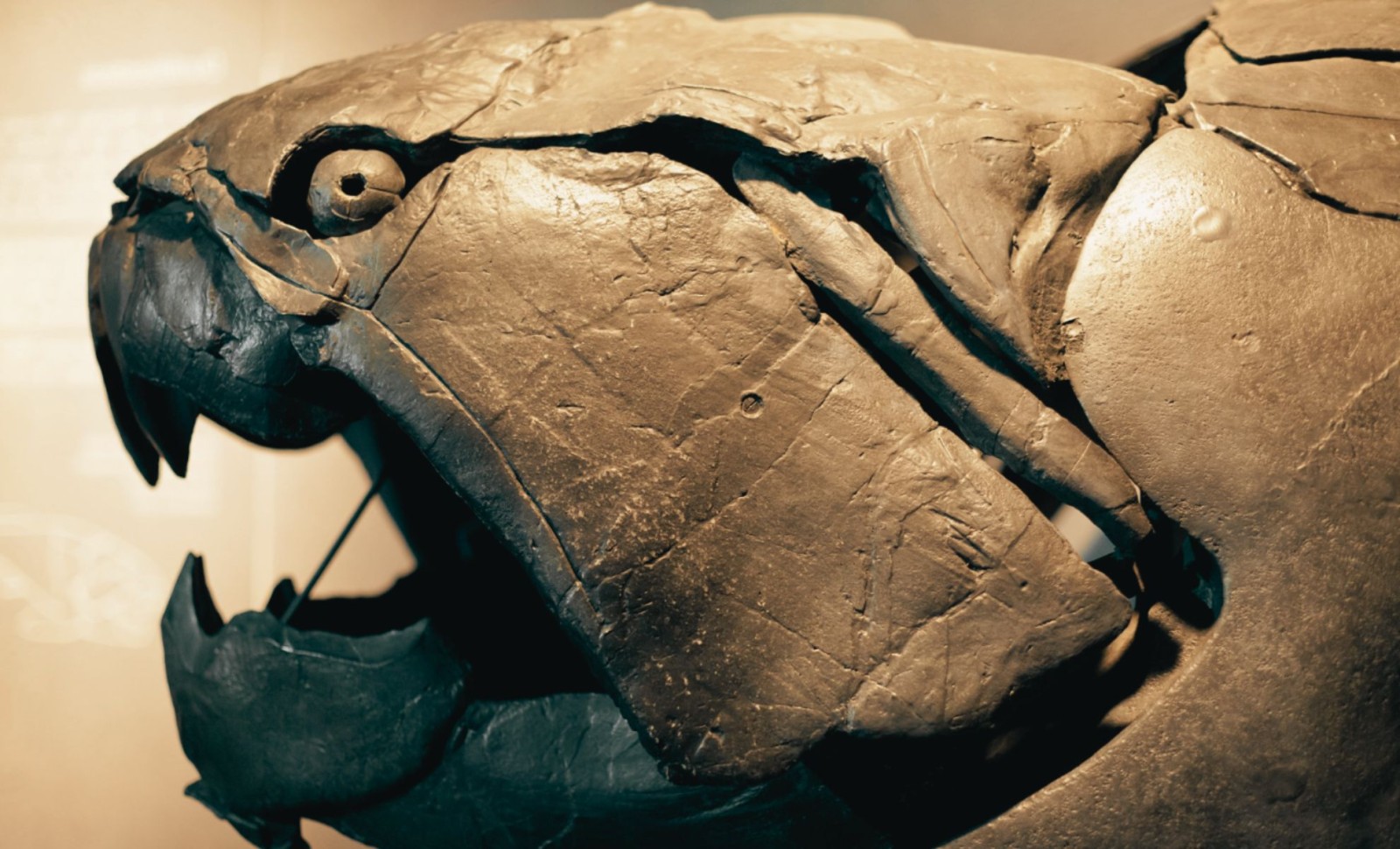
About 360 million years ago, the region now known as Cleveland, Ohio was submerged beneath a shallow sea. Dwelling in those waters was Dunkleosteus terrelli, a 14-foot-long armored fish that wielded bone blades instead of traditional teeth. This Devonian giant has long been recognized as a prime example of one of the earliest jawed vertebrate predators—a pioneering evolutionary force in marine ecosystems.
However, recent research led by scientists at Case Western Reserve University challenges this conventional portrayal. Rather than representing a typical member of arthrodires, a now-extinct group of armored fishes resembling sharks, Dunkleosteus appears to have been an evolutionary oddity. Its skull consisted of nearly 50% cartilage, and its jaw structure shows surprising parallels with today’s sharks and rays.
This study is the first in nearly 100 years to conduct an in-depth anatomical review of the species, demonstrating that even the most celebrated prehistoric creatures can redefine our understanding.

“Contrary to popular belief, Dunkleosteus was quite distinct from its relatives and stood out as unusual,” explained Russell Engelman, the graduate student at Case Western and the study’s lead author.
A More Intriguing Predator Emerges
The findings, published in The Anatomical Record, represent the most thorough analysis since 1932, when researchers first attempted to piece together its fragmented fossilized bones. Leveraging advanced technologies and new fossil records, scientists have now examined both the fish’s anatomy and its role in evolutionary history.
Collaborators from Russia, the United Kingdom, Australia, and Cleveland revisited the exceptional fossil assemblage held at the Cleveland Museum of Natural History, which safeguards the world’s most complete collection of Dunkleosteus specimens. These remains, embedded in Devonian black shale, have frequently come to light through local construction activity.
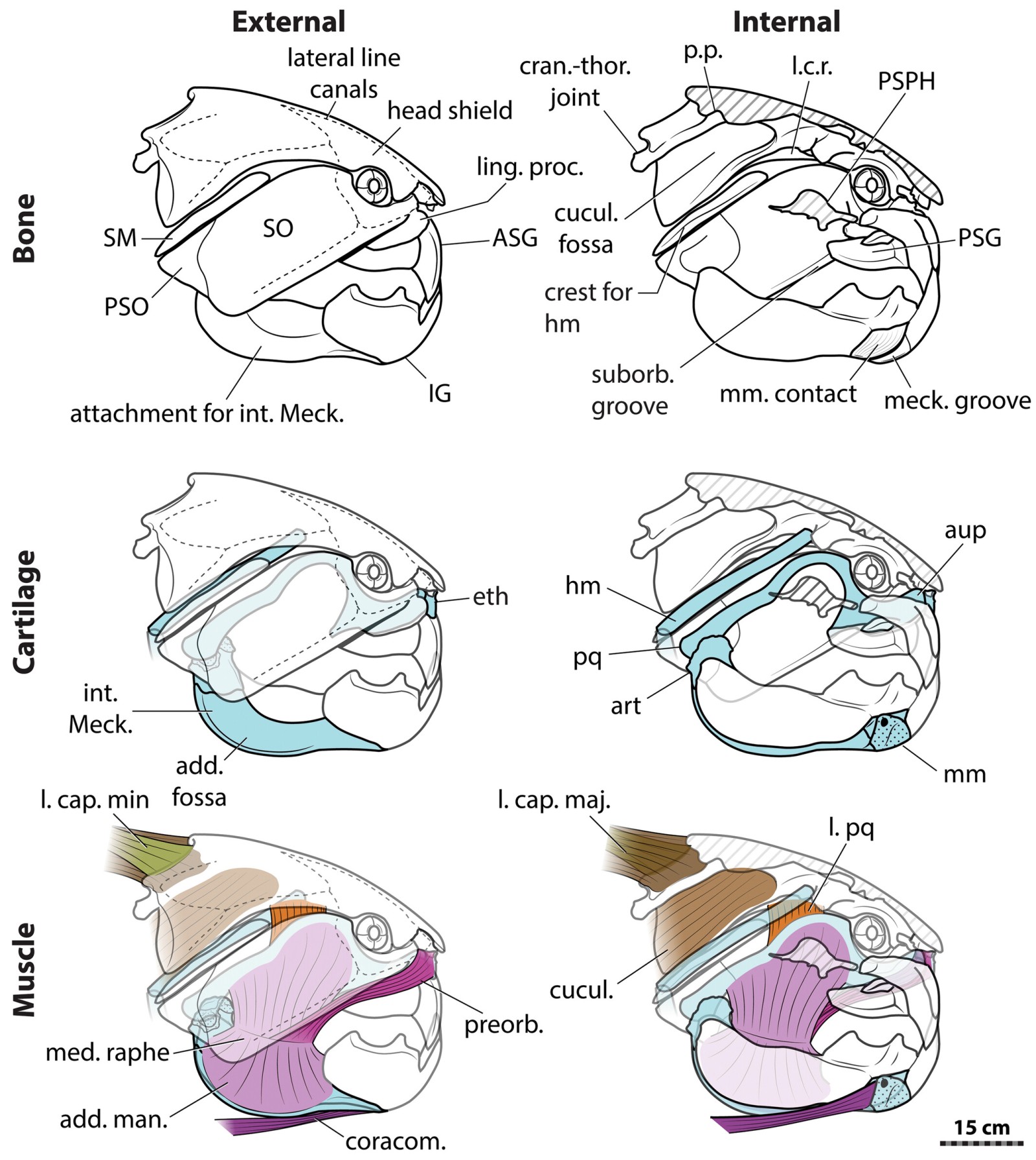
One striking revelation was that nearly half of the skull’s structure was cartilaginous, encompassing key jaw joints and muscle attachment sites. This contrasts markedly with armored fish from the same period. Equally notable was the identification of a large bone canal harboring a jaw muscle akin to those found in modern cartilaginous fishes like sharks and rays. This feature suggests a previously unrecognized jaw mechanics.
“Although previous studies have modeled Dunkleosteus' biomechanics, no one had thoroughly investigated the bone structure to interpret muscle placement and jaw function,” Engelman noted in the university’s release.
Blades Replacing Teeth
While typical arthrodires possessed true teeth, the research reveals that Dunkleosteus and a few of its close kin uniquely lost these. Instead, they developed razor-sharp bony blades in the jaws, functioning like slicing tools to shear through flesh.
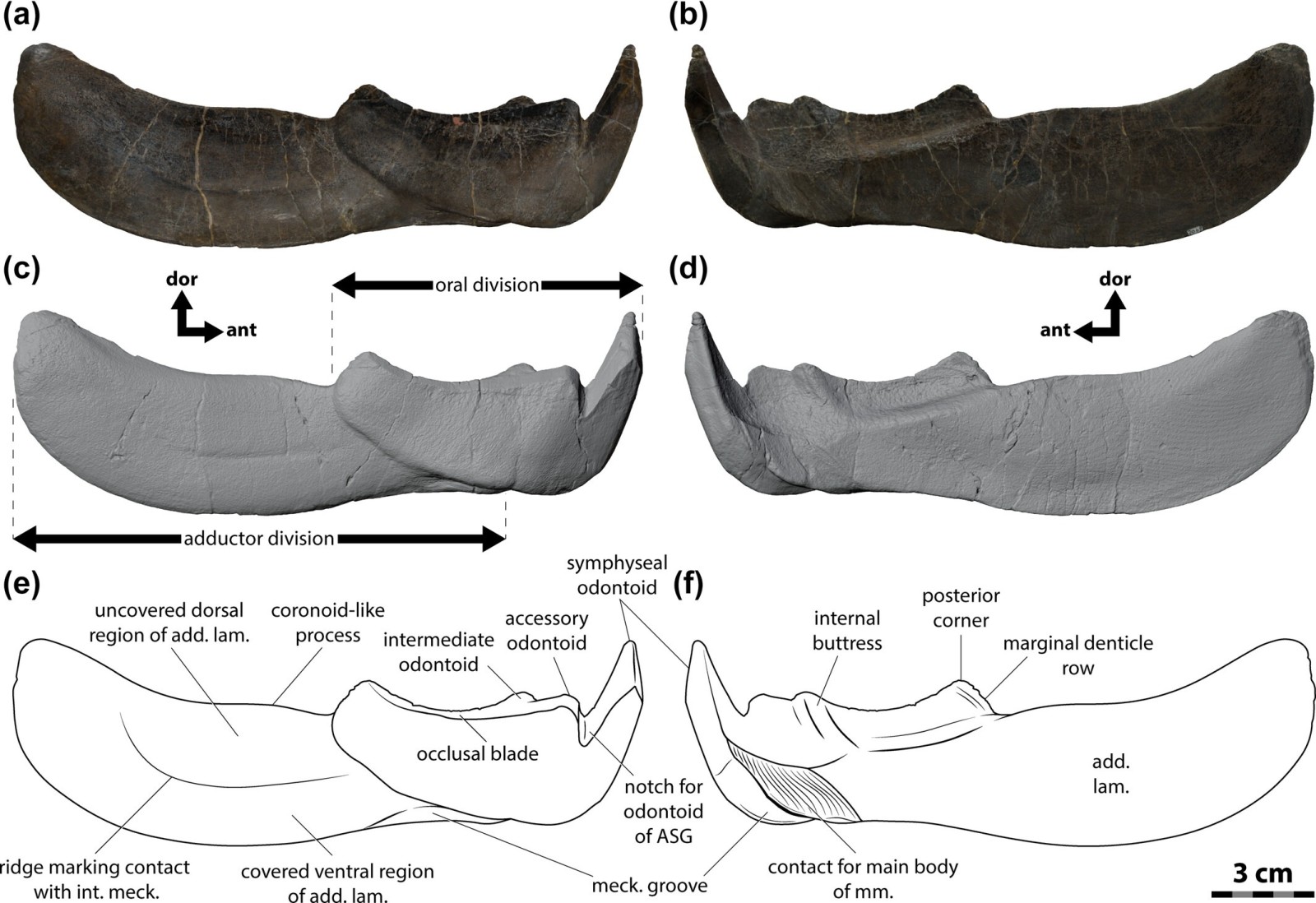
The emergence of these bone blades occurred independently across several arthrodire lineages, likely driven by competitive pressures in the Devonian seas among large predators. The research team proposes that these adaptations enabled Dunkleosteus to effectively tackle large, hard-bodied prey by delivering powerful, precise bites instead of swallowing food whole.
“For nearly a century, this apex predator has been scientifically overlooked,” the researchers stated in the Case Western report. Their work positions Dunkleosteus as a highly specialized hunter occupying a distinct niche within its ancient ecosystem.
Shifting Paradigms in Paleo Studies
This investigation transcends the story of a single prehistoric fish, offering broader insights into arthrodire evolution and early vertebrate diversification.
“Our results emphasize that arthrodires were not uniform or primitive creatures but a varied and ecologically diverse group that thrived in many roles throughout their existence,” Engelman said in the IFLScience interview.
By redefining arthrodires as a complex conglomerate of species, this study calls into question long-held assumptions and encourages scientists to reconsider familiar fossil specimens. If a well-studied genus like Dunkleosteus can reveal unexpected traits, what other hidden insights await discovery?
The findings also highlight the importance of reexamining museum collections with modern analytical methods. Despite decades of availability, the Cleveland collection had never undergone such a comprehensive anatomical review until now.
New Approaches Shape Paleontology’s Future
The major shift seen here is methodological. The discipline is increasingly moving from artistic depictions and superficial analyses toward precise, anatomy-focused investigations—exemplified by this research.
Significant gaps remain in understanding Dunkleosteus’ full body shape: fossils predominantly preserve its armored head and upper torso, while fins, tail, and muscle details are mostly absent. This incomplete data complicates efforts to reconstruct its swimming and hunting strategies.
Yet the overarching insight is clear: even fossils long on display in museums can still harbor groundbreaking secrets—if examined with fresh perspectives and advanced techniques.
- Categories:
- Science





0 comments
Sign in to Comment