
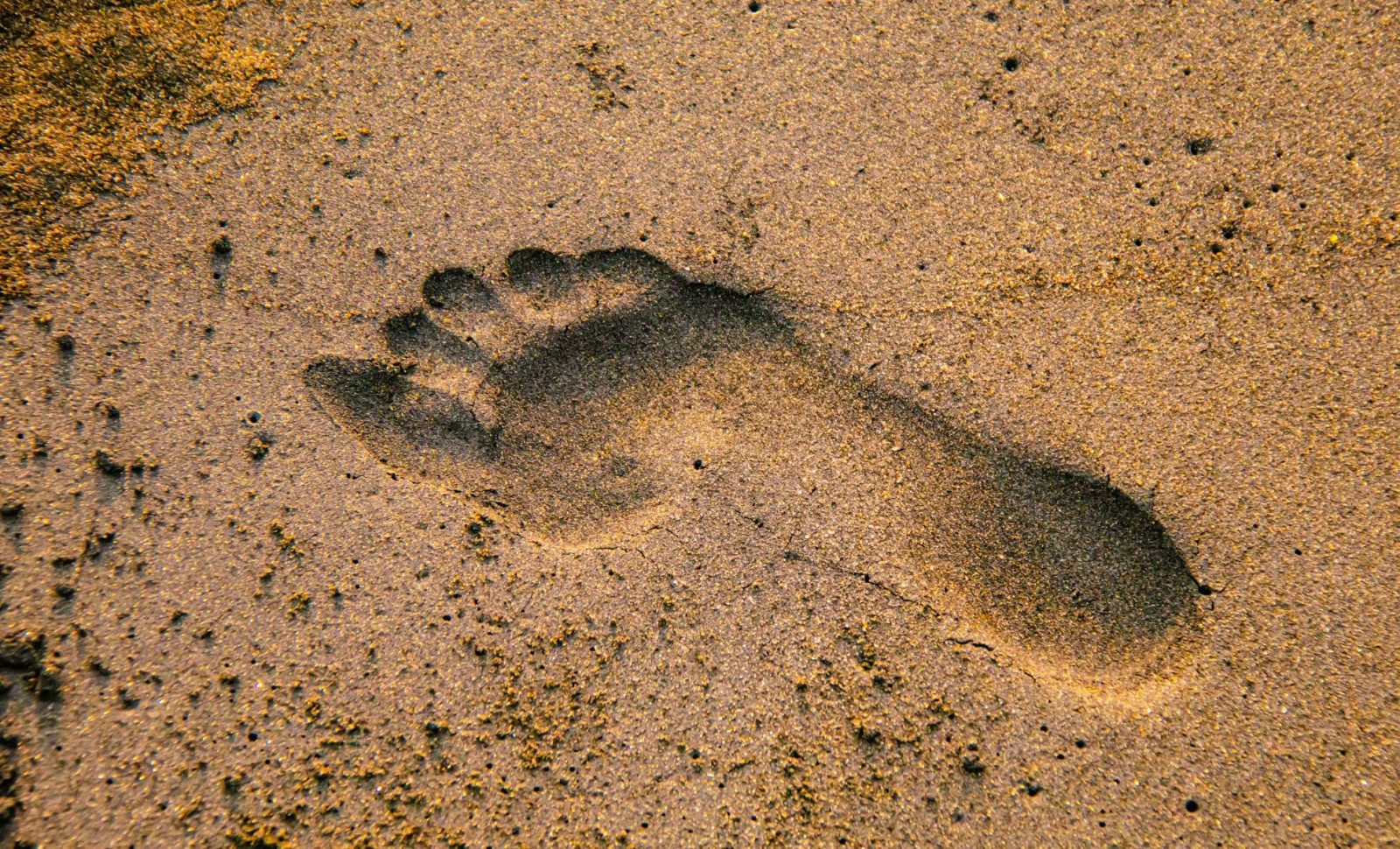
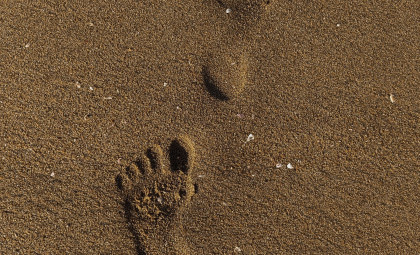
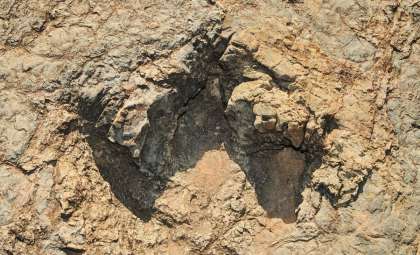
During a blustery afternoon walk along Lunan Bay Beach, dog walkers Ivor Campbell and Jenny Snedden stumbled upon a remarkable archaeological find: ancient footprints embedded in the clay beneath the shifting sand. These impressions are thought to date back nearly 2,000 years, offering a rare glimpse into the distant past.
The footprints briefly emerged as powerful winds swept away layers of sand dunes, but nature’s forces threatened to erase them just as swiftly. Archaeologists had to act swiftly within a narrow window to record and safeguard the fragile prints before the incoming tide and storm conditions swept them away.
A Fortuitous Find Amidst a Routine Walk
By chance, while walking their dogs on the Angus coast of Scotland, Campbell and Snedden noticed human footprints embedded in hardened clay under the sand. According to Bruce Mann, an archaeologist from Aberdeenshire, this rare discovery required immediate investigation.

“This serves as a powerful reminder that many crucial archaeological finds come from everyday people who take a moment to observe and report something unusual,” he explained. “What followed was a hurried effort against the clock.”
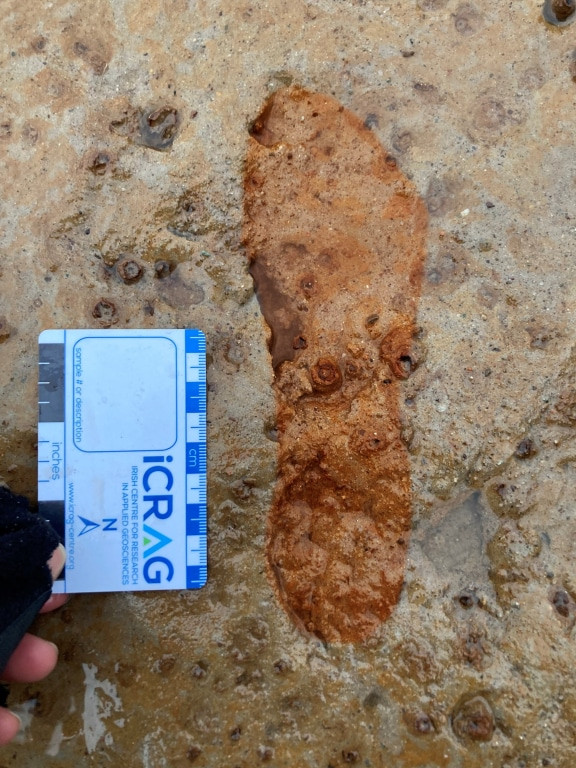
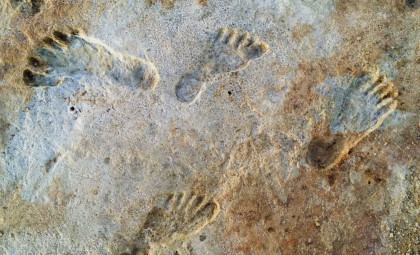
The find is notable as footprints from this era are exceptionally uncommon. Experts believe the prints date from the late Iron Age, roughly 2,000 years ago, coinciding with the period of Roman incursions into Scotland. Alongside human prints, tracks from animals like red and roe deer were also identified.
Nature’s Challenge to Preserve History
Once alerted, archaeologists were faced with extreme challenges. Fierce 55 mph gusts and an encroaching high tide threatened to eliminate the site entirely.
As detailed in a University of Aberdeen press release, a research team rushed to Lunan Bay equipped with plaster to cast the prints. Archaeologist Kate Britton described the conditions as some of the most challenging fieldwork experiences she has faced.
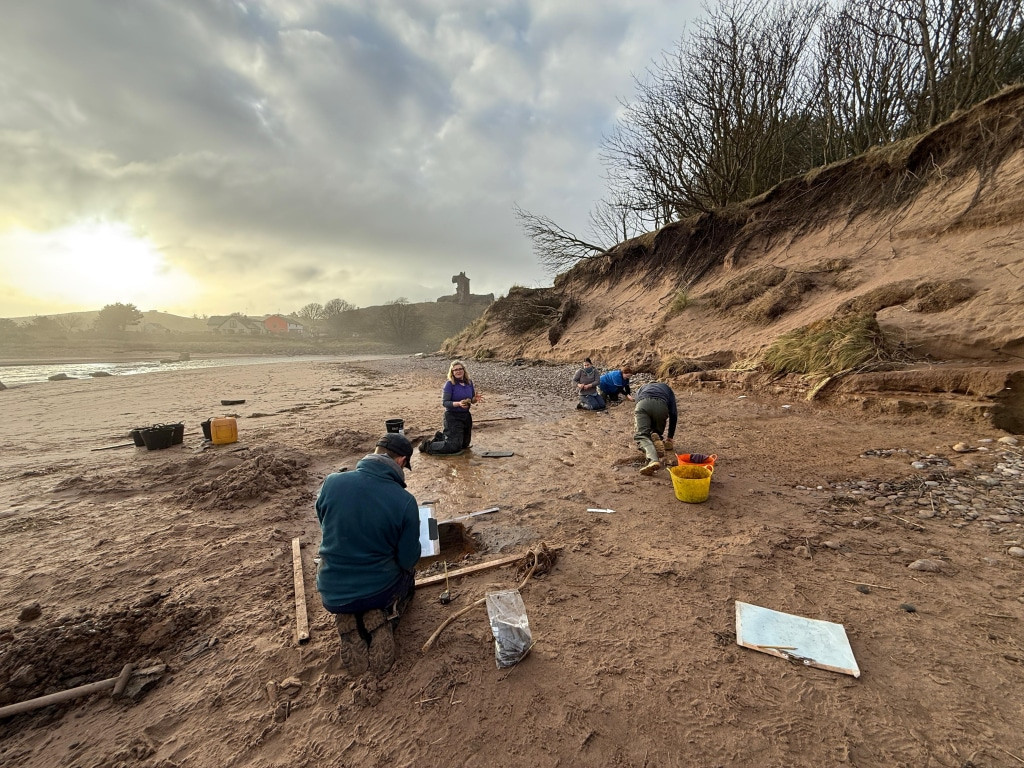
“We were nearly sand-blasted during the process while delicately cleaning and documenting the prints. It truly was a race against natural forces. Within 48 hours, the site was completely wiped out.”
Despite near-blinding sandstorms, the team managed to create detailed 3D scans and physical casts to preserve the imprint data. But with time rapidly running out, the rising tide began eroding the site, signaling that the prints were doomed to disappear.
Ephemeral Evidence of a Long-Lost Era
In under 48 hours, the footprints—once visible and embedded in clay—were obliterated by relentless winds and the advancing sea. Though the archaeological team managed to document essential details and take casts, the swift destruction of the site raises critical concerns about how many invaluable ancient clues vanish unnoticed due to natural forces.
William Mills, a postdoctoral researcher at the University of Aberdeen, emphasized how quickly delicate historical traces can disappear.
“It’s extremely rare to witness such a fragile record form and then be obliterated in such a brief timespan—just minutes to create, hours to be lost—a fleeting glimpse into ancient human activity,” he said. He also noted the site reveals how this sandy beach was once a muddy estuary where early humans likely hunted deer or foraged wild plants like samphire.
- Categories:
- Science







0 comments
Sign in to Comment