
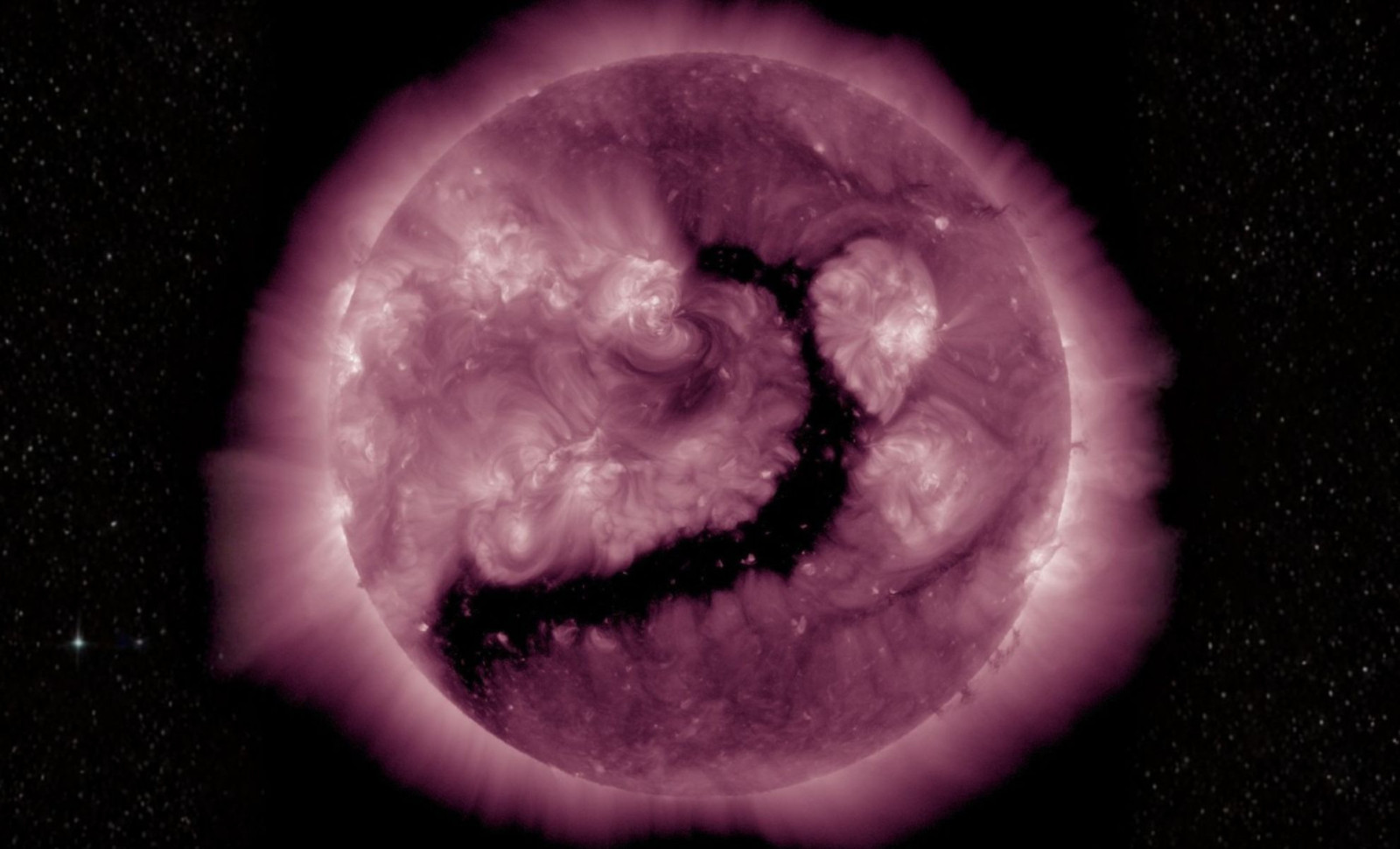
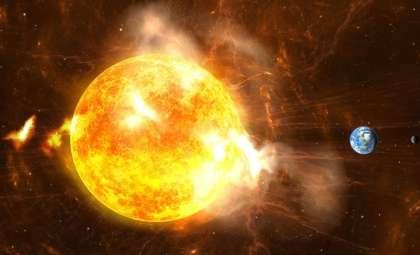
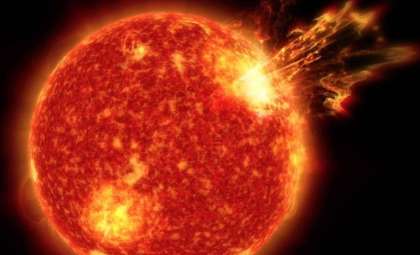
In late January, sunspot group AR 14098 emerged over the Sun's eastern edge, showcasing magnetic intricacies not observed since late 2025. Within just four days of coming fully into view from Earth, this region unleashed six intense solar flares strong enough to overwhelm spacecraft X-ray detectors.
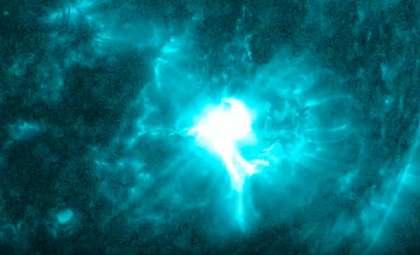
The initial and most powerful flare struck at 23:59 UTC on February 1, reaching an X8.1 classification on the GOES scale. It was followed by three eruptions on February 2, one on February 3, and another on February 4. This burst marks the most concentrated series of major solar flares since the peak of Solar Cycle 25 over a year ago. The Solar Dynamics Observatory captured these events in multiple extreme ultraviolet wavelength bands.
The flare activity in early February confirms the Sun's ongoing vigorous behavior. The solar maximum identified in 2024 was never predicted to end abruptly, and historical trends suggest that high solar activity phases often last two to three years beyond official peak dates.

A Persistent Hotspot
On February 5, the NASA Scientific Visualization Studio released a composite visual combining all six flares on a single solar image. The leading X8.1 flare on February 1 stemmed from the same active area that sparked an X1.0 flare about 11 hours earlier and an X2.8 flare shortly after midnight on February 2. Later the same day, an X1.6 flare occurred at 08:15 UTC.
Further eruptions followed: an X1.5 on February 3 at 14:15 UTC, and an X4.2 on February 4 at 12:16 UTC. Different filters on the SDO reveal unique aspects of the flares; for instance, the 131 Angstrom band highlights extremely hot plasma, while the 171 Angstrom band depicts cooler coronal features.
Origins of Solar Wind Speed
While these flares hail from magnetically complex zones, another solar phenomenon shapes space weather through distinct processes. Coronal holes manifest as darker regions in extreme ultraviolet solar imagery because they’re cooler and less dense than surrounding plasma, featuring open, unipolar magnetic fields.
The openness of these fields permits solar wind to escape more freely, generating fast solar wind streams. Coronal holes can appear anytime, though they’re more frequent near solar minimum periods. Some persist across multiple 27-day solar rotations.
When these rapid streams collide with slower ambient solar wind, they form a compression zone known as a co-rotating interaction region. This region precedes the high-speed stream, causing increases in particle density and magnetic field strength before the fast solar wind arrives.
Detecting Solar Dark Spots
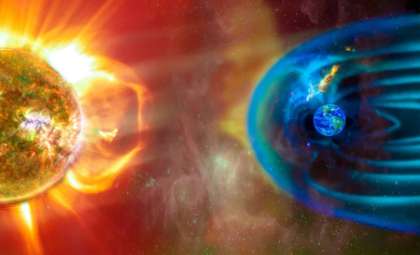
Coronal holes close to the Sun's equator are prime contributors to elevated solar wind speeds reaching Earth. Robust interaction regions and fast wind streams can disrupt Earth's magnetosphere, resulting in geomagnetic storms rated G1 to G2. Larger coronal holes can continuously impact Earth with high-speed winds for several days.
Automatically identifying coronal holes poses technical hurdles. Studies in ScienceDirect discuss an enhanced SPoCA CH module designed to improve detection accuracy. Visual audits from June 2010 through December 2016 pinpointed artifacts as a major issue—areas of the quiet Sun with lower brightness than average but brighter than coronal holes.
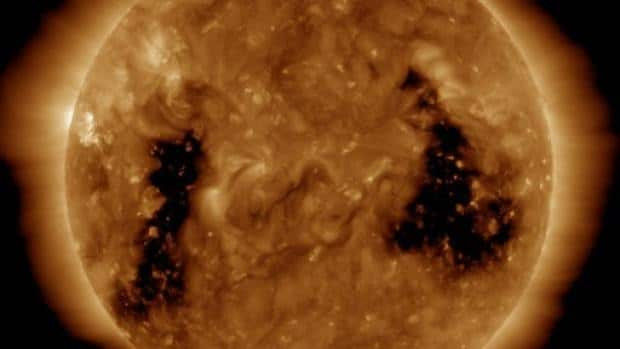
These artifacts tend to appear when no coronal holes are present on the solar disk or when large active regions dominate. The upgraded module counters this by adopting a conservative pixel classification strategy for low intensity areas.
Key Indicators for Forecasting
The Solar Ultraviolet Imager aboard GOES R satellites compiles reports on bright regions, flare sites, and coronal holes. These streamline thematic maps into actionable data to monitor features impacting space weather. The bright region report details the position and brightness of solar regions, crucial because such areas frequently generate powerful eruptions.
The coronal hole report outlines detected boundaries within SUVI maps. Mapping these boundaries is vital since their locations correspond strongly with high-speed solar wind streams that induce effects on Earth.
Data from the Ulysses mission differentiated two dominant solar wind regimes: slow wind arises above helmet streamers with closed magnetic fields, while fast wind originates from coronal holes with open fields. During solar minimum, these regimes remain orderly; however, solar maximum phases introduce complex, chaotic conditions.
Fast solar wind stemming from coronal holes travels between 450 and 800 kilometers per second, while slower wind above helmet streamers is under 450 kilometers per second. February's X8.1 flare underscored the region’s flare potency, though the magnetic orientation of any related coronal mass ejections cannot be discerned from extreme ultraviolet images alone.
- Categories:
- Science







0 comments
Sign in to Comment