
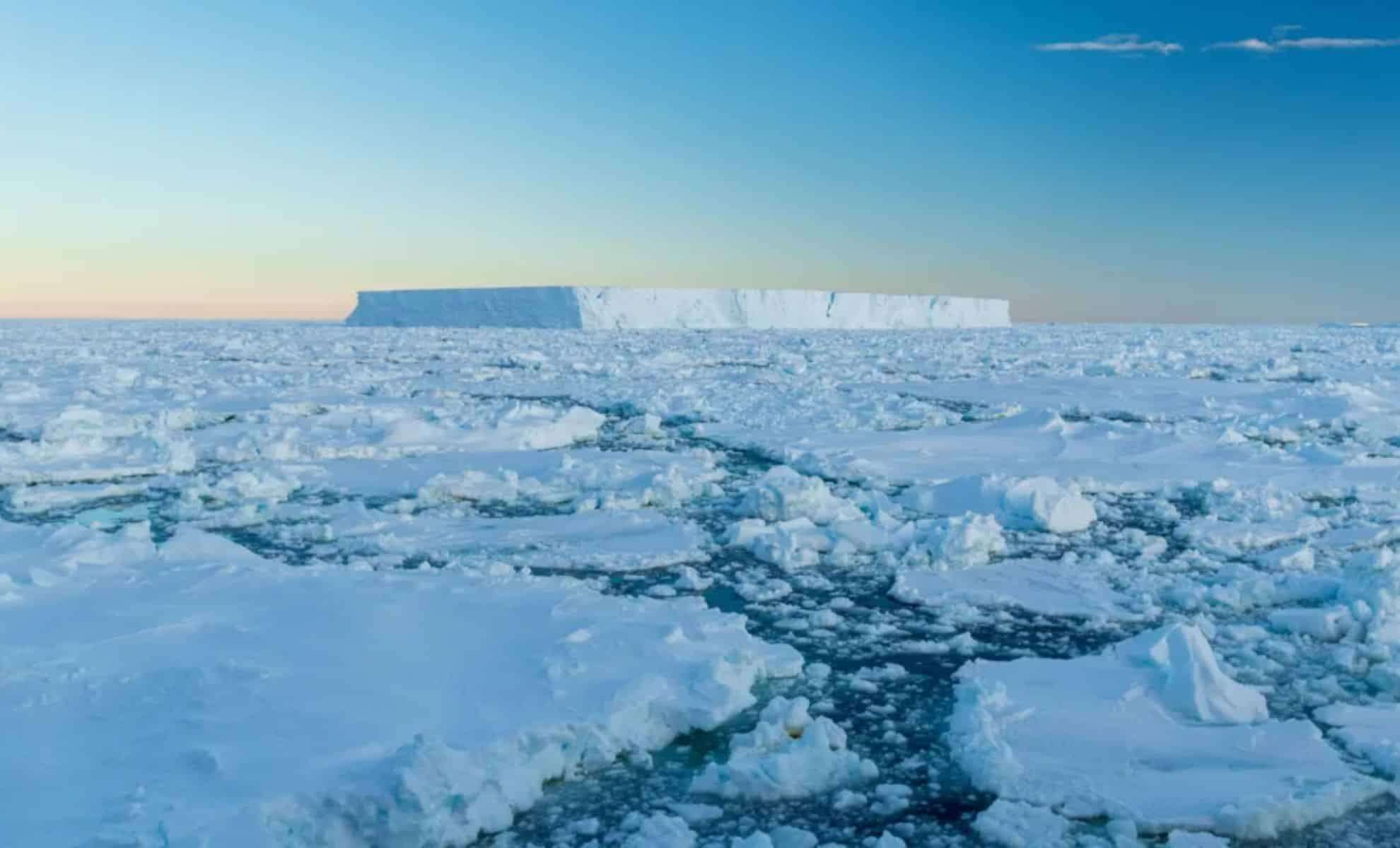
Recent studies have revealed that colossal icebergs, which once drifted across the North Sea roughly 18,000 years back, carved distinct grooves along the ocean floor. These gigantic ice masses, comparable in scale to moderate-sized cities, offer valuable insights into Earth's distant climatic conditions.
Immense Iceberg Giants: Unlocking North Sea's Glacial Past
Between 18,000 and 20,000 years ago, during the last Ice Age, extensive ice sheets stretched over much of northern Europe.
As these ice sheets receded swiftly, enormous icebergs separated from the ice shelves and drifted through the North Sea, eventually reaching the shores of Britain.
Researchers from the British Antarctic Survey, under the guidance of James Kirkham, identified traces of these icebergs by examining preserved gouges on the seabed.
These markings were uncovered using seismic survey data typically gathered for oil and gas prospecting.
Kirkham commented, “Based on the size of the scours and information about ancient sea levels, we infer that these icebergs stretched from five to tens of kilometres in width and stood several hundred metres thick—sizes comparable to a mid-sized British city.”
These extraordinary proportions underline the significant influence these icebergs had on the landscape at the time.

Magnitude and Importance of These Ancient Icebergs
The latest research illuminates the scale and dynamics of icebergs that once drifted the North Sea.
Discovering such enormous icebergs supports mounting evidence that this region once hosted ice shelves akin to those presently found in Antarctica.
Today, tabular icebergs—flat-topped, expansive ice blocks—continue to calve from Antarctic ice shelves. Some, like A23a and A68a, approximate the size of small American states.
These glacial features not only fascinate with their scale but also offer vital clues about ice shelf responses to temperature shifts.
Kirkham’s findings suggest that the long-vanished ice shelves beneath the North Sea were likely comparable in character to today’s Antarctic ice shelves.
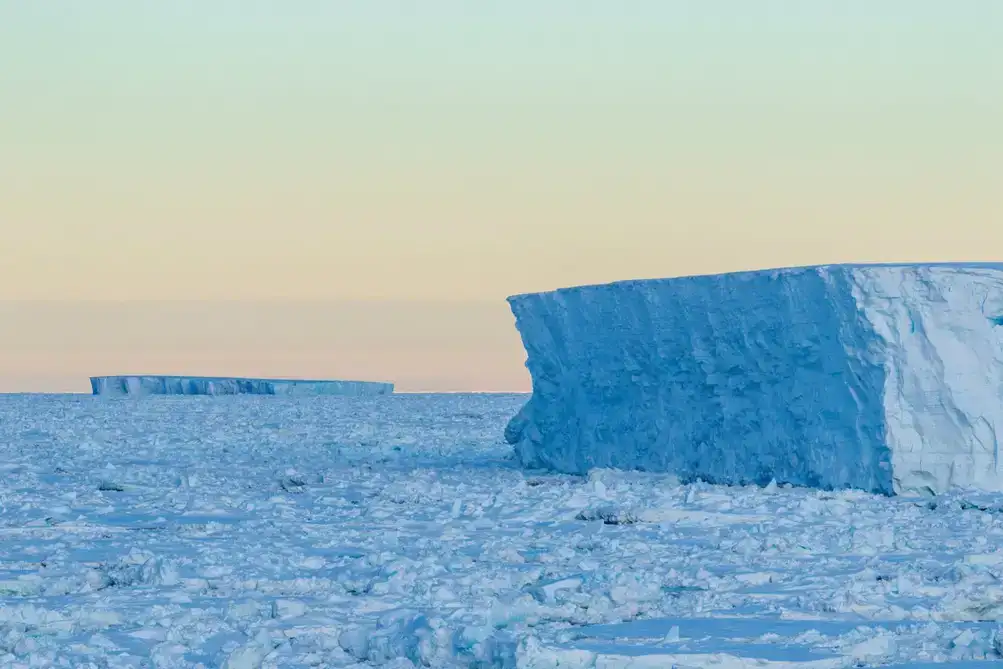
Changing Patterns of Iceberg Formation
The North Sea's ocean floor reveals a temporal shift in iceberg characteristics. The deep, broad gouges etched by enormous icebergs are overlain by narrower, winding channels formed by significantly smaller ice fragments.
This indicates that as the ice shelves fragmented, large tabular icebergs gave way to numerous smaller ice chunks.
Kirkham explains, “A regime shift happens when vast icebergs are replaced by many smaller ones as warming temperatures cause ice shelves to disintegrate.”
Reevaluating Ice Shelf Stability
These insights bring fresh perspective to the durability of Antarctica’s ice shelves.
Notably, they challenge the notion that major calving events are definitive signs of imminent ice shelf collapse.
Emma MacKie from the University of Florida states that large calving episodes “do not automatically indicate instability or an emergency.”
Instead, the critical risk might lie in the progressive weakening of ice shelves over extended periods.
MacKie’s investigation, utilizing satellite data on tabular iceberg sizes from the mid-1970s to today, indicates that these massive icebergs have remained fairly consistent in size.
“James’s work bolsters my findings, showing large calving occurrences aren’t necessarily alarming,” she remarks. “The real concern arises when such large events cease, revealing a slow, steady deterioration of ice shelves.”
The Gradual Decline of Ice Shelves
This slow, incremental decay—marked by frequent, smaller iceberg breakoffs—may pose a greater threat than irregular, massive berg detachments.
As ice shelves weaken, smaller ice floes become more common, resulting in steady ice loss and rising sea levels over time.
- Categories:
- Science










0 comments
Sign in to Comment