

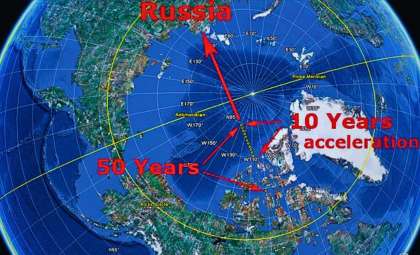
The Earth’s magnetic north pole continues its gradual migration, prompting scientists to publish an updated World Magnetic Model (WMM). The latest data indicates the pole has moved significantly closer to Siberia over the past five years and maintains its trajectory toward Russia. This revision is vital for enhancing the precision of GPS technology that guides everything from aviation to maritime navigation and personal devices. But what actually causes magnetic north to shift, and what are the broader implications for our planet’s magnetic environment?
The Importance of Magnetic North: Understanding the Movement
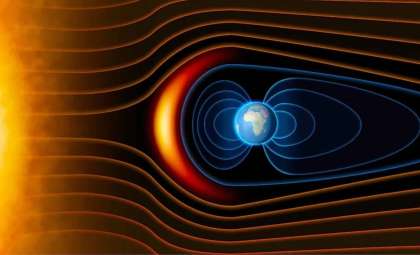
Unlike the fixed position of the geographic North Pole, the magnetic north is dictated by fluctuations in Earth’s magnetic field, which arises from turbulent flows of molten metals within the planet’s core. These dynamic processes create a changing magnetosphere that doesn’t remain stationary. The pole’s motion has notably varied in recent decades.
- Variable Drift Speeds: During the 1990s, the magnetic north sped up, advancing as fast as 34.2 miles (55 kilometers) per year. Later, by 2015, its pace had decelerated to approximately 21.7 miles (35 kilometers) annually, leaving researchers puzzled.
- Navigation Implications: Because the World Magnetic Model is refreshed every five years, these updates ensure critical systems reliant on GPS maintain their accuracy. Omitting such revisions could lead to cumulative navigational errors impacting aviation, shipping, and military operations.
Dr. Arnaud Chulliat of the University of Colorado, Boulder, highlights, “Delaying updates to the model increases positioning inaccuracies. Our current forecasts largely depend on extrapolations informed by recent knowledge of the Earth’s magnetic field.”

Details of the Updated World Magnetic Model
On December 17, researchers unveiled two versions of the updated WMM: a standard edition and a high-resolution model. While the high-resolution variant offers finer detail, most consumer electronic GPS devices continue to use the less detailed, yet sufficient, standard model.
- Standard Edition: This version provides a spatial resolution near 2,051 miles (3,300 kilometers) at the equator and is widely used in commercial and military navigation.
- High-Resolution Edition: With an accuracy of around 186 miles (300 kilometers) at the equator, this detailed model demands specialized equipment for effective use.
Dr. William Brown, a geophysicist from the British Geological Survey, remarks, “Major airlines will implement software updates on their fleets to incorporate the new model. However, most users won’t need to make immediate changes.”
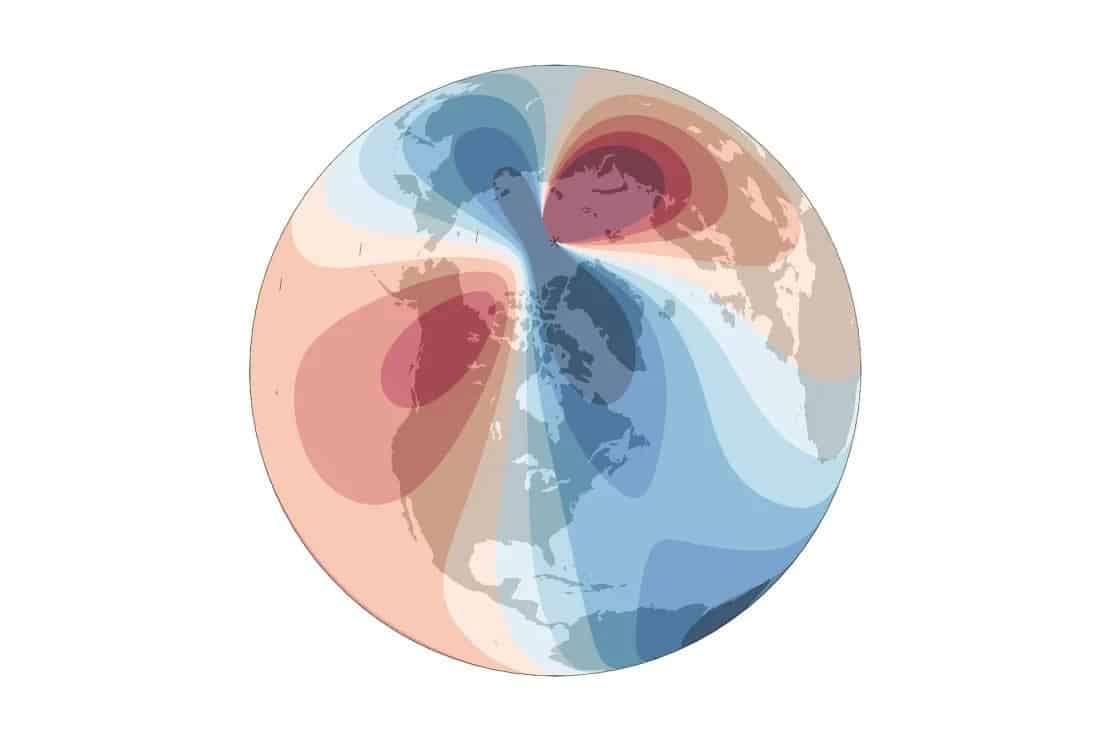
Distinguishing Magnetic North from True North
The geographic North Pole, or “true north,” is a stationary location where all longitudinal lines meet on the globe. In contrast, the magnetic north pole marks the northern tip of Earth’s magnetic field, which continuously shifts due to magma movements within the core.
- Historical Movements: Since its identification by Sir James Clark Ross in 1831, magnetic north has steadily migrated from northern Canada towards Russia, completely departing Canadian territory by 2000.
- Daily Variability: On a daily basis, the magnetic north pole moves in an elliptical path spanning roughly 75 miles (120 kilometers), complicating navigation precision.
The newest WMM affirms the ongoing migration towards Russia, albeit at a decelerated rate. Dr. Brown urges caution: “Movement speed could shift unpredictably or accelerate again. Continuous monitoring and WMM assessments remain crucial.”
The Future Outlook for Earth’s Magnetic Field
Historically, Earth’s magnetic field has seen radical transformations, including full polarity reversals where magnetic north and south interchange. These upheavals, occurring approximately every million years, unfold over millennia and carry profound effects.
- Technological Vulnerabilities: During a reversal, a weakened magnetic field may disrupt radio communications, interfere with navigation systems, and pose hazards to satellite operations.
- Effects on Wildlife: Species like whales, butterflies, and sea turtles that depend on geomagnetic cues for migration could experience significant challenges.
Although life on Earth has persisted through several magnetic reversals, modern technology has never faced this phenomenon. Dr. Brown notes, “Adapting technology to a reversal would be a formidable task, but ideally, the gradual nature of such events would allow for careful preparation.”









0 comments
Sign in to Comment