
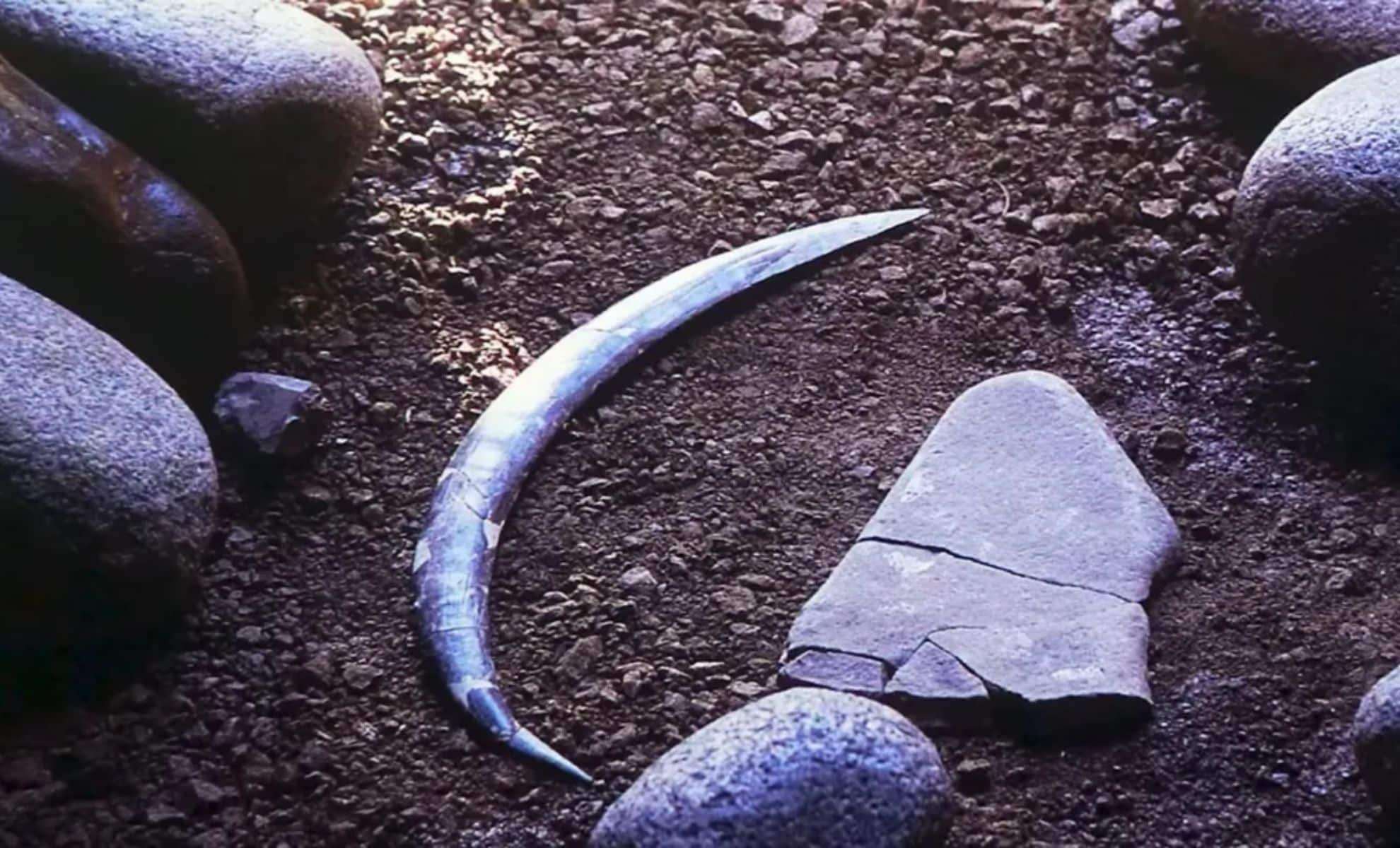
A recent investigation has uncovered that a carved boomerang made from mammoth tusk, found in Poland's Obłazowa Cave, is much older than previously thought. Estimated to be over 40,000 years old, this artifact stands as the most ancient boomerang discovered in Europe and potentially the entire globe.
Discovering a Remarkable Ice Age Tool
This boomerang, measuring about 28 inches (72 centimeters) long, was excavated over 40 years ago alongside notable prehistoric finds such as human skeletal remains, stone implements, and necklaces fashioned from fox teeth. Situated in southern Poland, the cave has drawn archaeologists’ attention for decades. The artifact was initially dated to roughly 18,000 years ago, but the more recent research has pushed its origins much further back in time.
Published in PLOS One, the study employed sophisticated dating techniques, including DNA sequencing and radiocarbon dating, pinpointing the boomerang’s creation between 42,365 and 39,355 years ago. This revised chronology situates the artifact well beyond 35,000 years old, making it one of the earliest known complex tools crafted by prehistoric humans in Europe and possibly predating similar tools worldwide.

Examining the Boomerang’s Craftsmanship
The boomerang carved from a mammoth tusk exhibits a curving form and a flat on one side with a convex on the other, closely resembling boomerangs currently used by Aboriginal Australians in Queensland. Paweł Valde-Nowak, an archaeologist at Jagiellonian University and a study co-author, notes, “This ivory object possesses all the defining characteristics of the boomerangs employed by Queensland’s Aboriginal peoples today.”
These design traits imply that early Europeans were capable of creating sophisticated hunting tools similar to those developed elsewhere. The boomerang’s shape and build indicate that it was likely a non-returning type, comparable to those still used by Indigenous Australian communities for hunting rather than sport.
Insights from Obłazowa Cave Excavations
Obłazowa Cave has offered researchers a wealth of prehistoric clues. When the mammoth tusk boomerang was initially uncovered, it came as part of a collection of artifacts, some of which had been coated in red ocher. These finds were linked to early Homo sapiens and set apart from the Neanderthal relics found deeper inside the cave. Valde-Nowak’s 1987 research highlighted that the presence of ocher-covered objects pointed to symbolic behavior and advanced tool-making exclusive to early modern humans.
Though a 1996 carbon-14 test initially dated the boomerang and other organic materials to about 18,000 years ago, concerns about contamination led to renewed analyses. The latest results confirm a much older age, firmly dating the artifact to over 40,000 years, redefining our understanding of its antiquity.
Rethinking Early Human Technological Progress
This mammoth tusk boomerang challenges previous timelines related to early human tool creation. While throwing weapons like boomerangs have been known in Australia for at least 20,000 years, evidence now indicates that early Europeans developed similar hunting tools far earlier than historically assumed.
These discoveries enhance our comprehension of how ancient humans innovated and adapted their technology, paving the way for future advancements as they thrived in diverse prehistoric environments.
- Categories:
- News













0 comments
Sign in to Comment