
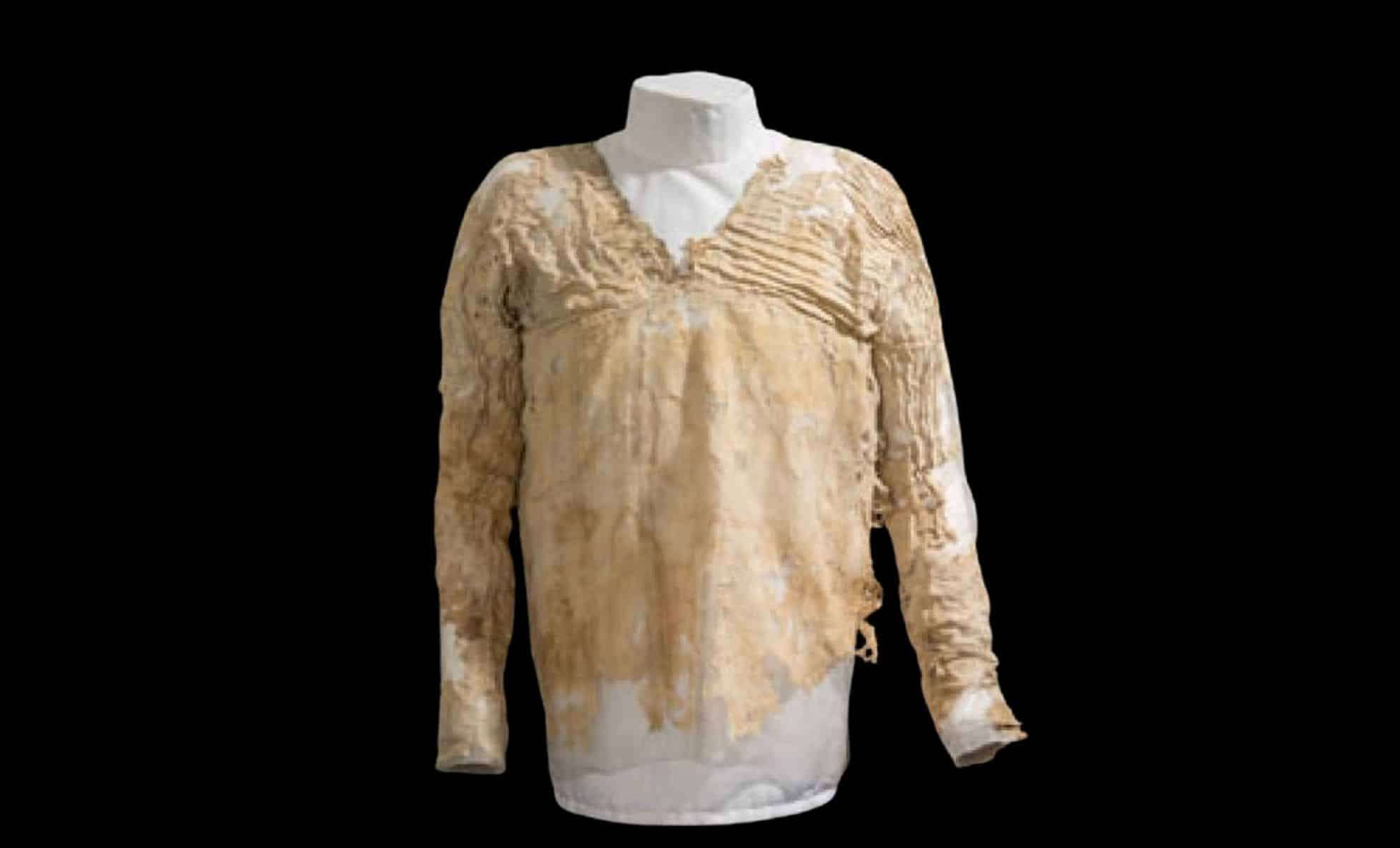
In an impressive archaeological revelation, the Tarkhan Dress has emerged as the oldest known intricately woven attire in human history. This original linen garment, dating from over 5,000 years ago, gives us an invaluable window into the clothing and lifestyle of early Egyptians.
Unearthing a Unique Relic from Egypt’s Past
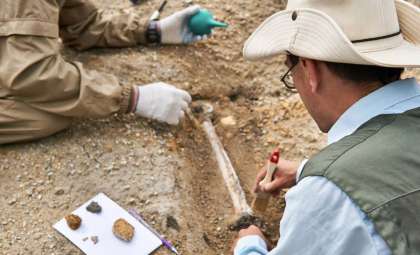
Discovered in 1913 by British archaeologist Sir Flinders Petrie at the Tarkhan Cemetery near Giza, the Tarkhan Dress stands among numerous tombs dating to the late Protodynastic and Early Dynastic eras, roughly 3100 B.C. Petrie initially came across a substantial heap of linen remnants, which at first seemed like discarded scraps.
However, this pile turned out to be an extraordinary find. In 1977, specialists at London’s Victoria and Albert Museum reassessed the fabric and identified it as the Tarkhan Dress. Radiocarbon dating places its creation between 3482 and 3102 B.C., confirming it as the most ancient surviving example of a sewn and fitted garment.

Insights Into Fashion of Early Egypt
Made from flax linen, the Tarkhan Dress features a sleek V-neckline and is constructed using three individually woven pieces joined together. The garment’s tailored nature is evident in the precise knife-pleated details along the sleeves and bodice, formed by thin, sharp folds. Although the lower portion is missing, researchers believe it may have served as a tunic or dress, probably worn by a slender young woman.
This garment exemplifies early Egyptian textile craftsmanship, highlighting the weavers' skill in combining practicality and aesthetic appeal in delicate linen fabric—a material rarely preserved so well through millennia.
As Alice Stevenson, a professor of museum archaeology at University College London, noted in a 2016 report, “the survival of highly perishable textiles in the archaeological record is exceptional.”
More Than Merely Burial Attire
Despite its discovery among funerary artifacts, the Tarkhan Dress was evidently fashioned for everyday wear. Its visible signs of use imply it belonged to a high-ranking individual prior to burial. The garment corresponds to images of period costume often depicted in Egyptian mortuary art.
Thus, this dress likely held dual significance: as a luxurious piece of clothing during life and as part of ritual burial customs, shedding light on how clothing intersected with social status and death practices in ancient Egypt.
Revealing Ancient Textile Techniques
As the oldest extant example of tailored dress, the Tarkhan Dress marks a pivotal advancement in the history of Egyptian apparel. The craftsmanship displayed here influenced successive generations of clothing design and production.
Its discovery enriches our knowledge of ancient Egyptian daily life and highlights the civilization’s remarkable ingenuity in creating durable garments from natural fibers.
- Categories:
- News





0 comments
Sign in to Comment