
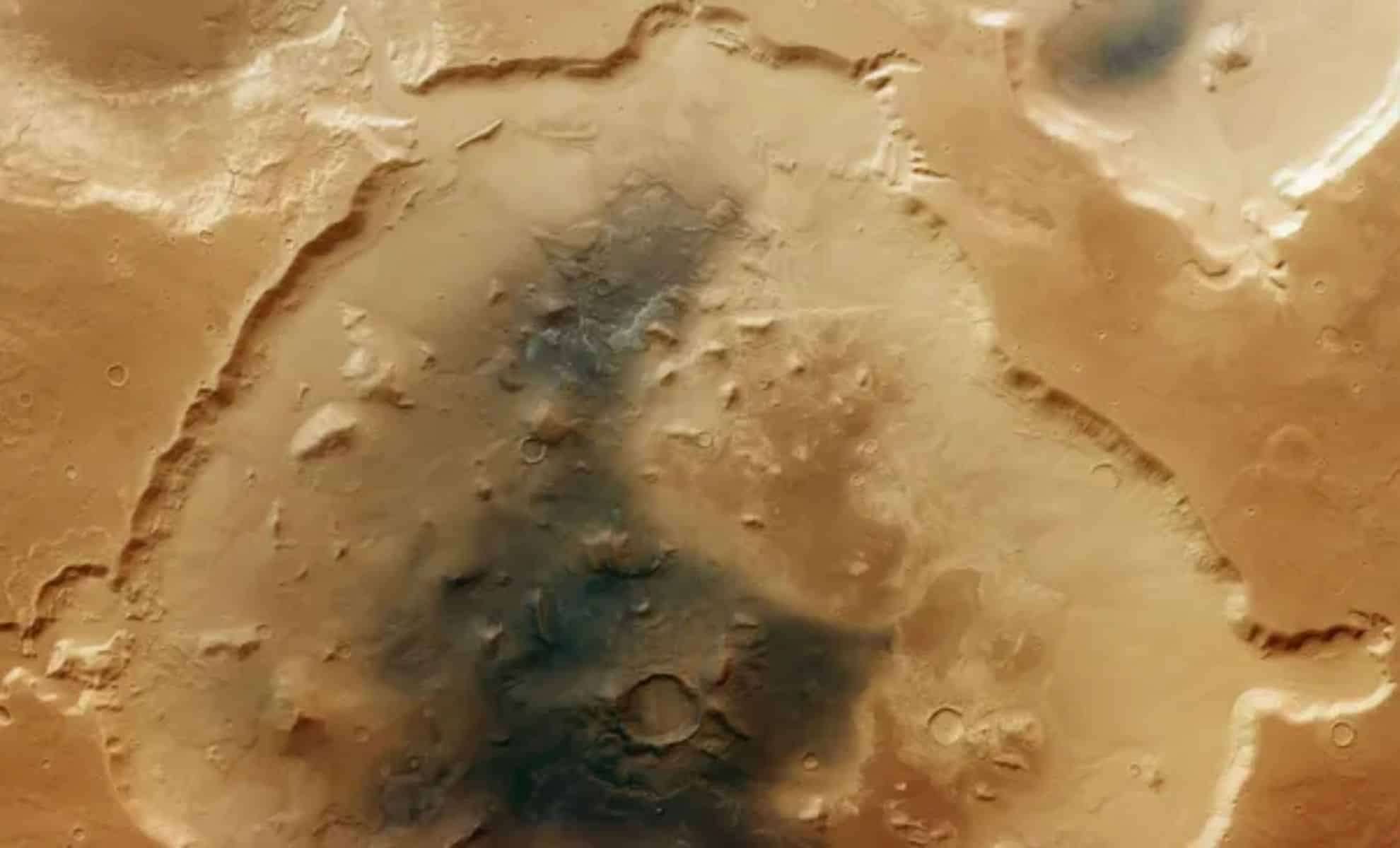
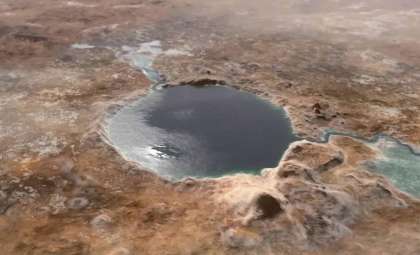
An extraordinary photograph from ESA’s Mars Express orbiter shines a spotlight on the intriguing and severely worn crater known as Deuteronilus Cavus. Spanning approximately 75 miles (120 kilometers) across, this nearly circular depression is situated between the planet’s rugged southern highlands and its smoother northern plains.
Chronicles Etched in Martian Terrain
Captured in October 2024 by the High Resolution Stereo Camera (HRSC) aboard Mars Express, the image showcases a landscape profoundly altered over billions of years. Researchers estimate the crater formed from a colossal impact event dating back between 4.1 and 3.7 billion years ago, a time when Mars and its neighboring worlds endured heavy bombardment from asteroids and comets. Since its origin, the crater has been reshaped by volcanic eruptions, flowing water, glacial activity, and wind-blown sediments.
The European Space Agency (ESA) describes Deuteronilus Cavus as “imbued with layers of Martian history,” highlighting the roles ancient lava flows, liquid water presence, repeated freeze-thaw cycles, and volcanic dust accumulation have played. Due to extensive erosion, the crater has nearly doubled in size, providing a unique window into the evolution of Mars’ geology.

Evidence of Water and Volcanism
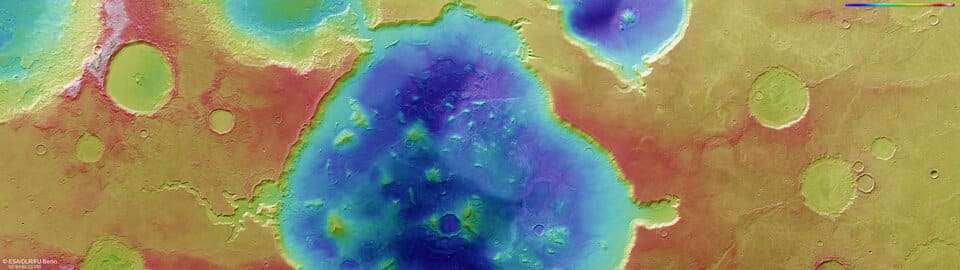
One notable discovery within the crater includes clay minerals formed through interactions between volcanic rock and water, hinting at conditions potentially supportive of life in Mars’ ancient environment. Additional features like channels intersecting the crater’s rim suggest historic flows of surface water or collapses triggered by subterranean water reservoirs draining away.
ESA has also pointed out distinctive grooves and glacial markings. Their report states, “linear grooves reveal the paths of boulders embedded in glacial ice, which scraped the surface as the glacier moved.” These features strongly indicate past glaciation events that may have coincided with periods when Mars experienced more pronounced axial tilts.
At the bases of the crater's inner walls, glacial deposits known as “debris aprons” are evident—these tongue-shaped accumulations of ice and rock slid downslope during glacial times, leaving behind geological signatures still visible today.
Fragments of a Destabilized Central Peak
The crater floor exhibits a diverse assortment of features including rocky hills, flat-topped mesas, channels, and plains. Scientists believe these structures are remnants of a central peak that has since collapsed. The presence of dark volcanic ash spread across much of the floor attests to the area’s volcanic heritage, while surrounding wrinkle ridges likely mark ancient, buried lava flows.
The geological richness displayed throughout Deuteronilus Cavus makes it a prime focus for researchers aiming to decode Mars’ environmental history. ESA officials capture the essence of the site as a “feature-packed crater” that encapsulates the most dynamic processes that have shaped the Red Planet over eons, providing “an enticing glimpse into its complex legacy.”
- Categories:
- News






0 comments
Sign in to Comment