
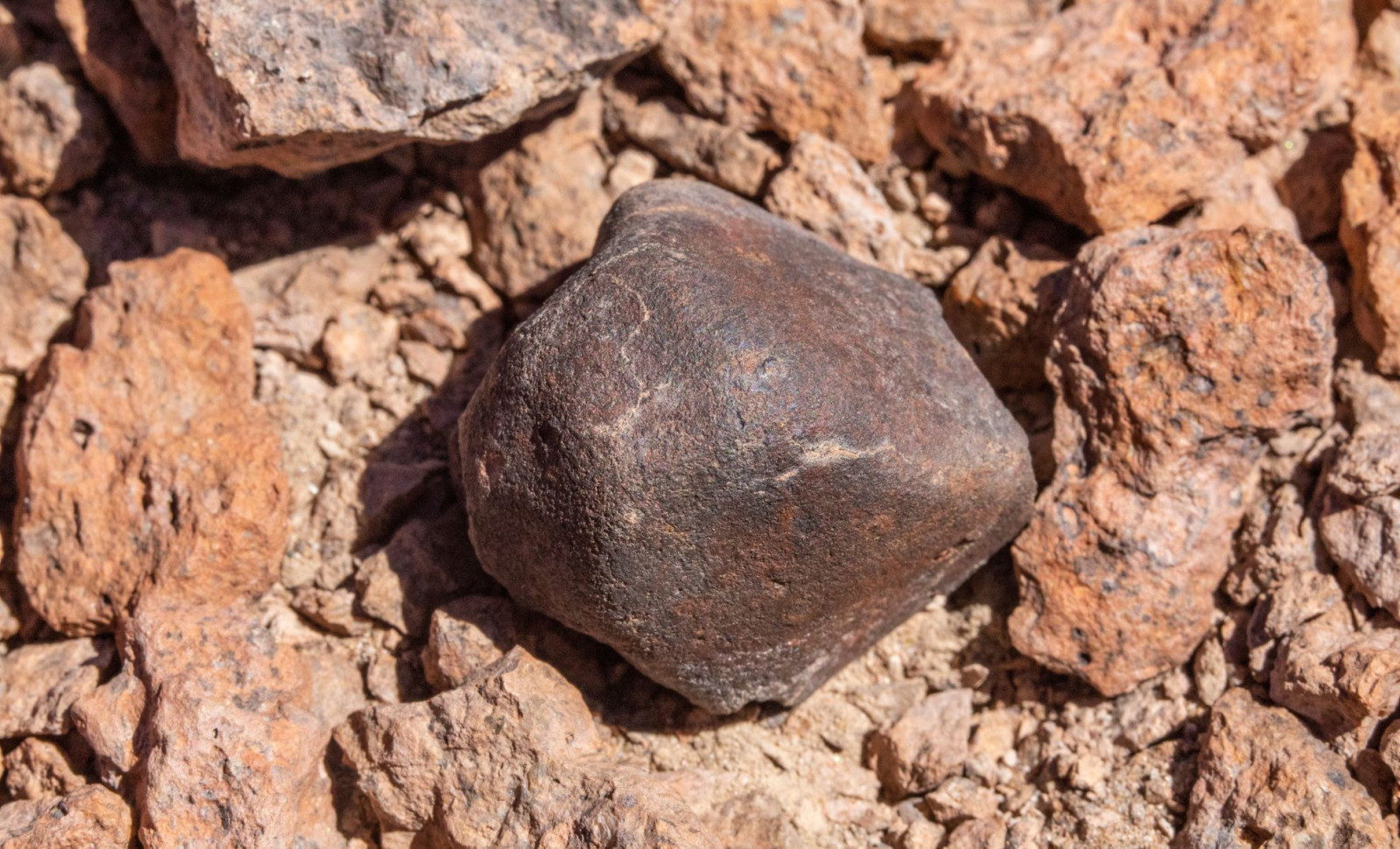
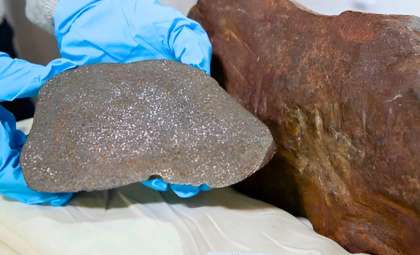
Discovered in the Sahara Desert, a meteorite dating back 4.5 billion years offers invaluable insights into a once-existing planetary body. Analysis of the rock’s composition indicates it originated inside a sizable protoplanet that was ultimately destroyed amid the solar system’s turbulent formation period.
This specimen, named NWA 12774, is part of the angrite meteorite group—among the rarest types uncovered so far. According to a recent paper in Earth and Planetary Science Letters, the parent body from which it came was considerably larger than the small asteroids previously linked to angrites.
Meteorites act as relics from the solar system's infancy, preserving conditions from billions of years ago. Unlike planets, which have endured extensive geological evolution, many meteorites remain relatively unchanged. As highlighted by a press release from the University of Colorado Boulder, NWA 12774 is an especially extraordinary find.

Only 68 angrite meteorites have been cataloged out of the approximately 80,000 meteorites recovered on Earth. Given their rarity, each new examination can shed more light on the earliest moments of our solar system’s evolution.
Unveiling Surprising Features in a Rare Meteorite
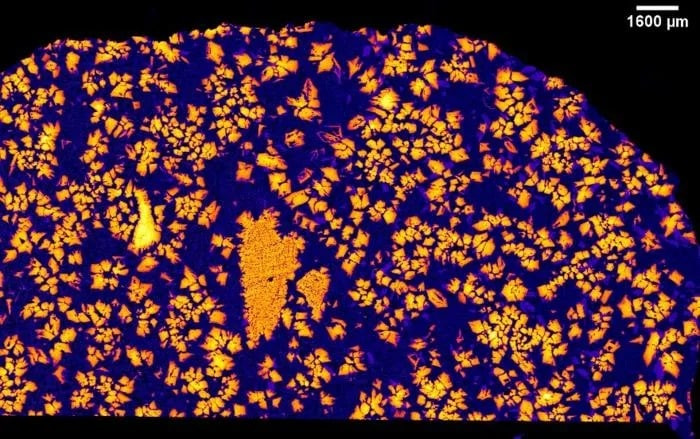
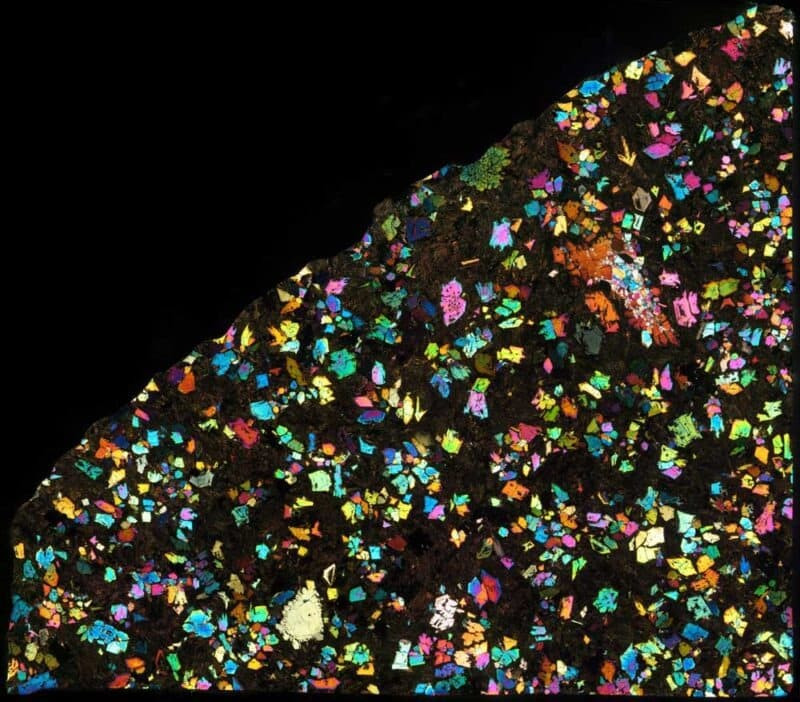
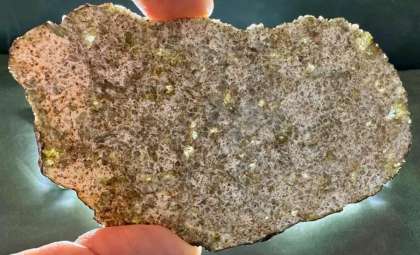
Upon inspection, NWA 12774 displayed characteristics that diverge from existing angrite assumptions. Known for their extremely low silica content—a key component of terrestrial planets—angrites were assumed to originate from small, asteroid-like bodies. However, this study identified clinopyroxene, a mineral common in Earth’s crust and mantle, within the meteorite.
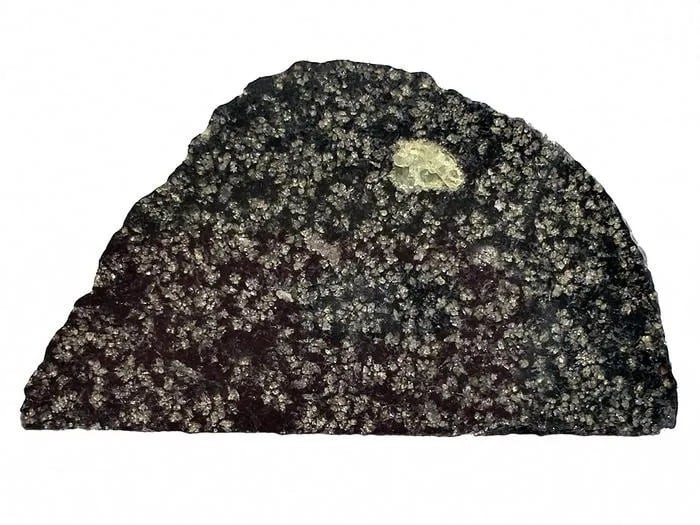
The crystals also exhibited elevated aluminum concentrations. Aaron S. Bell, an Earth scientist at the University of Colorado Boulder and one of the study’s co-authors, noted that:
“The materials that formed the angrite parent body are fundamentally different from the ingredients of Earth and Mars. It points to a distinct and separate evolutionary path in planetary formation in the early history of our solar system.” That raised a key question: what kind of object could generate those conditions?
Piecing Together the History of an Ancient Planetary Body
The team built a computational model to estimate the pressure conditions under which the crystals inside the meteorite formed—a process that took about a year to refine.
The findings, documented in Earth and Planetary Science Letters, revealed that NWA 12774 crystallized at pressures surpassing 17.5 kilobars. To put this into perspective, the pressure at the deepest oceanic trench on Earth is roughly one kilobar.
Such results suggest formation inside a massive parent body rather than a small asteroid. This discovery challenges previous assumptions about angrites and implies the rock’s origin lies in a protoplanet that had grown extensively early in its life.
Tracing the Origins of a Lost Protoplanet
By analyzing pressure data, scientists inferred the parent body had a diameter of at least 1,200 miles, with potential for even greater size. This inference is supported by the sharp edges of mineral grains inside the NWA 12774, suggesting formation near the surface rather than deep inside.
This proximity to the surface hints the size of the parent body could be comparable to the Moon's diameter of approximately 2,200 miles, or perhaps approaching the scale of Mars.
“This means that, within four million years [of the solar system’s formation], you’re making things that are the size of the moon,” he added. “It’s a very, very rapid formation timescale.”
What ultimately became of this ancient protoplanet remains uncertain. Researchers theorize it may have been fragmented by collisions during the solar system’s formative years, with its debris contributing to the makeup of Earth and other rocky planets.
- Categories:
- Science


0 comments
Sign in to Comment