
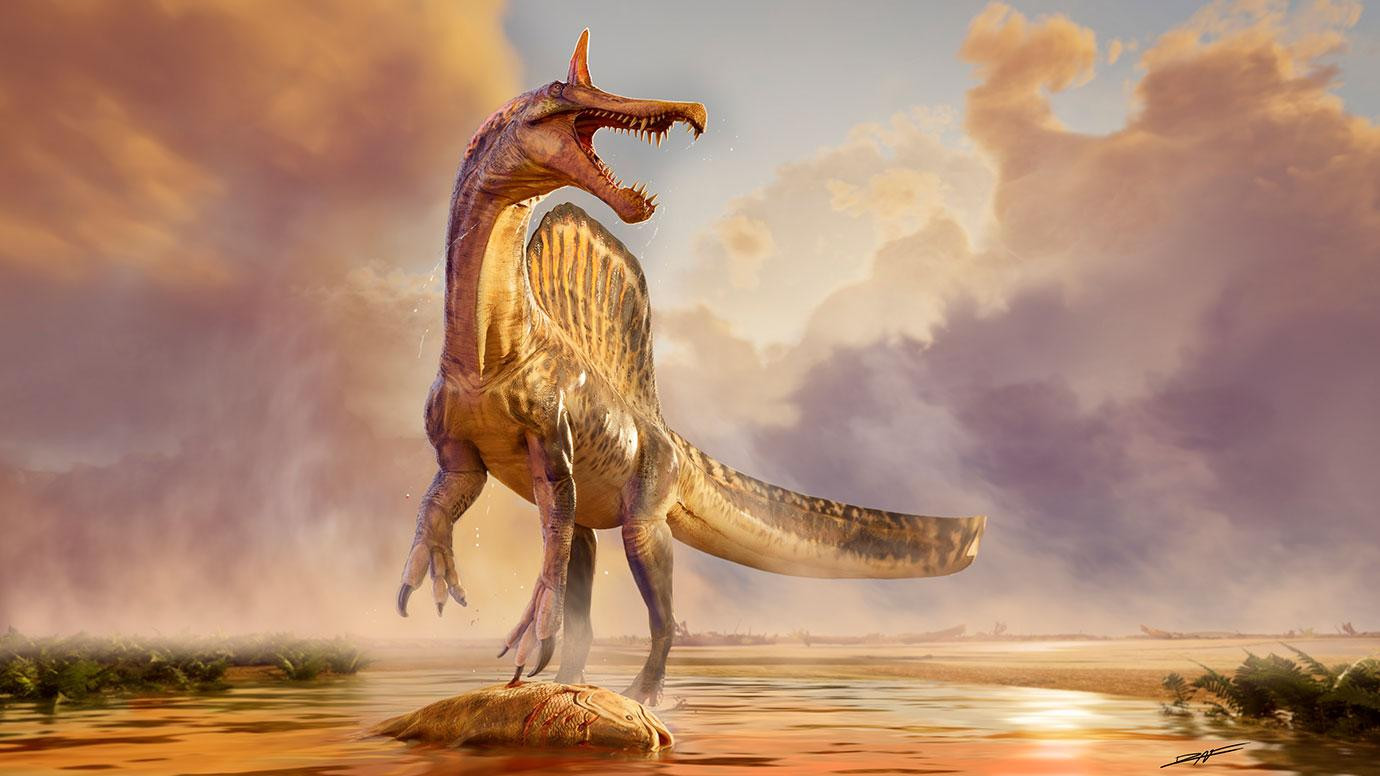
Scientists have identified a novel species of Spinosaurus that is reshaping our perception of this famous dinosaur once roaming the region now known as Niger around 95 million years ago. Featuring a unique scimitar-shaped crest atop its head and an extensive sail on its back, these fossils challenge the longstanding idea that Spinosaurus was a proficient swimmer. Current findings indicate this dinosaur more often waded through river waters than ventured into open aquatic environments.
Discovered within a remote inland river network, the remains depict a predator thriving well away from coastal areas. Led by paleontologist Paul Sereno from the University of Chicago, the research team proposes that Spinosaurus mirabilis was specialized for hunting in shallow waters, countering previous beliefs of it being primarily aquatic.
Exploring the Origins of Spinosaurus mirabilis
The fossils of Spinosaurus mirabilis were unearthed in 2019 with the assistance of a Tuareg guide in the Sahara Desert. These remains were unlike any other encountered by Paul Sereno and his colleagues. Their striking black color indicated an unusual high phosphate content, a rare regional characteristic. Having spent over twenty years in the desert, Sereno recalled:

“This find was so sudden and amazing, it was really emotional for our team,” he remarked, ” I’ll forever cherish the moment in camp when we crowded around a laptop to look at the new species for the first time.”
The fossilized jawbones and skull segments pointed to a creature inhabiting a distant river ecosystem, hundreds of miles inland from any coastline.
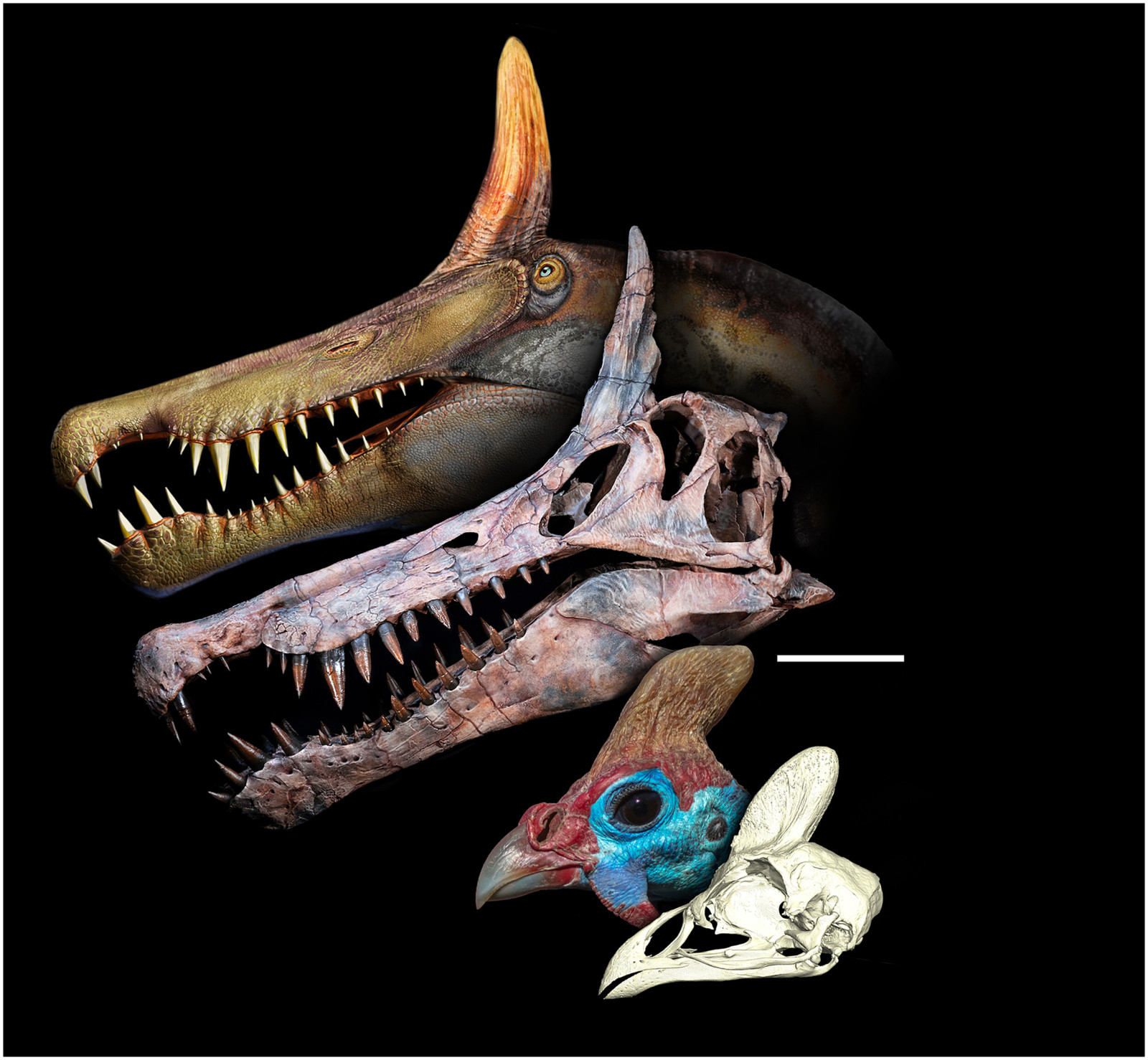
When revisiting the site in 2022, the team uncovered a partial head crest that immediately drew attention. Advanced CT scans and 3D modeling revealed preserved blood vessels, indicating the crest was sheathed in keratin, similar to bird beaks. Measuring nearly half a meter in height, it was likely the largest head crest among carnivorous dinosaurs. Sereno confessed their initial view of the crest was that it looked “odd” and asymmetrical, but it ultimately confirmed a distinct new species with exclusive characteristics.
The Function of the Scimitar-Shaped Crest
What role did this impressive, curved crest play? Scientists hypothesize it was primarily used for social interactions. While the exact function remains uncertain, it likely aided Spinosaurus mirabilis in communicating with other members of its species, particularly for courtship or territorial displays. Its irregular shape made it visually striking, and a recent study in Science suggests it may have served for visual signaling similar to how modern animals employ vivid colors.
Researchers propose that this elaborate structure functioned like the ornate feathers on peacocks or cock’s combs, either attracting mates or intimidating competitors.
Reevaluating Spinosaurus as a Swimmer
For a long time, the debate has revolved around whether Spinosaurus was truly adapted for underwater hunting, behaving like modern crocodilians or seals by swimming to catch fish. Yet, the inland river fossil finds have led Sereno and colleagues to reconsider the dinosaur’s lifestyle. The evidence points toward Spinosaurus not requiring swimming abilities to prosper in its habitat. In Sereno’s own words:
“I envision this dinosaur as a kind of ‘hell heron’ that had no problem wading on its sturdy legs into two meters of water but probably spent most of its time stalking shallower traps for the many large fish of the day.”
The distinctive sail would have hindered swimming efficiency, adding bulk and water resistance. Sereno emphasized that although Spinosaurus probably spent time in the water, it was more likely wading through shallow zones to capture large fish rather than diving beneath the surface as some had theorized.
- Categories:
- Science






0 comments
Sign in to Comment