
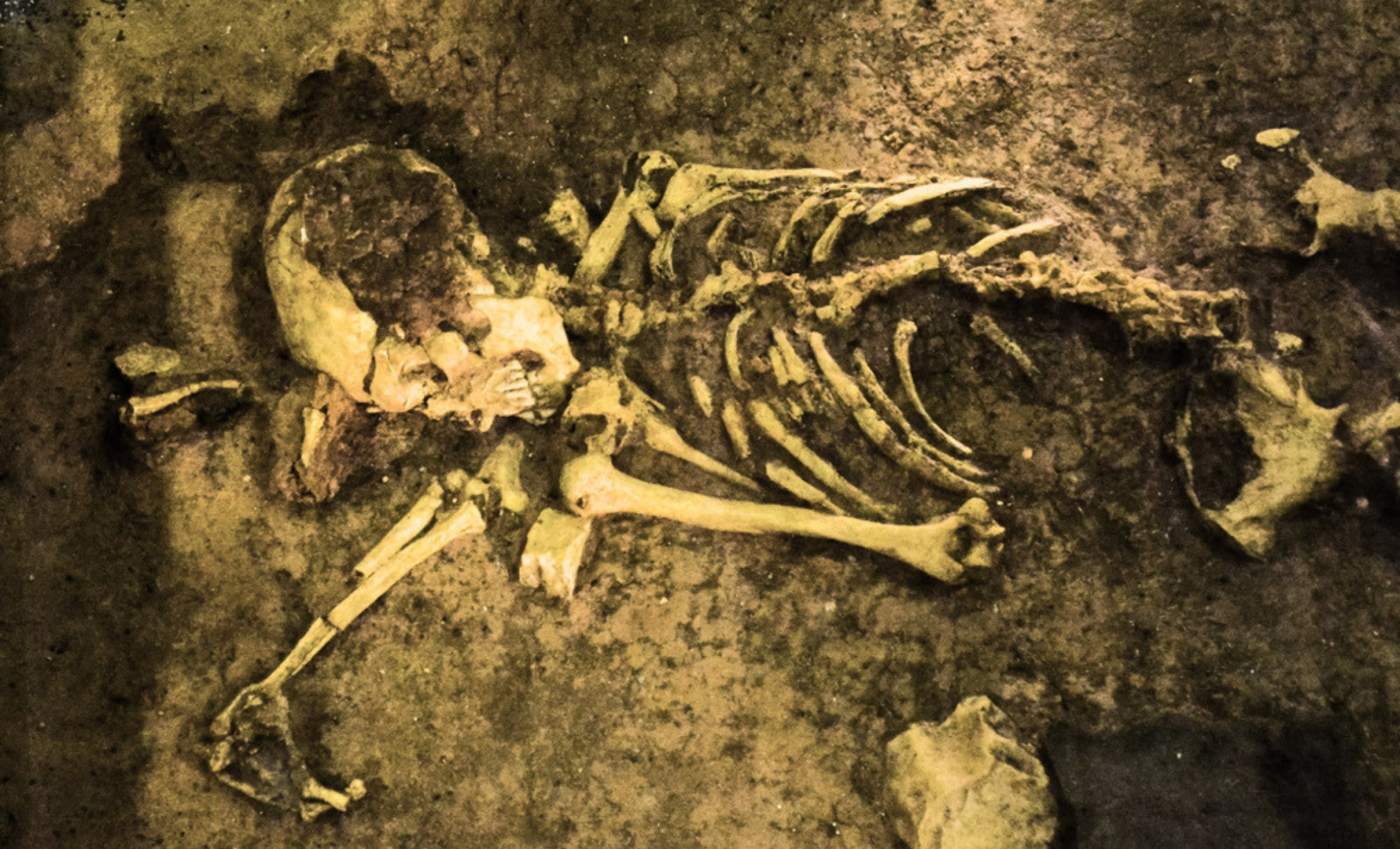
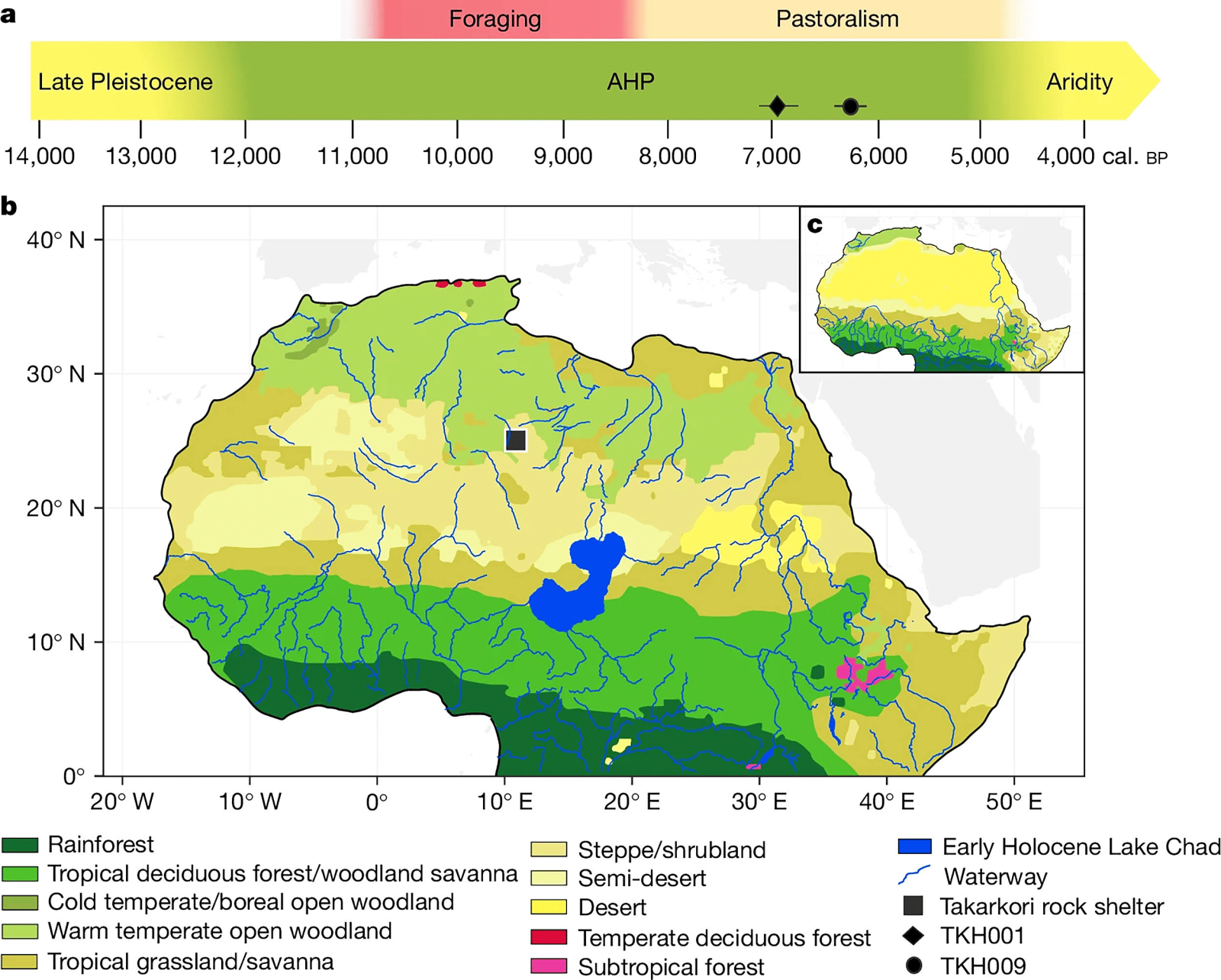
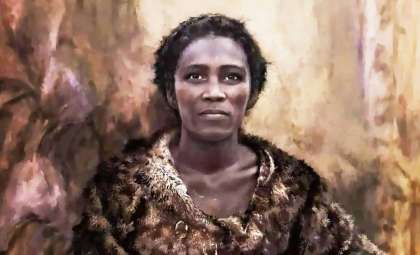
Buried roughly 7,000 years ago within a Libyan rock shelter, two women lived during the African Humid Period, when the Sahara Desert was a lush landscape filled with lakes, rivers, and expansive savannahs that supported thriving human communities, fishing, and animal husbandry in what is now an extreme desert environment.
Contrary to expectations, DNA extracted from these naturally preserved remains found at the Takarkori rock shelter unveils an entirely new North African genetic branch. These pastoralist herders’ genomes reveal they remained genetically secluded for thousands of years, exhibiting no significant gene flow from either sub-Saharan African groups to the south or from Near Eastern and European populations from the north.
Published in the journal Nature, this discovery challenges the traditional view that the Green Sahara functioned as a major migration route connecting distinct African populations. “These findings imply a profound genetic isolation despite engaging in animal herding, a practice introduced from outside Africa,” explained Johannes Krause, a geneticist at the Max Planck Institute for Evolutionary Anthropology and lead author, in an interview with Reuters.

A Genetic Lineage Preserved Through Millennia
The genomes from Takarkori trace back to a lineage diverging from sub-Saharan African populations roughly 50,000 years ago, coinciding with the global expansion of modern humans beyond Africa into Eurasia.
Describing the samples as "nearly like living fossils," Krause told BBC Science Focus, “Had I been told these genomes were 40,000 years old, it wouldn’t have seemed surprising.” The Max Planck Institute highlighted that this isolated lineage reflects enduring genetic continuity across North Africa during the late Ice Age.
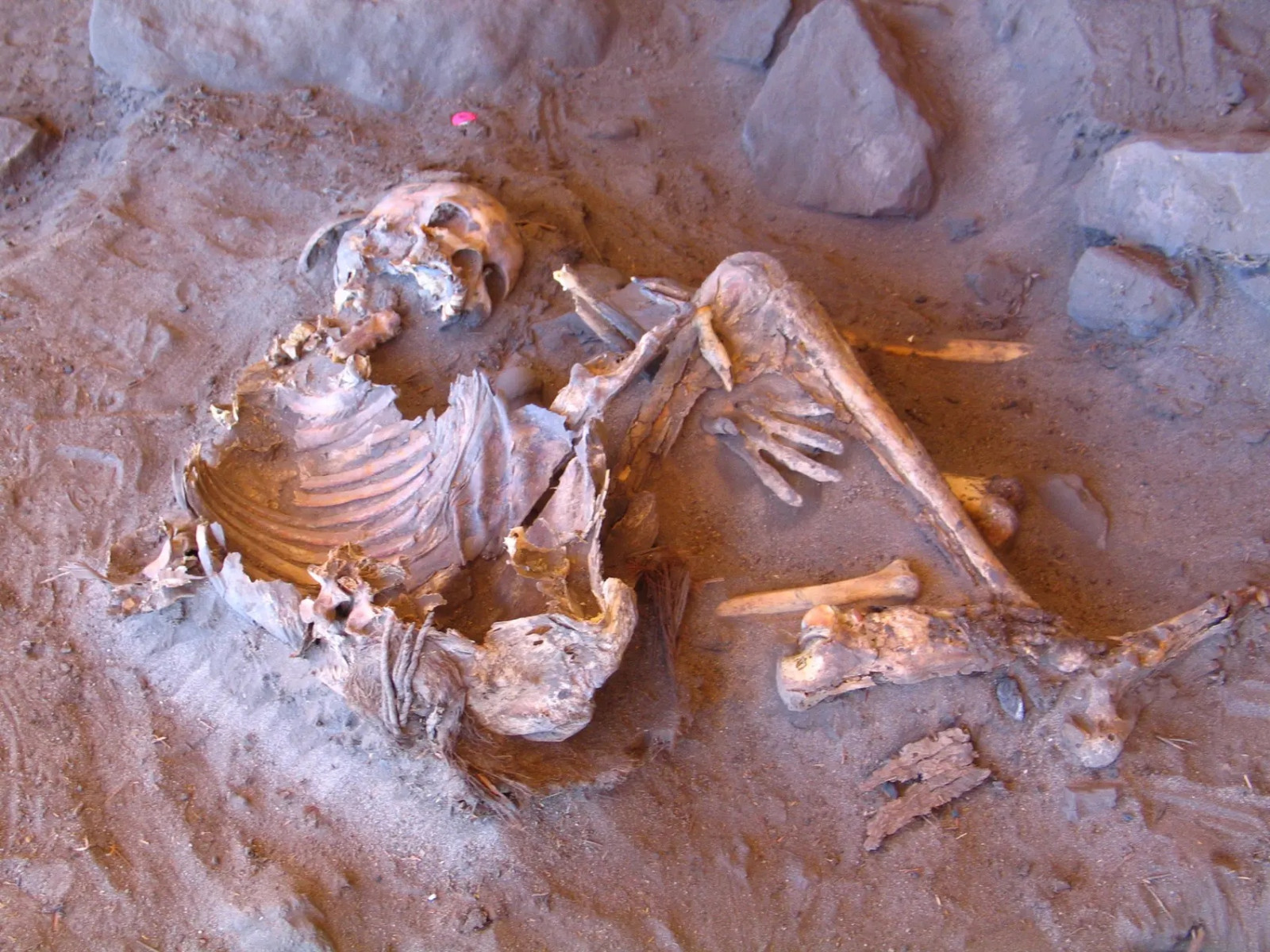
The DNA evidence from these two women, aged around 40 at death, indicates this isolation was sustained over their lineage’s history. Analysis of Neanderthal DNA revealed minimal traces—about 0.15 percent of their genome.
This is tenfold lower than the levels detected in Levantine farmers and other populations outside Africa, yet slightly above what is observed in modern sub-Saharan African genomes, hinting at infrequent but ancient interactions beyond North Africa.
Pastoralism Adopted Without Population Replacement
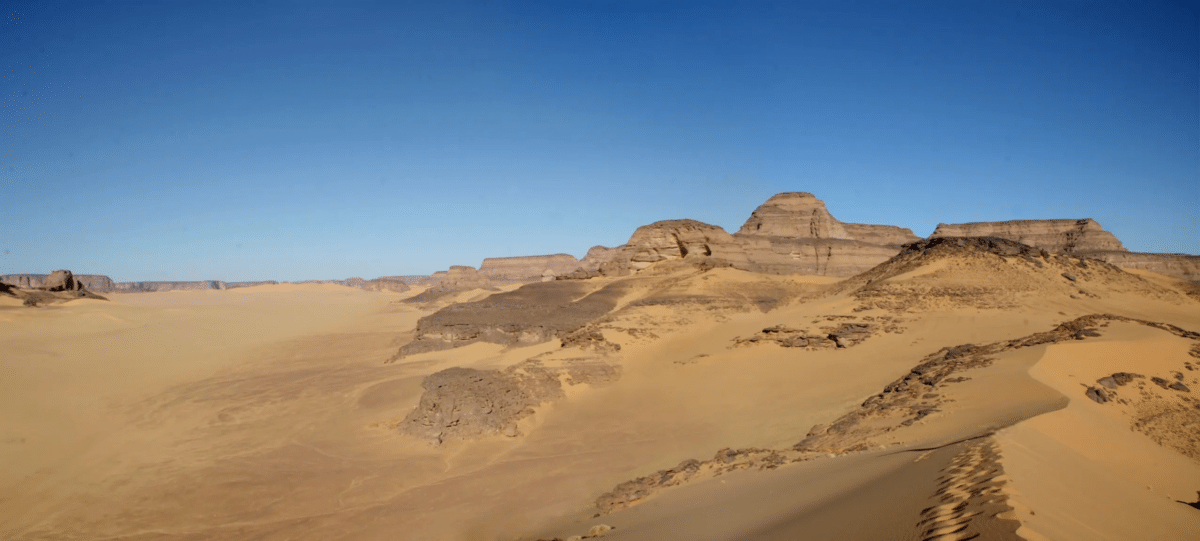
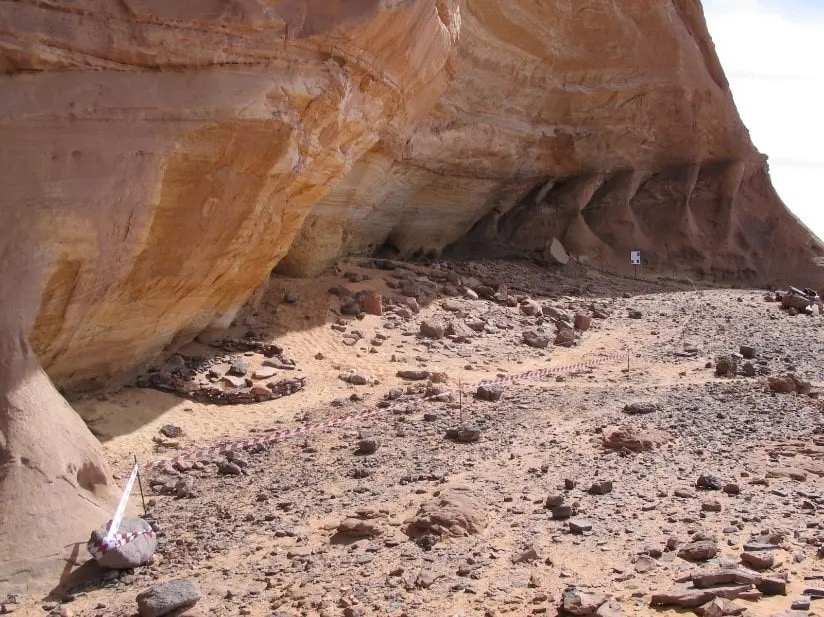
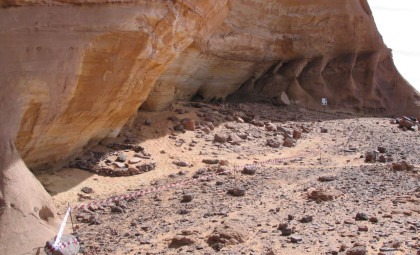
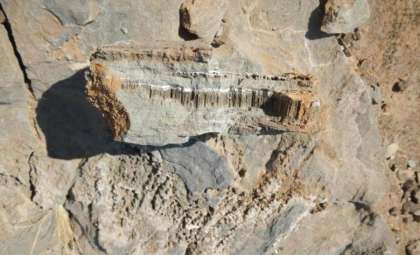
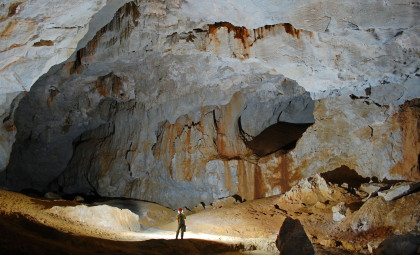
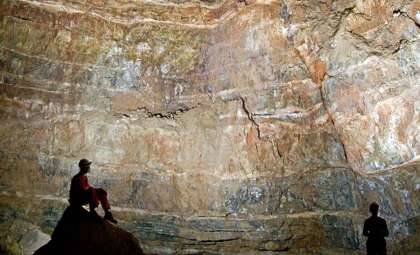
The archaeological site nestled in the Tadrart Acacus Mountains near Libya’s border with Algeria has yielded a comprehensive human record. This rock shelter holds 15 burials spanning from hunter-gatherer-fisher groups around 10,200 years ago, through a prolonged Pastoral Neolithic phase ending about 4,200 years ago.
The two females studied for ancient DNA belonged to the Middle Pastoral Era. Their mummified remains preserved skin, ligaments, and tissue perfectly. Excavations also uncovered stone tools, wooden artifacts, bones, pottery, woven baskets, and carved figurines within the shelter.
These genetic results address a longstanding archaeological question: Did herding traditions spread through migrating groups or local adoption? The data strongly support cultural diffusion—local people embraced livestock management, including goats and sheep, without being replaced genetically by newcomers.
Nada Salem from the Max Planck Institute and principal author stated that this research “demonstrates pastoralism’s spread across the Green Sahara was likely driven by cultural exchange rather than mass movement of people.”
Reevaluating the Origins of North African Foragers
The genomes also shed light on the ancestry of an older North African population. The 15,000-year-old individuals from Taforalt Cave in Morocco—tied to the Iberomaurusian culture—have long been an enigmatic group. Earlier studies suggested their origin involved about 63.5% Natufian ancestry from the Levant mixed with 36.5% unidentified sub-Saharan heritage.
The new findings replace that unknown contribution with a Takarkori-related North African lineage. The revised breakdown estimates nearly 60% Natufian and 40% Takarkori-like ancestry in the Taforalt population.
Both Taforalt and Takarkori samples share equal genetic distance from sub-Saharan African lineages, indicating that even amid the Sahara's humid periods, significant genetic mixing between northern and southern African populations was limited. The Sahara’s green phases did not become major conduits for human migrations.
Echoes of a Vanished Population
The Takarkori genetic line disappeared roughly 5,000 years ago as the African Humid Period ended, and the Sahara returned to desert conditions. Although this population vanished from archaeological records, its DNA lingers within modern North African populations.
The study identified stronger genetic links between the Takarkori lineage and some Sahelian groups, including Fulani herders across several countries. This fits archaeological models suggesting pastoral groups moved southward as the Central Sahara dried out. Researchers were startled by the minimal gene flow, challenging prior beliefs about the Green Sahara as a human passageway.
Mary Prendergast, an anthropologist at Rice University unaffiliated with the study, highlighted that such research is beginning to uncover the intricate human histories of Africa, revealing lineages barely visible in today's genomes. She noted, “Small sample sizes can profoundly influence our understanding of the distant past.”
The Takarkori human remains are preserved at the Museum of Anthropology at the University of Rome, La Sapienza.
- Categories:
- Science






0 comments
Sign in to Comment