
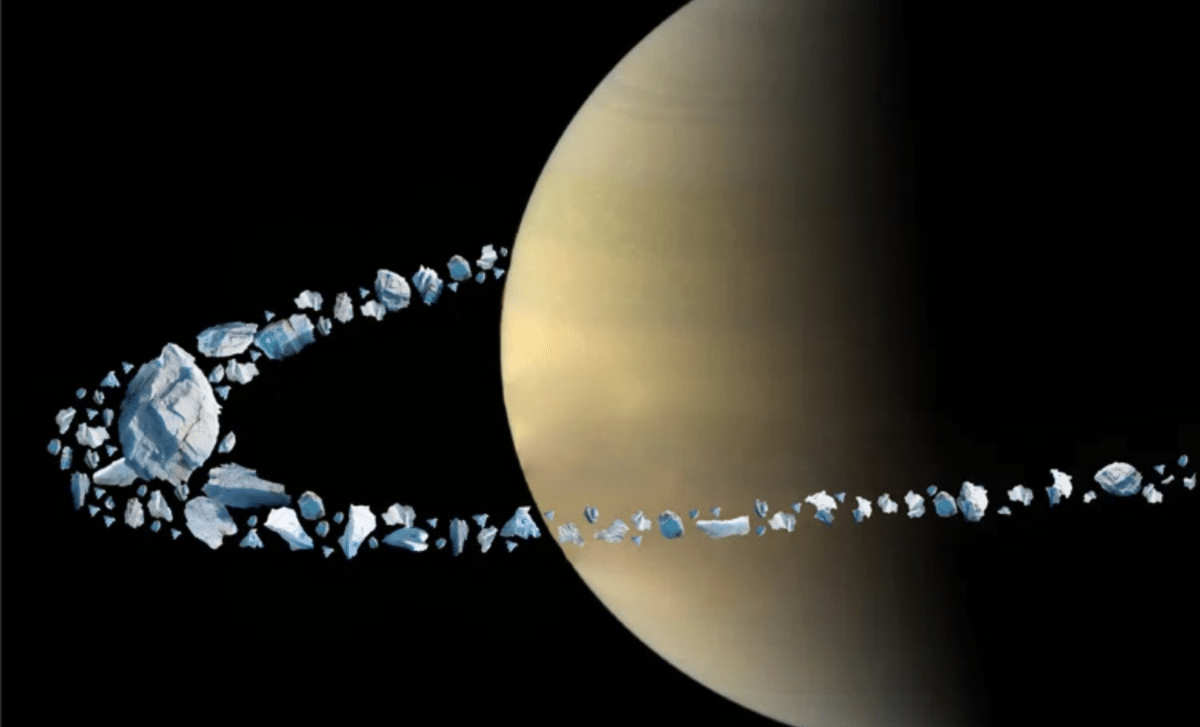
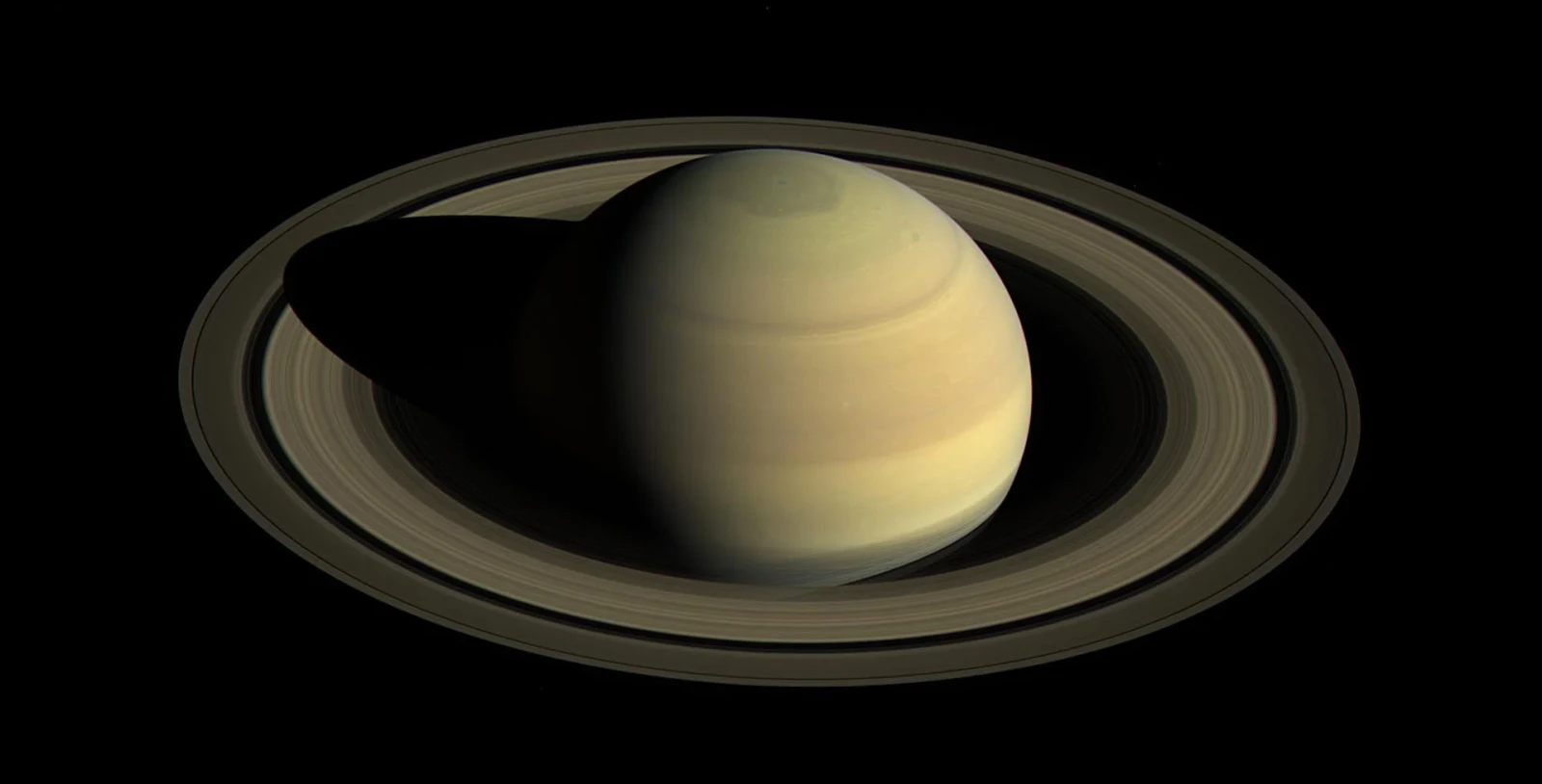
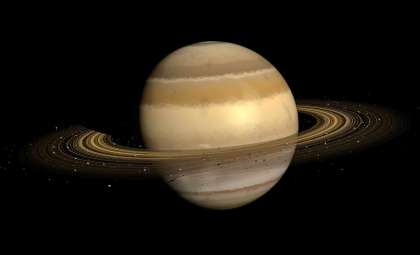
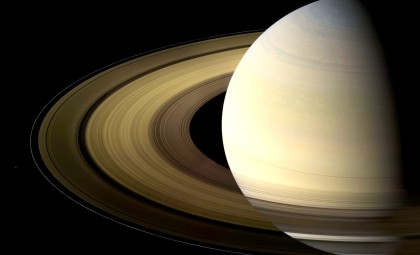
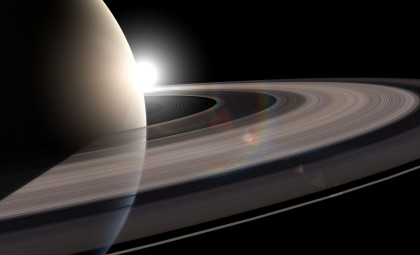
Saturn's breathtaking rings have fascinated observers for hundreds of years, visible even through Earth-based telescopes. Despite their fame, their origin has remained a subject of debate. Did a cataclysmic event create them, or did they form through another process? New research unveiled at the 57th Lunar and Planetary Science Conference proposes an intriguing explanation. A collaboration of scientists from the US and China suggests that an old moon named “Chrysalis” was gravitationally torn apart by Saturn, giving rise to its famous icy rings.
Introducing the Lost Moon Chrysalis
The researchers focus on a theoretical moon, Chrysalis, once orbiting Saturn. They estimate this moon was comparable in size to Saturn’s moon Iapetus, measuring about 1,469 kilometers (913 miles) across. By applying advanced computer simulations, they explored how Chrysalis might have broken apart. Their model paints it as an icy, rocky body with a mixed composition resembling moons like Dione and Iapetus within the Saturnian system.
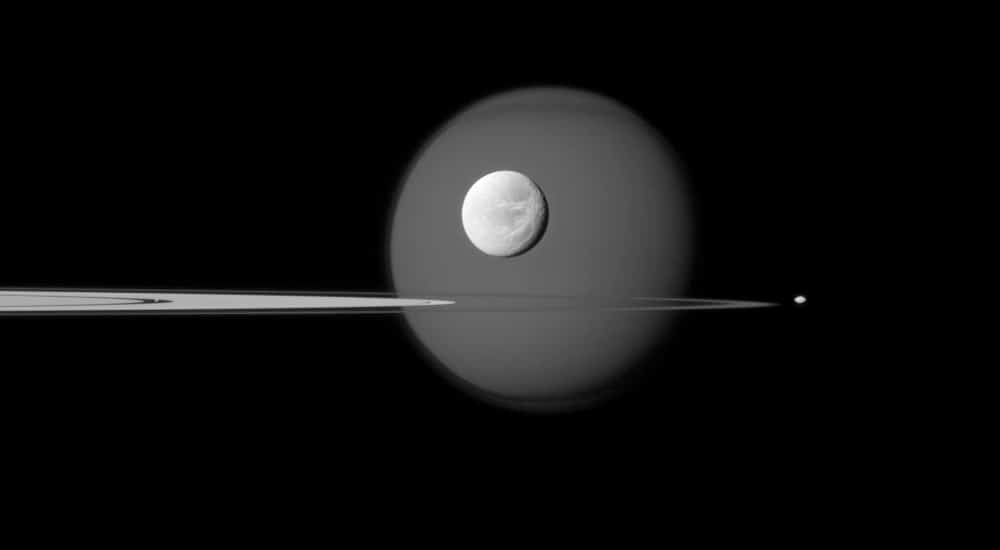
Chrysalis met its demise after venturing inside Saturn’s Roche limit, the boundary where tidal forces overpower an orbiting body’s structural cohesion. Once past this boundary, Saturn’s immense pull shattered the moon, scattering debris that eventually assembled into the rings we admire today.

The Role of the Roche Limit in Chrysalis’s End
As explained by Universe Today, the Roche limit defines the critical distance where Saturn’s gravity would disrupt a moon’s integrity. For icy bodies like Chrysalis, this threshold lies roughly 1 to 1.5 times Saturn’s radius. The study’s orbital models indicate that at certain points, Chrysalis crossed this limit, condemning it to break apart.
The simulations reveal that while some debris may have escaped Saturn’s grasp, much of the shattered fragments coalesced to form the precursor of today’s spectacular ring system.
Evolution of Saturn’s Expansive Rings
Findings also imply that Saturn’s rings were once far more extensive than their current appearance suggests. Early on, the rings might have spanned a vast area, possibly visible even to large prehistoric creatures like Titanosaurs. Over geological time, gravitational interactions with major moons such as Titan gradually eroded and reshaped the rings, reducing their size and influencing their present-day structure.
Remarkably, large chunks of the broken Chrysalis moon may have also collided with existing moons, producing impact scars evident on their surfaces. Investigating these collisions could illuminate the violent history shared among Saturn’s moons.
Significance for Broader Planetary Science and Exoplanets
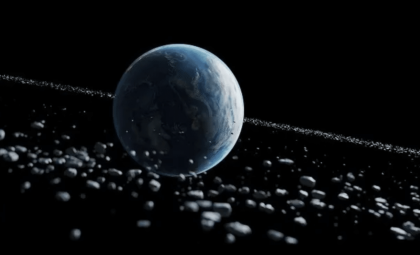
While centered on Saturn, this study bears wider importance. Understanding how Saturn’s rings formed offers clues about similar ring systems, both within our solar system and beyond, around exoplanets. Some extrasolar planets exhibit ring systems dwarfing Saturn’s in size.
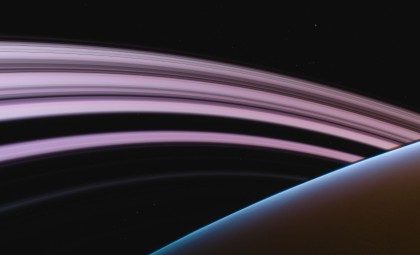
An extraordinary example is the exoplanet J1407b, nicknamed “Super-Saturn.” Positioned about 434 light-years away, its rings are estimated to be 200 times larger than Saturn’s. Insights from Saturn and Chrysalis will help decode how such colossal rings form and change on distant worlds, enriching our comprehension of exoplanetary environments and atmospheres.
Advancing the Understanding of Saturn’s Enigmatic Rings
Presented at the 57th Lunar and Planetary Science Conference, this research marks a notable leap in unraveling the story behind Saturn’s rings. Several questions remain, like the fate of the largest Chrysalis fragments and their impact on the evolution of Saturn’s moons, but the evidence strongly supports the ancient moon origin theory. Ongoing studies aim to address these unresolved issues and deepen our grasp of planetary formation processes across the cosmos.
This work not only expands our knowledge of Saturn’s majestic rings but also enhances understanding of how planets and moons form throughout the universe. As observational technology advances and discoveries continue, this theory could become a cornerstone in humanity's quest to decipher the cosmos.
- Categories:
- Astronomy


0 comments
Sign in to Comment