
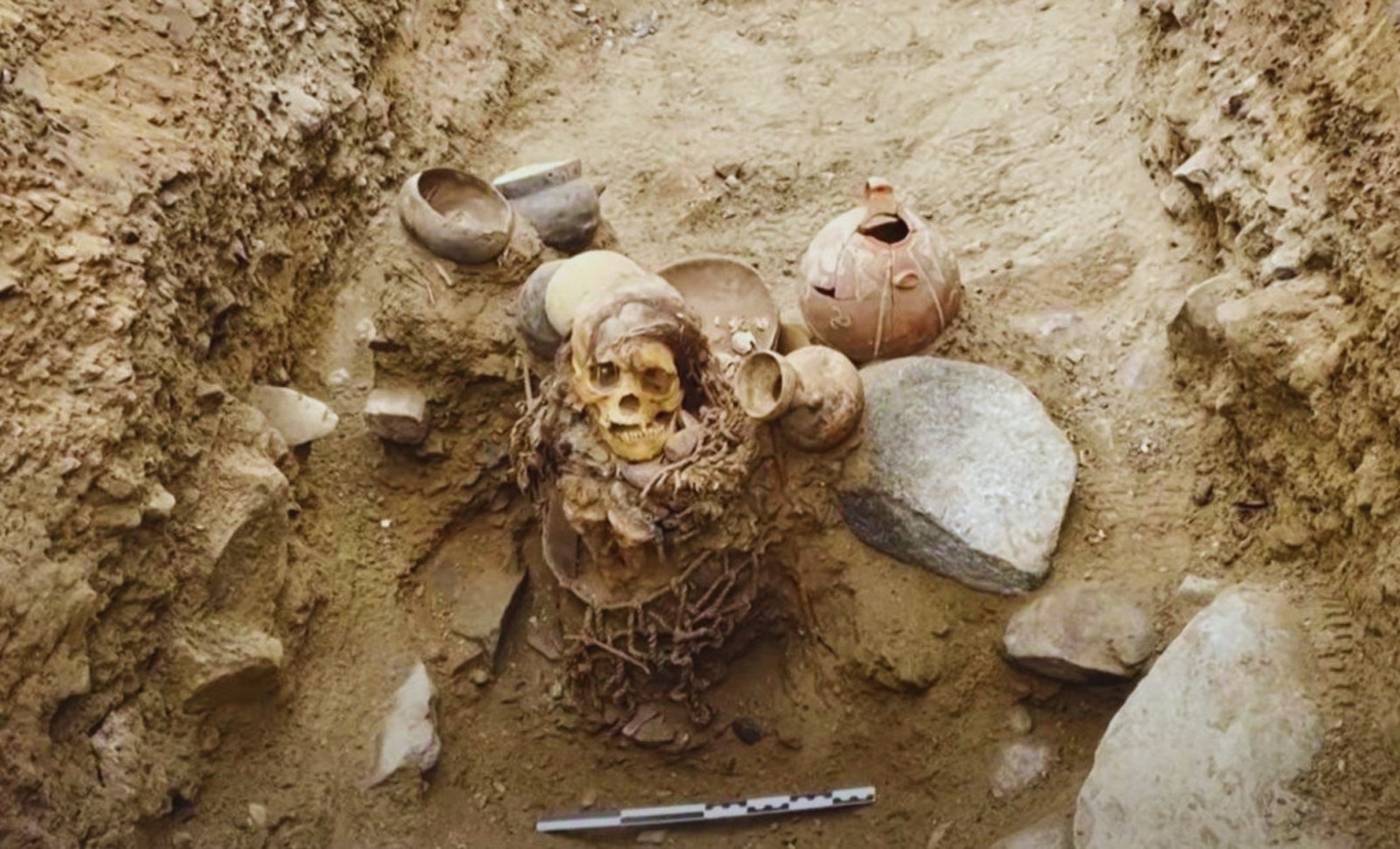
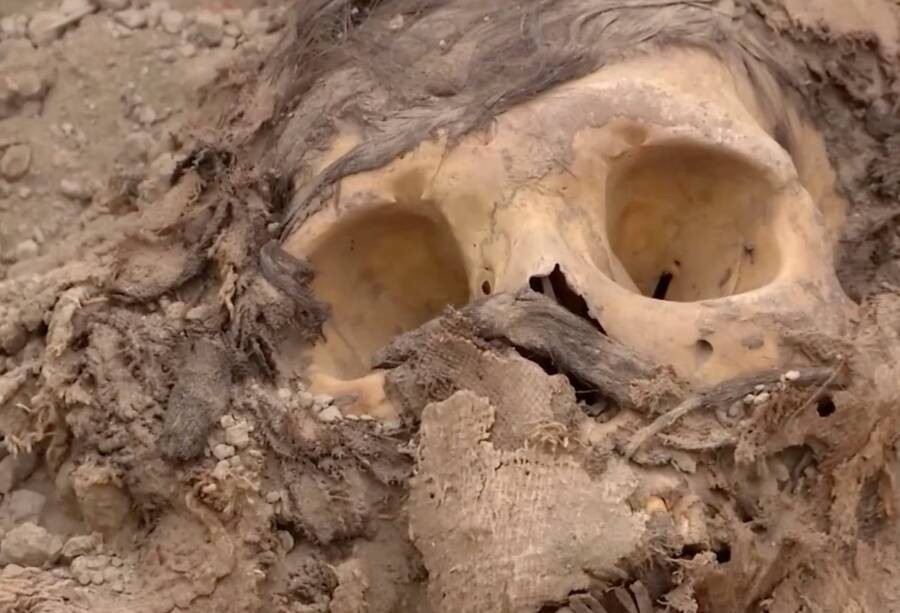
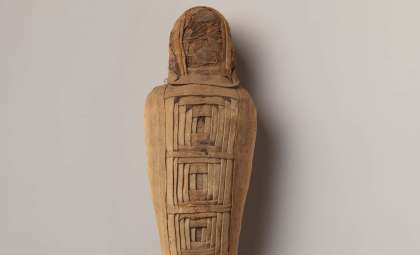
During routine trench digging for a natural gas installation in Lima, Peru, utility workers stumbled upon a remarkably preserved mummy estimated to be around 1,000 years old. The striking find, which includes dark brown hair still intact, was located at a shallow depth just 20 inches beneath the city’s surface. Specialists have attributed the specimen to the Chancay culture, an ancient civilization that existed well before the rise of the Inca Empire.
This remarkable discovery has drawn significant interest due to both its exceptional preservation and its unexpected setting within Lima, a bustling megacity of over 10 million residents. Beneath the urban sprawl, the capital is layered with numerous archaeological treasures that chronicle Peru’s rich historical tapestry.
Delving Into Lima’s Ancient Past
The mummy surfaced in Puente Piedra, a district on Lima’s outskirts, amid excavation efforts by the utility firm Cálidda. Employed to lay down a natural gas pipeline, the workers uncovered the remains positioned upright—a burial posture characteristic of the Chancay culture. The intact dark hair of the mummy further underscores the preservation quality. Dating back approximately 1,000 years, this find predates Inca dominance by several centuries.

José Aliaga, an archaeologist collaborating with Cálidda, notes that such encounters frequently happen during construction, given Lima’s location atop ancient ceremonial and burial sites.
“It is very common to find archaeological remains on the Peruvian coast, including Lima, mainly funerary elements: tombs, burials, and, among these, mummified individuals,” said Pieter Van Dalen, dean of the College of Archaeologists of Peru
The Chancay civilization, known for its predominance along the central Peruvian coast, has left behind a rich legacy including mummified bodies, distinctive pottery, and finely woven textiles.
Exploring the Legacy of Pre-Incan Societies
The Chancay people are recognized for their unique funerary customs of positioning bodies in seated postures with covered faces. The arid coastal environment naturally contributed to the mummification process. The mummy recently uncovered in Lima exhibits these traits, highlighting its origin between 1000 and 1470 A.D., predating Incan rule.
Researchers are focused on gaining insights into Chancay mortuary traditions and societal structures. Archaeologist Miguel Aguilar suggested that the individual may have been deposited or offered as a ritual sacrifice during a temple’s final stages, estimated to be around 3,000 years ago.
Lima’s Abundant Archaeological Heritage
Hosting more than 400 documented archaeological locales, Lima ranks among South America’s richest repositories of ancient history. Despite its modern urban sprawl, the city occupies ground once inhabited by diverse cultures that predate even the Inca.
Aliaga highlights the city’s advantageous geographic setting near the Andes and historical water sources as a driving factor for early populations settling in this fertile region.
“In Lima, 3,000 years of history are literally just beneath our feet,” said Cecilia Camargo, an archaeologist with Cálidda. “We’ve made discoveries in nearly every district.” The city’s urban expansion is regularly accompanied by new archaeological treasures, revealing layers of history just under the surface.
- Categories:
- Science






0 comments
Sign in to Comment