
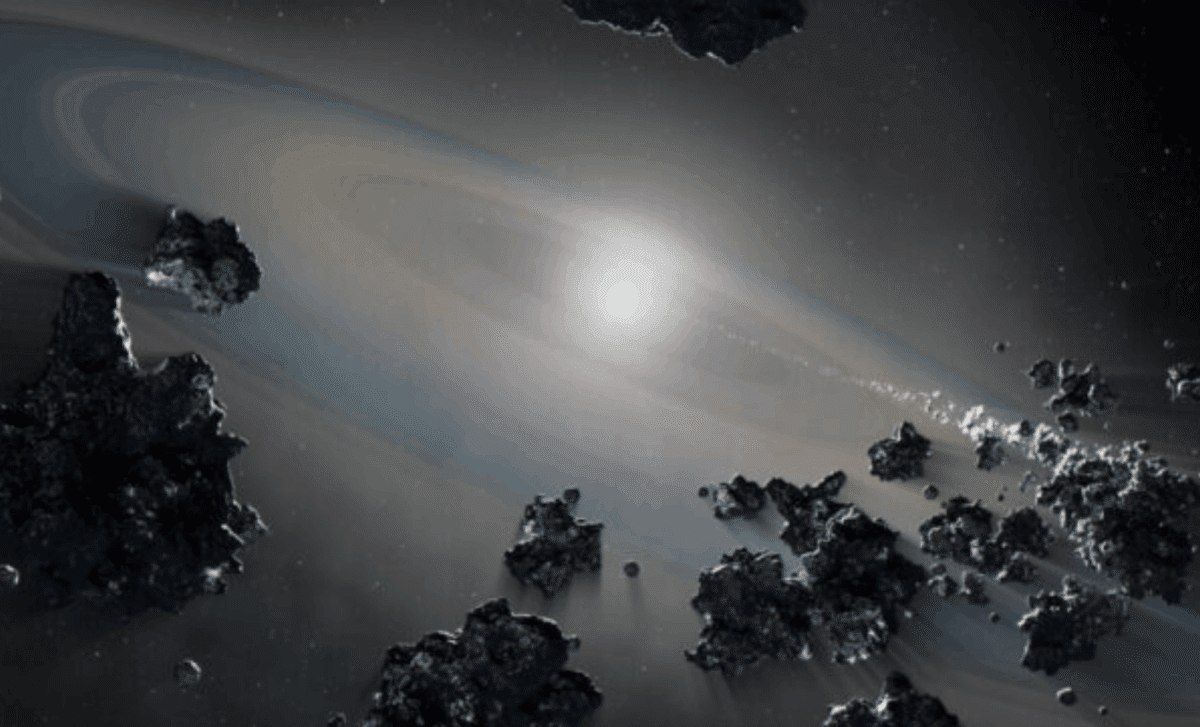
Although a star’s final moments may seem peaceful, the aftermath can be exceptionally turbulent. Scientists have identified a star very similar to our Sun that, billions of years after its own death, devoured one of its former planets. Remarkably, signs of this long-ago cosmic feast persist within the star’s atmosphere today. This discovery, featured in The Astrophysical Journal, provides an invaluable glimpse into the inner layers of distant exoplanets.
The Lingering Evidence of a Destroyed World in a White Dwarf’s Atmosphere
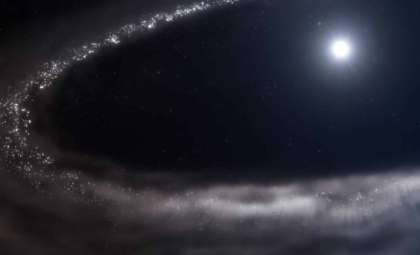
Located far from Earth in the Triangulum constellation, a white dwarf called LSPM J0207+3331 appears at first like a typical sun-like stellar remnant. However, within its hydrogen-dominated atmosphere, astronomers uncovered something extraordinary: the chemical traces of a planet it had swallowed. Observations from the W. M. Keck Observatory on Mauna Kea, Hawaiʻi, revealed an unprecedented presence of 13 heavy elements—more than ever detected in a white dwarf of this category.
This breakthrough, published in The Astrophysical Journal, challenges current theories regarding planetary system evolution and white dwarf chemistry.

“Their atmospheres are more opaque, and heavy elements sink quickly toward the star’s center. We expected to see only a few elements,” explains Érika Le Bourdais from the University of Montreal, lead author of the study.
Instead, the spectral data revealed elements characteristic of a planetary core, including iron and nickel. These materials clearly originated from a former planet the star ingested.
Unraveling the Composition of the Consumed Planet
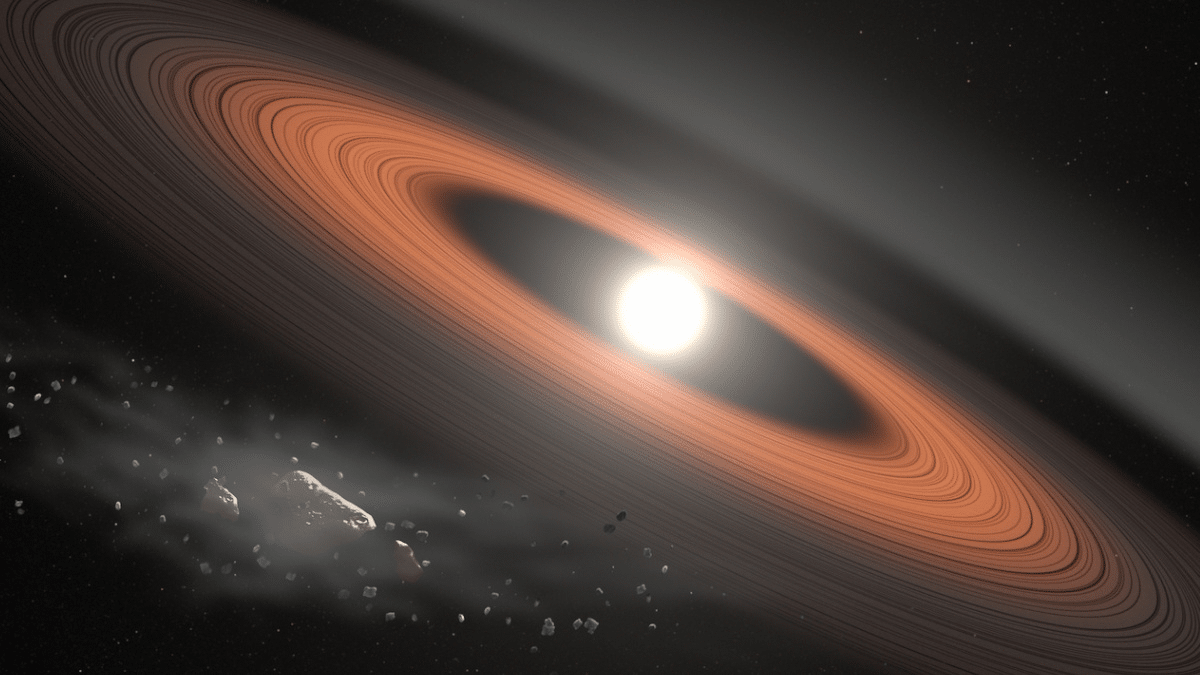
The evidence not only identified a destroyed planet but also revealed insights into its inner structure. Analysis indicates the planet possessed a metallic core coupled with a rocky outer layer, bearing resemblance to Earth's composition. Estimates suggest this body was at least 200 kilometers in diameter and had a core mass ratio of 55 percent, nearly double that of Earth and approaching that of Mercury at 70 percent. This suggests the planet experienced intense heating or gravitational effects.
Notably, these heavy elements were detected in the atmosphere of a relatively cool, hydrogen-rich white dwarf, where such compounds normally vanish within days. Their presence implies a recent event that brought debris into the star’s outer layers, leaving behind a compositional record. For researchers, this offers a rare and direct probe into the mineral makeup of distant exoplanets, something conventional telescopes cannot achieve.
Delayed Planetary Disruption After a Star’s Death
One of the most intriguing questions is how a planet could plunge into its star billions of years post mortem, after the star had settled into a white dwarf state. According to John Debes from the Space Telescope Science Institute,
“Something clearly disturbed this system long after the star’s death.”
This disturbance may have been caused by gravitational interactions with other sizable planets, such as a Jupiter-sized companion nudging smaller worlds into destabilized orbits.
“This delayed instability,” Debes adds, “could point to long-term dynamical processes we don’t yet fully understand.”
As stars evolve and lose mass, the gravitational balance shifts, potentially forcing planets previously in stable paths to drift inward toward the central star—even one long dead. This underscores that planetary systems remain dynamically complex after their stars expire, sometimes with unpredictable and dramatic consequences.
Using Stellar Death to Explore Exoplanet Interiors
Paradoxically, the destruction of planets around white dwarfs provides a unique tool for exoplanet science. While telescope missions like JWST can analyze the atmospheres of distant worlds, deciphering their internal composition is normally impossible—unless those planets are fragmented. When such debris falls onto a white dwarf, it contaminates the star’s atmosphere, revealing distinctive elements ranging from calcium and chromium to silicon and iron. These chemical signatures effectively map the planetary interior of objects that no longer exist.
Researchers aim to find more examples by reviewing data from observatories like Gaia and conducting upcoming infrared surveys. Each discovery could deepen our understanding not only of exoplanet interiors but also the ongoing dynamics that govern their survival or demise around dead stars. Together, these studies help build a broader perspective on how planetary systems form, develop, and fade across the galaxy.
- Categories:
- Space










0 comments
Sign in to Comment