
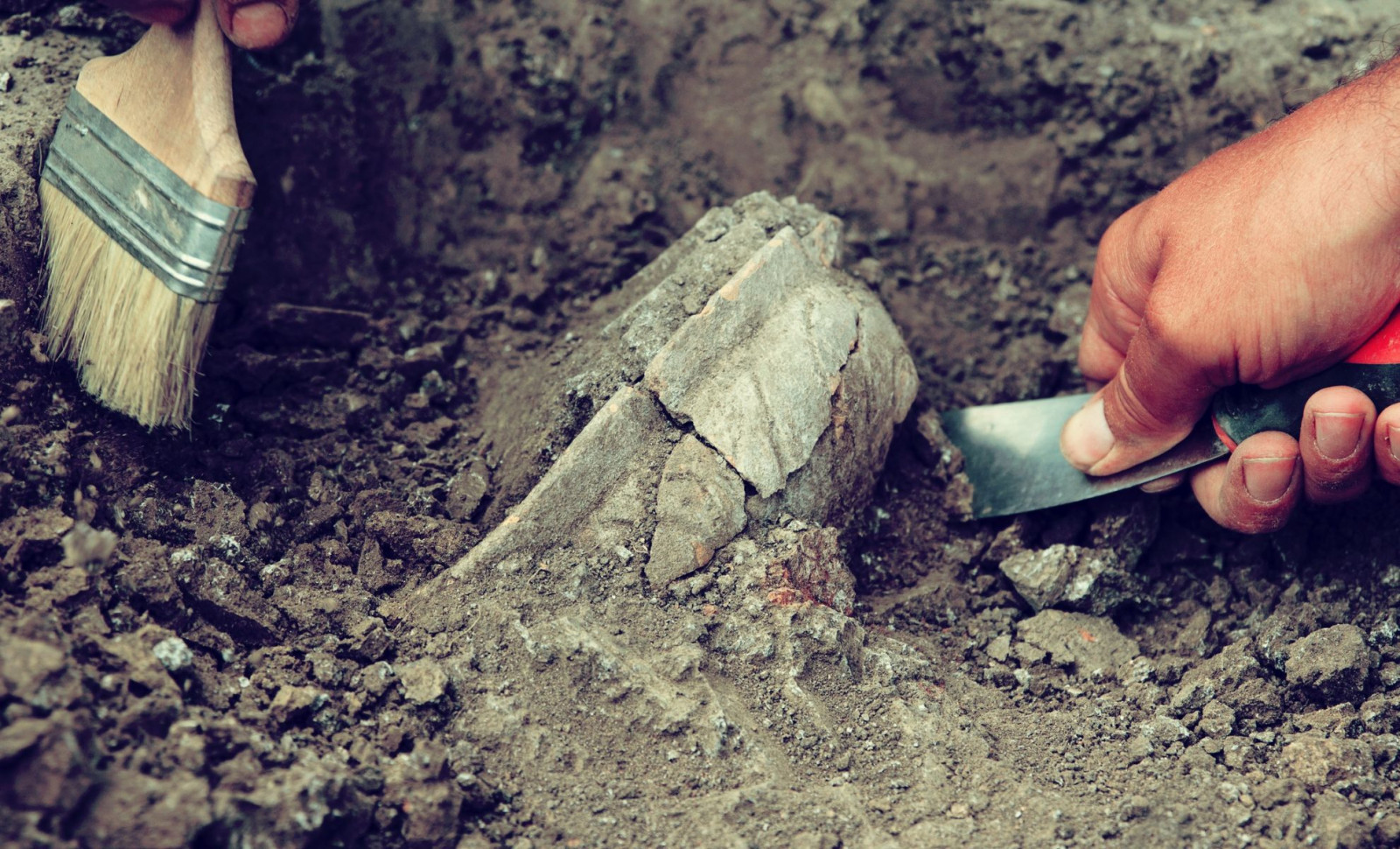
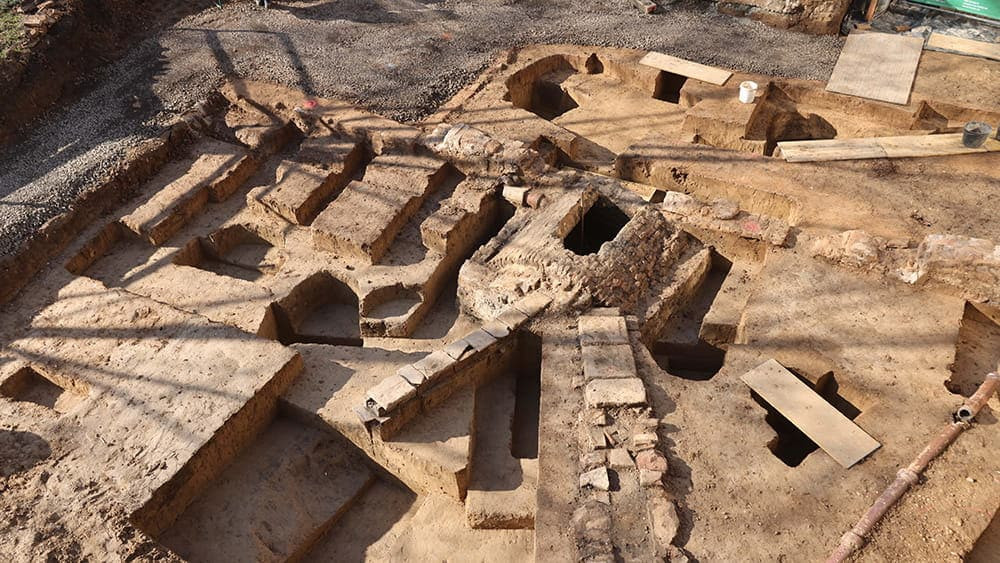
In Frankfurt, routine refurbishment work has unveiled a remarkable archaeological treasure: a Roman military camp dating back over two millennia, concealed beneath the garden of a historic estate. This extraordinary discovery took place at the Bolongaro Palace located in the Höchst neighborhood, roughly five miles west of central Frankfurt.
Following nearly ten years of efforts to restore the estate and repurpose it as a museum, specialists from the Department of Archaeological Heritage Management uncovered vestiges of the Roman encampment, alongside various relics that illuminate the site's extensive past.
Frankfurt's mayor, Mike Josef, emphasized that the location enhances understanding of both Roman expansion and the early foundations of Frankfurt, offering historians invaluable insights into this pivotal era.

Frankfurt's First Roman Military Site Discovered
This excavation represents a historic milestone: the inaugural confirmed discovery of a Roman military camp in the Frankfurt region. As detailed in a Popular Mechanics article, the find offers tangible proof of a sustained Roman footprint during the Augustan period. In a translated statement, Mike Josef shared insights at the unveiling:
“The remains of a military camp dating back to around the year 0 are of significance extending far beyond the immediate region.” He added that, “this archaeological site allows us to trace not only the development and expansion of the Roman Empire in our area, but also a piece of the history of the city of Frankfurt itself.”
Excavations revealed artifacts such as coins originating from regions now known as France and Belgium and ceramics from South Gaul, underscoring the camp’s links to extensive Roman trade and supply chains. These artifacts imply that the site was inhabited over an extended period, distinguishing it from many contemporary Roman camps that were transient and rarely left lasting traces.
Coexistence: Romans and Locals in Harmony
An especially intriguing aspect of the find is the absence of any signs of warfare or destruction. Andrea Hampel, head of the Monuments Authority, notes that, alongside Roman artifacts, indigenous pottery and dietary evidence suggest peaceful interaction between Roman soldiers and native inhabitants.
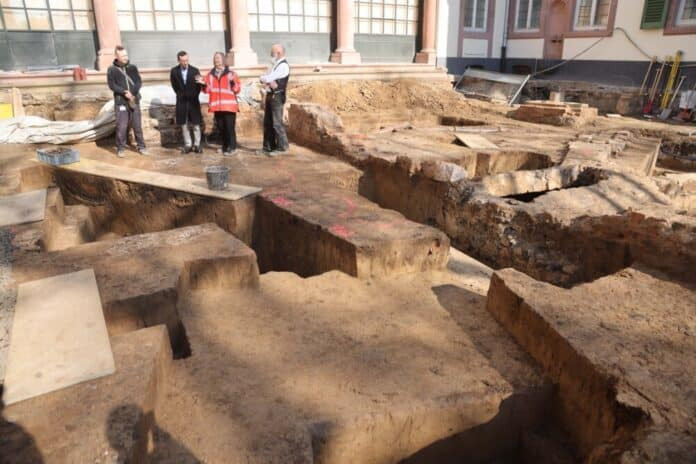
Hampel highlights that while Roman expansion is often associated with conflict, the Höchst findings prompt a reassessment of early contacts between Romans and locals:
“We must rethink our perspective on the era of initial contact between the Romans and the ‘Frankfurters.’ It may well have been far more peaceful and characterized by curiosity than previously assumed.”
Strategically Situated Roman Outpost
The camp at Höchst is notable for its extended occupation. City officials point out that its location, perched near the Nidda and Main rivers, offered substantial strategic benefits, including access to vital transportation routes and links to a wider road network connecting Roman sites across the region.
It is believed the camp housed both legionary forces and auxiliary units, indicating a more established base rather than a temporary military post. This enduring establishment enriches knowledge about Roman frontier tactics and illustrates how even well-explored areas may conceal untold chapters beneath their surfaces.
- Categories:
- Science






0 comments
Sign in to Comment