

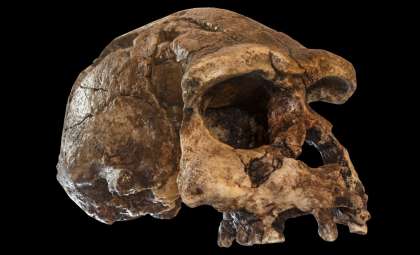
A remarkable fossil discovered in Georgia is shedding light on a long-standing mystery: why do humans have such an extended period of childhood? Unlike our primate relatives, humans require a much longer time to mature. Now, ancient dental remains from a young Homo individual may provide insight into this developmental puzzle.
This specimen was unearthed at the Dmanisi archaeological site, renowned for uncovering early human artifacts dating back approximately 1.77 million years. The detailed findings on this child’s teeth are recently published in Nature.
Unveiling New Secrets Hidden in Teeth
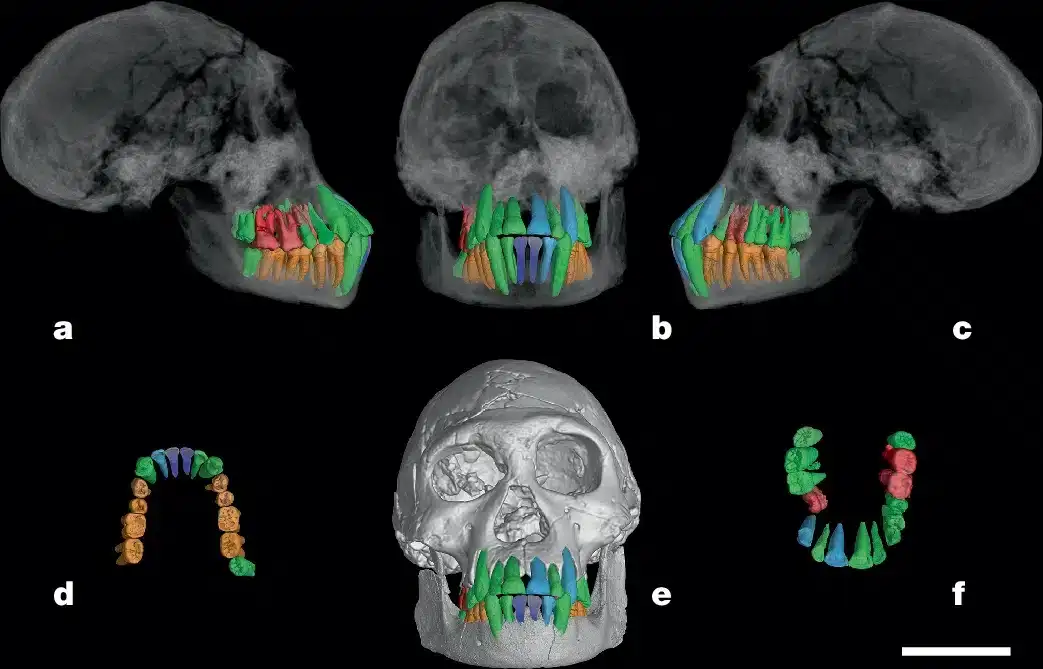
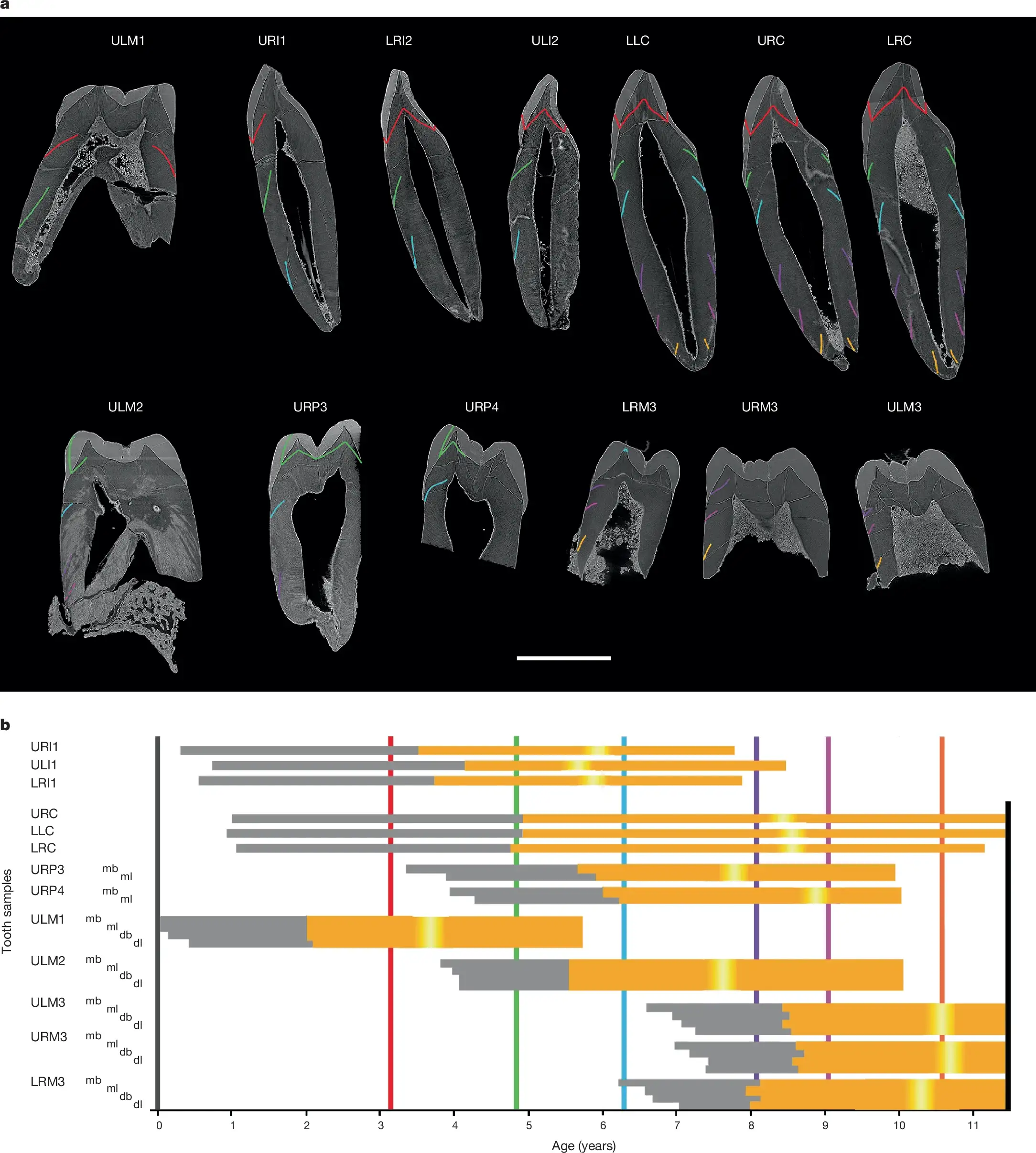
To preserve the fossil, researchers utilized an advanced technique called synchrotron imaging, which offers highly detailed scans similar to X-rays. Teeth reveal growth rings akin to those in trees, allowing scientists to trace the speed of development in young individuals.

“Childhood and cognition do not fossilize, so we have to rely on indirect information,” said Christoph Zollikofer from the University of Zurich. “Teeth are ideal because they fossilize well and produce daily rings.”
The results challenged expectations. Paul Tafforeau of ESRF remarked that researchers anticipated dental growth patterns resembling either modern humans or non-human great apes. However, the child displayed a distinctly different growth pattern, with molars developing faster than any other known ancestor or living ape.
A Unique Combination of Rapid and Slow Dental Growth
The child was between 11 and 12 years old at death, yet their wisdom teeth had already erupted—a trait typical of great apes—pointing to accelerated bodily development. Conversely, the persistence of baby teeth usage suggested slower maturation in other respects.
While some teeth grew rapidly, others developed more gradually. The growth of the back teeth implies that this young individual, and possibly others from its group, remained reliant on adult caregivers for longer periods compared to apes.
“This could be the first evolutionary experiment of prolonged childhood,” explained Marcia Ponce de León, a member of the research team.
These fossil findings imply that an extended childhood enabled youngsters to stay near adults for longer durations, allowing them to acquire skills, mimic behaviors, and form stronger social connections.
Intergenerational Care Was Vital
Evidence beyond teeth supports this idea. At the same Dmanisi site, scientists discovered the remains of an elderly Homo individual who had lost all teeth but survived for years afterward. Such survival likely required considerable assistance from others.
“The fact that such an old individual was able to survive without any teeth for several years indicates that the rest of the group took good care of him,” said David Lordkipanidze of the National Museum of Georgia.
This intergenerational care possibly played a crucial role in the transmission of knowledge—from tool-making to food preparation—ensuring younger generations were equipped to thrive.
- Categories:
- News







0 comments
Sign in to Comment