

A remarkable find in Africa in 2023 unveiled a lunar meteorite dating back 2.35 billion years, offering groundbreaking clues about the volcanic history of the moon. This specimen, distinguished by its distinct chemical makeup, holds the record as the youngest basaltic lunar meteorite to be identified on our planet. The findings, shared at the Goldschmidt Conference in Prague, fill a nearly one-billion-year void in our comprehension of lunar geologic developments.
Called Northwest Africa 16286, this meteorite provides fresh understanding of the moon’s interior and supports the view that volcanic processes occurred over an extended timescale. By studying its mineral content, researchers uncovered critical details about the mechanisms that sustained volcanic eruptions on the lunar surface. The discovery reaffirms the value of lunar meteorites as key sources of data that deepen knowledge of the moon’s geological history and dynamic activity.
Reconstructing the Moon’s Volcanic Evolution
This meteorite’s uncommon chemical traits reveal how volcanic activity on the moon progressed, illuminating the thermal processes that generated internal heat. The research team at the University of Manchester concluded that the rock was formed from a deep lunar lava flow. Classified as an olivine-phyric basalt, it features elevated potassium levels alongside moderate titanium content—minerals crucial for interpreting the moon’s internal thermal dynamics and volcanic activity.

Scientists propose that the presence of large olivine crystals indicates an origin deep beneath the surface, possibly from lava that crystallized after venting from the moon’s interior. Dr. Joshua Snape from the University of Manchester highlights that lunar meteorites provide extensive geological information from diverse regions, unlike lunar samples returned by missions limited to select landing zones.
“As such, there’s some serendipity surrounding this sample; it just happened to fall to Earth and reveals secrets about lunar geology without the massive expense of a space mission.”
Extending the Timeline of Lunar Volcanism
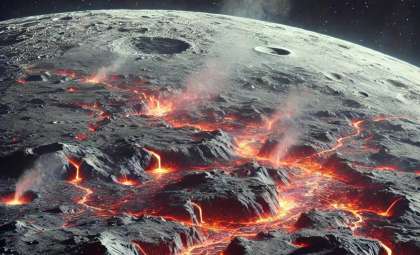
The identification of this 2.35-billion-year-old meteorite addresses a major gap in the timeline of lunar volcanic activity. Previously, scientists believed lunar volcanism ended roughly 3 billion years ago, but this basaltic meteorite indicates volcanic processes lasted far longer. It is younger than rocks collected during the Apollo, Luna, and Chang’e 6 missions, yet predates the newest samples from China’s Chang’e 5 mission.
Dr. Snape explains that the meteorite’s composition and unique age demonstrate ongoing volcanic activity driven by persistent radiogenic heat generation inside the moon. This suggests that internal heating mechanisms powered eruptions over billions of years, redefining ideas about lunar geological evolution.
“The age of the sample is especially interesting because it fills an almost billion-year gap in lunar volcanic history,” said Dr. Snape. “It’s younger than the basalts collected by the Apollo, Luna and Chang’e 6 missions, but older than the much younger rocks brought back by China’s Chang’e 5 mission.”
Effects of Impact Events on the Meteorite
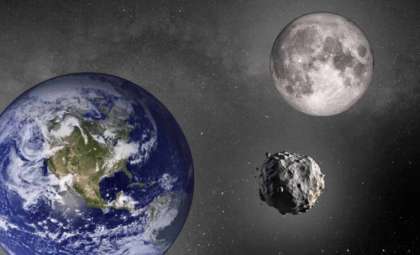
Weighing 311 grams, this meteorite belongs to a very exclusive category of lunar basalts found on Earth. Its distinctive features indicate it underwent impact events, probably caused by an asteroid or meteorite collision, resulting in the creation of glass-rich melted veins within the rock. These shock effects complicate precise dating but illustrate the moon’s surface’s violent, impact-prone history.
Despite these challenges, scientists estimate the age of the meteorite with an uncertainty of plus or minus 80 million years. The rock’s elevated uranium-to-lead ratio also provides critical evidence regarding the longevity and nature of volcanic activity on the moon. These insights are expected to influence future lunar exploration missions and scientific inquiries.
“Its age and composition show that volcanic activity continued on the moon throughout this timespan, and our analysis suggests an ongoing heat generation process within the moon, potentially from radiogenic elements decaying and producing heat over a long period.”
Guiding the Next Phase of Lunar Exploration
The unique properties of this meteorite make it an invaluable tool for scientists seeking a better understanding of lunar geology. As lunar exploration advances, specimens like Northwest Africa 16286 offer essential data without requiring costly space missions. Further research to identify its precise origin on the lunar surface could help select promising landing sites for future sample return missions.
“Moon rocks are rare, so it’s always interesting when we get something that stands out and looks different to everything else. This particular rock provides new constraints about when and how volcanic activity occurred on the moon.”
Dr. Snape and his colleagues remain hopeful that ongoing studies of this and other samples will unlock more mysteries about the moon’s volcanic past, directing the course of upcoming lunar research for years ahead.
“There is much more yet to learn about the moon’s geological past, and with further analysis to pinpoint its origin on the surface, this rock will guide where to land future sample return missions.”
- Categories:
- News

0 comments
Sign in to Comment