
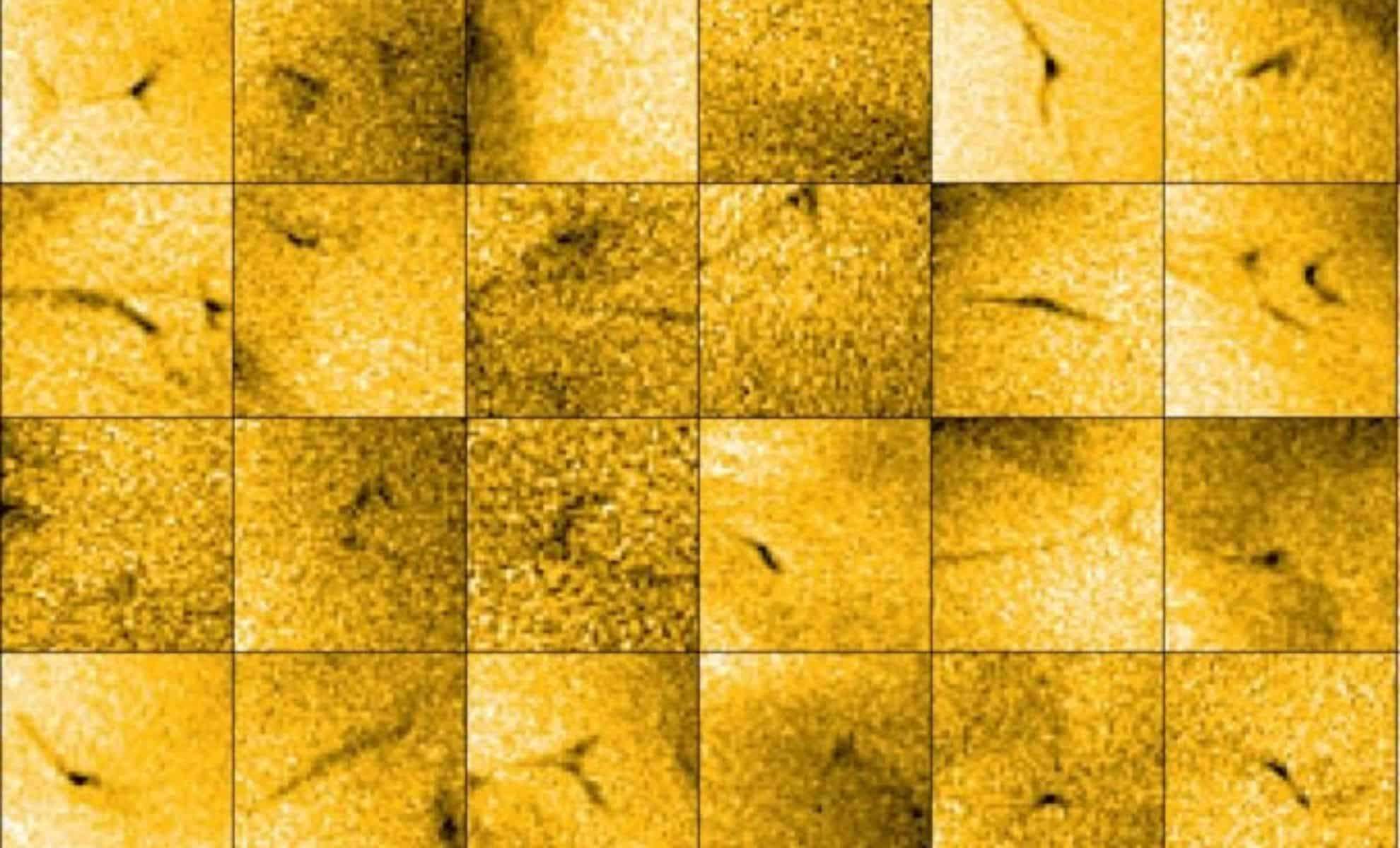
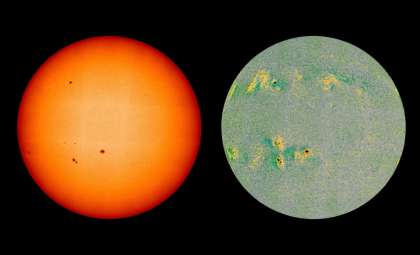
Since its launch, the European Space Agency’s Solar Orbiter has ventured closer to our star than previous missions, capturing unprecedented imagery of the Sun’s outer atmosphere and polar regions. For years, scientists have been striving to decode the enigmatic solar wind, a continuous flow of charged particles that shapes space weather and can interfere with Earth’s satellite systems. Recently released footage from the Solar Orbiter has unveiled surprising new activity: tiny, rapid plasma jets near the Sun’s south pole that could be crucial to understanding how solar wind originates.
These jets, initially spotted in 2023, manifest as bright, slender spikes captured in detailed images recorded during two of the spacecraft’s closest approaches. Analysis shows these energetic bursts are not random but represent a persistent phenomenon that may feed both fast and slow varieties of solar wind. Published in Astronomy and Astrophysics, these insights promise to profoundly deepen our grasp of the Sun’s interactions with its surrounding space environment.
Unpacking the Role of Micro Jets in the Solar Wind
The detection of these high-velocity jets offers fresh evidence about how streams of solar wind are launched and sustained. Previously, the origin of fast solar wind was linked to coronal holes—darkened regions in the Sun’s corona where magnetic field lines extend outward instead of looping internally. These open magnetic structures enable charged particles to escape rapidly into space.

Yet, the source of the slower solar wind component remained elusive. Utilizing Solar Orbiter’s advanced imaging and particle sensors, researchers have now connected these slow solar wind flows to the newly identified microscopic jets. Lasting roughly a minute each, these jets propel charged particles at speeds reaching nearly 100 kilometers per second (62 miles per second). This discovery challenges earlier assumptions, implying a unified underlying mechanism drives both fast and slow solar regimes.
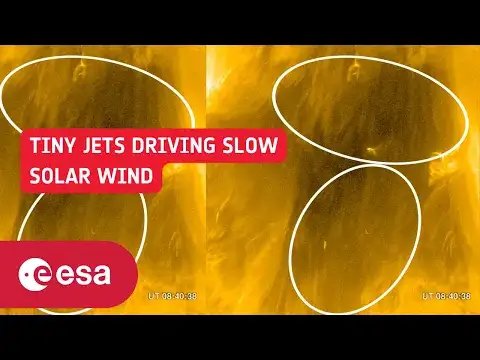
Linking Imaging Data to Particle Streams
Researchers confirmed the jets’ role by combining high-resolution imagery with direct particle velocity measurements. Correlating the photographic evidence of jets with corresponding bursts of escaping particles allowed them to firmly establish causation.
“Discovering that a single process powers both solar wind types is unexpected,” ESA representatives noted. This insight overturns prior theories positing separate sources for fast and slow solar wind, prompting revisions to existing solar wind generation models.
The Road Ahead for Solar Orbiter
Since its February 2020 deployment, Solar Orbiter has been equipped with an array of instruments designed to capture exceptionally close views of solar magnetic activity. At present, it orbits at about a quarter of the distance between Earth and the Sun, providing a vantage point for on-the-spot observations.
Conducting two close flybys annually, the spacecraft is set to accumulate additional data on these micro jets. Upcoming flybys will test if these jets dominate the slow solar wind’s creation or if other contributing mechanisms exist.
The mission aims to shed light on the Sun’s effects on space weather, which impacts Earth’s electrical infrastructure and the safety of astronauts beyond our planet’s protective magnetosphere. Decoding solar wind’s sources is vital for enhancing space weather prediction and safeguarding technology and future human expeditions to Mars and farther.
A Pivotal Advancement in Solar Science
The identification of these subtle plasma jets marks a major step forward in solar physics. For years, the origin of slow solar wind has perplexed scientists. Thanks to Solar Orbiter’s precise observations, compelling evidence now links these brief but powerful jets to that longstanding puzzle.
As the spacecraft continues its mission, each new dataset edges us closer to unraveling the Sun’s multifaceted and evolving nature. With forthcoming measurements, this research could revolutionize our comprehension of solar wind, space weather dynamics, and the Sun’s overarching role within our solar system.
Details of this pioneering discovery were published in Astronomy and Astrophysics on February 7, 2024.
- Categories:
- News



0 comments
Sign in to Comment