
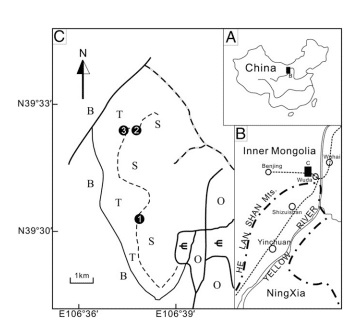
A groundbreaking find in northern China has uncovered a tropical forest dating back 300 million years, remarkably preserved beneath layers of volcanic ash. Situated near Wuda in Inner Mongolia, this site offers an extraordinary glimpse into ecosystems from the early Permian era.
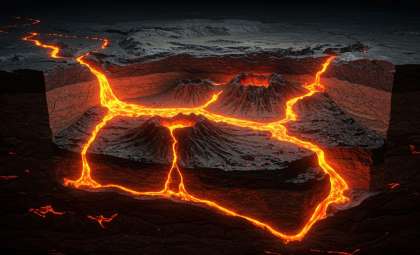
Featured in the Proceedings of the National Academy of Sciences, the research details how a swift volcanic ash fall encapsulated the vegetation, preserving it in situ and capturing a vivid snapshot of ancient life. Scientists highlight that this preservation offers a rare window into the forest's composition and structure.
Exceptional States of Preservation in Ancient Plant Life
The forest's preservation is truly outstanding, with numerous flora and trees retained exactly where they originally grew. Rapid deposition of volcanic ash swiftly covered the forest, maintaining fine details of the plants in place.

Professor Hermann Pfefferkorn of the University of Pennsylvania, who contributed to the publication, described the fossil's condition as "incredibly well-preserved," noting that such preservation grants paleontologists an unprecedented chance to analyze plant life instantly buried by a volcanic event.
“We can stand there and find a branch with the leaves attached, and then we find the next branch and the next branch and the next branch. And then we find the stump from the same tree.”Pfefferkorn said.
Fossilized Forest Displays Wide Variety of Tree Species
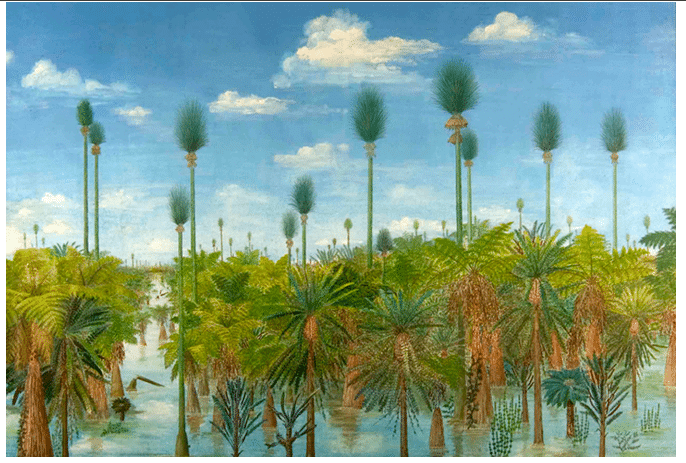
The fossil forest includes diverse plant groups, featuring six distinct tree categories. According to the study, tree ferns occupied the lower levels of the canopy, while taller species like Sigillaria and Cordaites reached heights of up to 80 feet. This diversity reflects a thriving tropical habitat of the period.
Researchers unearthed nearly complete fossils of Noeggerathiales, an extinct lineage of spore-producing trees closely related to ferns. Though previously recorded in North America and Europe, their plentiful presence in this ancient Chinese forest marks a significant new finding.
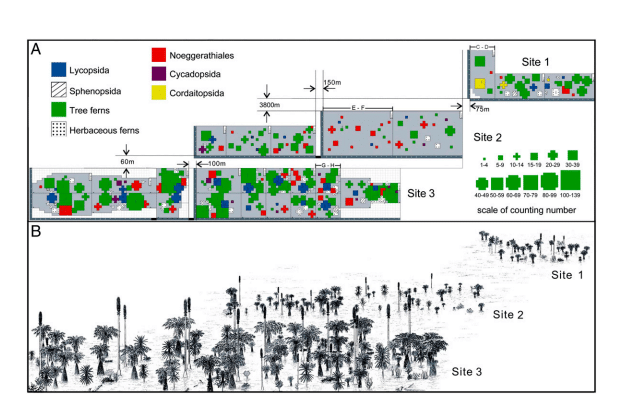
The differences in plant makeup across the three examined locations imply the forest consisted of multiple plant communities, likely shaped by variations in local environmental conditions.
Insights into Earth’s Distant Climate
Although this discovery doesn't fully reveal the climatic changes of the era, it contributes vital information to scientists studying Earth's ancient environmental patterns.
Professor Pfefferkorn compared the finding to Pompeii’s archaeological significance, describing the forest as a valuable time capsule that aids in understanding the climatic and ecological conditions before and after the volcanic ash burial.
“It’s a time capsule,” Pfefferkorn explained, “and therefore it allows us now to interpret what happened before or after much better.”
- Categories:
- Science



0 comments
Sign in to Comment