
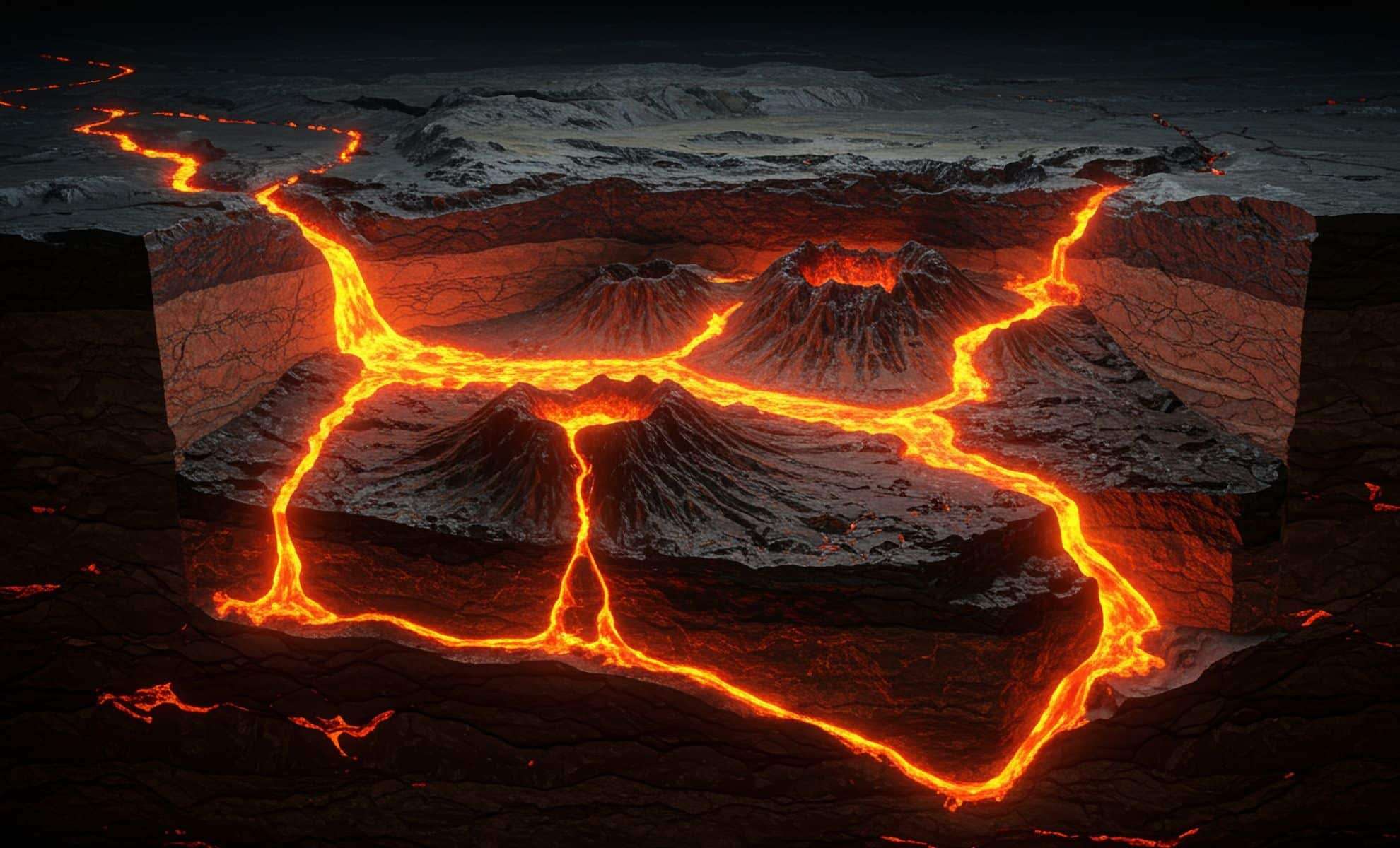
A groundbreaking investigation published in Geology has identified a massive chain of ancient volcanic formations lying hidden beneath the Sichuan Basin in southern China. This remarkable discovery could transform prevailing theories about Earth's tectonic activity and climate evolution. The international team, led by scientists from PetroChina and Nanjing University, integrated aerial geophysical surveys with targeted drilling to uncover a volcanic system that has remained inactive for almost 800 million years.
A Subterranean Volcanic Network Spanning Hundreds of Miles
The research commenced with detailed aeromagnetic surveys aimed at revealing the region’s subsurface geology. These measurements detected a pronounced 50-kilometer-wide (30-mile) band of iron-rich rock positioned roughly 6 kilometers below the surface, a characteristic often linked to long-extinct volcanic activity.
To validate these initial results, scientists conducted seven deep borehole drills reaching depths between 3.6 and 6.5 kilometers. Analyses of the extracted samples confirmed their volcanic genesis and associated them with arc volcanism—typically generated above subduction zones. Radiometric dating placed these formations securely in the Neoproterozoic period, between 770 and 820 million years ago, coinciding with the fragmentation of the supercontinent Rodinia.

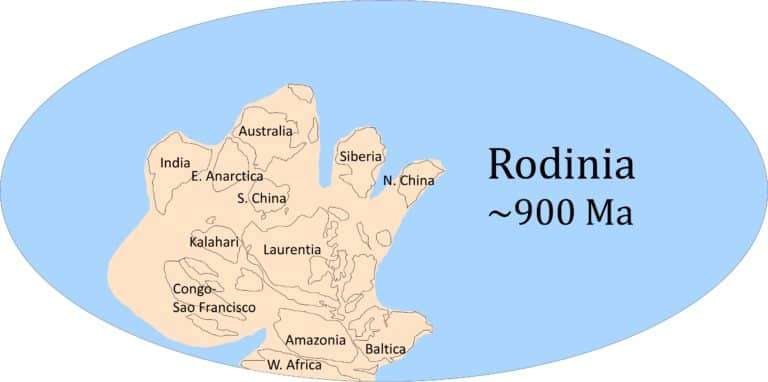
“This fossil arc was formed during the assembly and breakup of Rodinia,” the study explained, placing the volcanic system within one of the most active tectonic episodes in Earth’s history.
Explaining the Interior Location Through Flat-Slab Subduction
The significance of this find goes beyond its antiquity; it lies unusually far inland. Typically, volcanic arcs are located near continental margins where oceanic lithosphere subducts beneath continental plates. However, this volcanic belt is situated over 500 miles inside the continent, defying conventional expectations.
The team suggests that this phenomenon is attributable to flat-slab subduction, where the descending oceanic plate is forced to slide almost horizontally under the continent for an extended distance before plunging deeper into the mantle. This tectonic configuration can generate two volcanic fronts: one proximal to the continental edge and another deep within the interior.
Comparable geological behavior is observed today in the Andes mountain range, offering a present-day parallel to the ancient processes beneath China. Researchers describe the Sichuan volcanic chain as “an exceptionally well-preserved instance of this rare tectonic event.”
Impact on Understanding Ancient Climate Dynamics
Volcanism heavily influences the global carbon cycle, releasing CO₂ during eruptions and sequestering it through chemical weathering of volcanic rocks. The extent of this volcanic arc indicates it could have played a crucial role in modulating Earth's climate during the Neoproterozoic era, a time marked by massive environmental upheaval.
Debates continue about the causes behind the Snowball Earth glaciations, periods when ice may have reached equatorial regions. Some hypotheses propose that widespread volcanic activity combined with erosion of extensive volcanic landscapes contributed to destabilizing ancient climate systems. While the Sichuan arc alone may not fully explain these glaciations, it strengthens evidence linking Earth's inner dynamics with atmospheric changes of that era.
Providing New Insights Into Earth's Geological Past
The unveiling of a 400-mile-long fossilized volcanic arc beneath southern China highlights how much remains concealed beneath the Earth’s surface. Utilizing advanced geophysical imaging alongside deep drilling efforts, scientists are piecing together tectonic events from almost a billion years ago.
For geologists, the Sichuan Basin is evolving beyond its role as an energy source, becoming a critical record of tectonic, volcanic, and climatic processes. Ongoing investigations aim to better link these buried features with broader questions about continental evolution and their influence on Earth's ancient climate over vast geological timescales.
- Categories:
- Science






0 comments
Sign in to Comment