
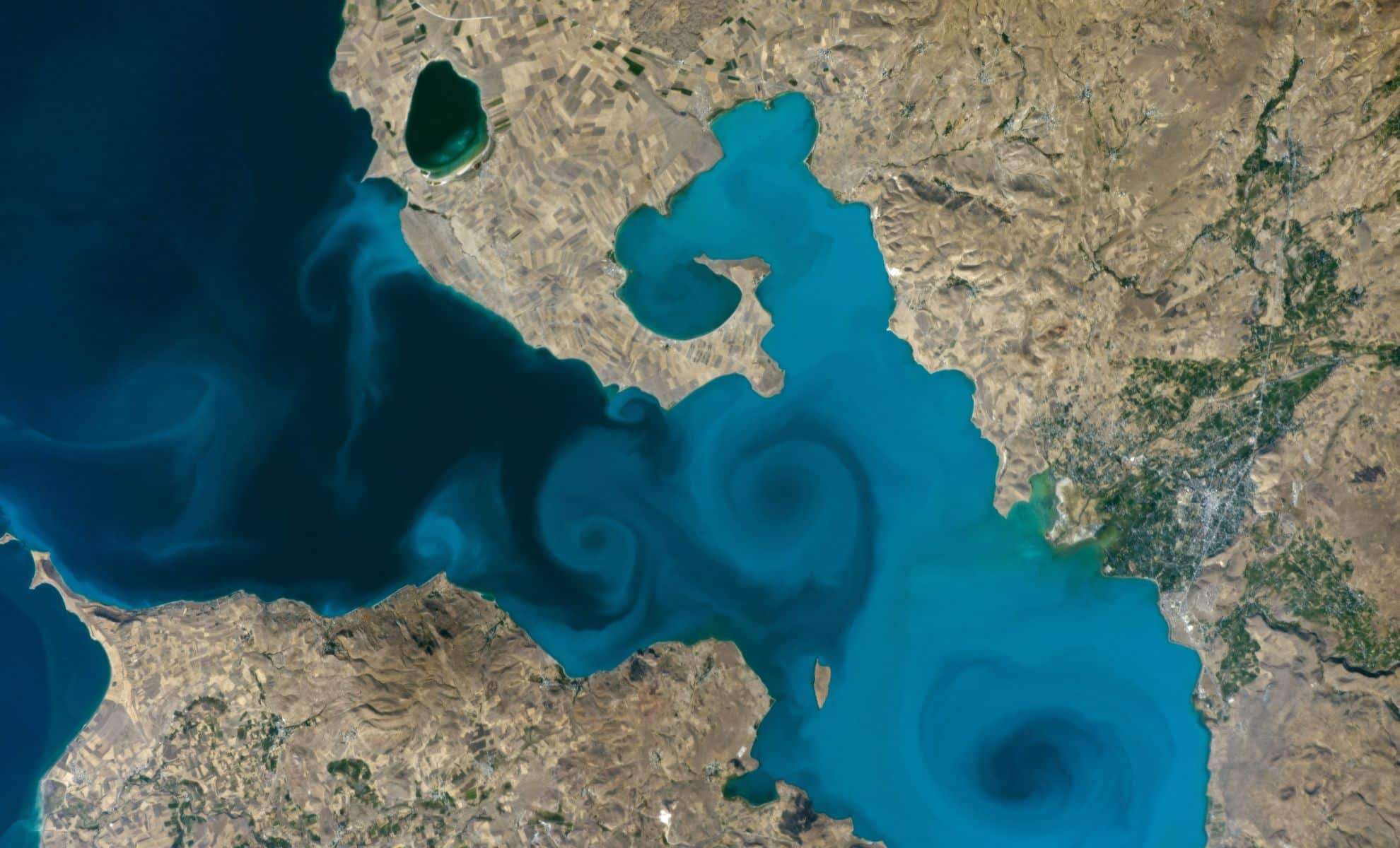
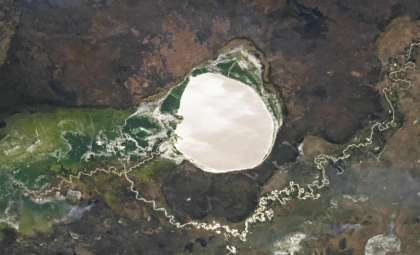
A remarkable photograph taken from orbit reveals unusual milky swirls across the surface of Lake Van, located in eastern Turkey and known as the planet’s biggest alkaline lake. This image was snapped by NASA astronaut Kate Rubins aboard the International Space Station on September 12, 2016 and subsequently highlighted by NASA’s Earth Observatory. Scientists who examined the photo identified the patterns as turbidity plumes, which are cloudy mineral formations created by disturbances on the lake’s floor.
Decoding the Unique Features of a Soda Lake
Lake Van, situated in Turkey’s Eastern Anatolia, stands as the largest alkaline lake worldwide, spanning approximately 3,100 square kilometers. Elevated over 1,600 meters above sea level, the lake’s high pH value—around 10—is a consequence of its status as an endorheic basin, meaning it lacks natural outlets. Continuous evaporation without drainage leads to an accumulation of salts and other minerals, resulting in exceptionally concentrated solutions.
The distinctive white swirls observed are called turbidity plumes, essentially clouds comprising primarily calcium carbonate alongside minor organic particles. These formations emerge when the sediment on the lake bottom is unsettled by forces such as currents, wind, or human intervention. Near the city of Erciş, where the lakebed is relatively shallow, these plumes are more prone to forming due to increased susceptibility to such disruptions.

Differentiating from Algal Blooms
Although the milky patterns might resemble blooms generated by phytoplankton, where tiny aquatic organisms multiply explosively and spread through currents, NASA’s Earth Observatory clarifies that the pictured plumes result from non-biological mineral activity. Instead, they consist of mineral-laden clouds suspended within the lake’s water column, sparked by mechanical activity on the lake floor.
In the photograph, smaller greenish areas near the shore, particularly around Erciş and an adjacent smaller lake, likely indicate localized phytoplankton growth. However, these biological elements do not contribute to the prominent milky swirls that dominate the scene.
A Lake Molded by Age and Climate Shifts
Lake Van’s distinctive water chemistry is the product of hundreds of millennia of environmental changes. Its water levels have variably risen and fallen by up to 600 meters over the last 600,000 years, influenced by fluctuations in Earth’s climate. This unique environmental history makes Lake Van unlike most other lakes globally. Its enriched carbonate salt content even prevents freezing, despite subzero winter temperatures.
These harsh chemical conditions foster the formation of microbialites, layered sedimentary structures created through microbial activity that binds minerals together. Lake Van hosts one of the highest concentrations of such formations on Earth. Although microbialite growth is most active during the spring and autumn seasons, NASA experts confirm that these formations are not behind the swirling patterns visible in the 2016 orbital image.
An Extraordinary Perspective from Orbit
The striking photograph, shared as part of NASA’s “Earth from Space” initiative, offers an uncommon glimpse into Lake Van’s dynamic natural processes. The swirling white patterns, composed largely of calcium carbonate and set against the lake’s deep blue alkaline waters, create a captivating visual spectacle with scientific relevance.
This orbital view underscores how mineral buildup, shallow lake depths, and disturbances on the lakebed interact to generate a rare and transient phenomenon observable only from space.
- Categories:
- News






0 comments
Sign in to Comment