
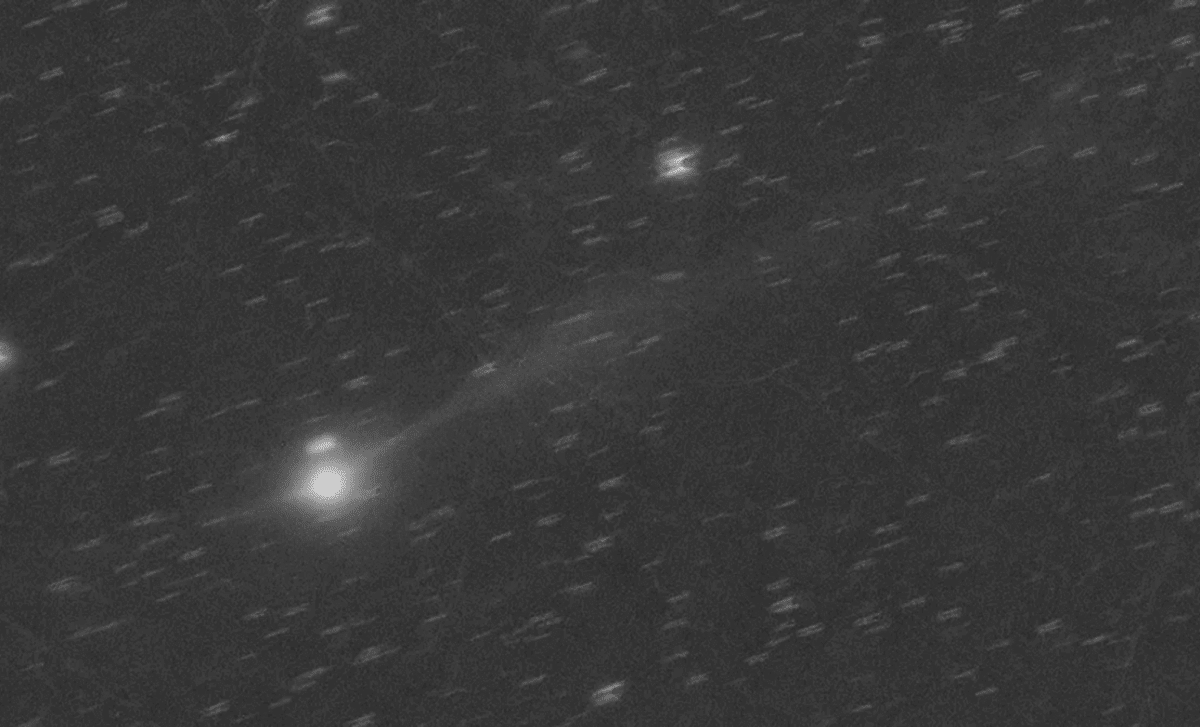
Scientists utilizing South Africa’s MeerKAT radio telescope have achieved a remarkable feat by detecting the inaugural radio emission from the interstellar comet 3I/ATLAS. This breakthrough offers an unprecedented avenue for investigating material traveling from beyond our solar neighborhood. As 3I/ATLAS drew closer to the Sun, researchers observed increased outgassing linked to water ice sublimation, providing valuable insights into the comet’s makeup and behavior in the interstellar medium.
MeerKAT’s Landmark Contribution to Interstellar Research
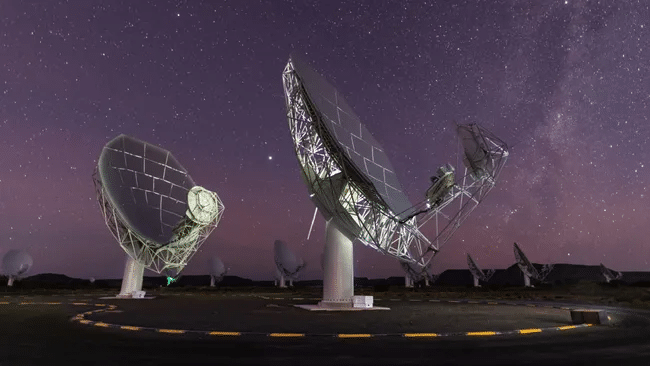
The highly sensitive MeerKAT radio telescope situated in South Africa was instrumental in this landmark event. On October 24, 2025, observation teams recorded the first-ever radio detection of the interstellar visitor 3I/ATLAS. Captured shortly after the comet’s closest solar approach, this signal sheds light on the physical and chemical properties of an object that has traversed the galaxy alone for countless millennia.
Radio wave detection offers a window into the comet’s dynamic outgassing processes. Approaching the Sun causes its surface temperature to rise, leading to vaporization of frozen volatiles and the formation of a gaseous envelope, or coma. MeerKAT’s observations revealed absorption signatures indicative of hydroxyl (OH) molecules, a key marker of water vapor being released as a response to solar heating, reaffirming the comet’s natural origin rather than an artificial anomaly.

Initial attempts by MeerKAT in late September 2025 to catch radio signals from 3I/ATLAS were unsuccessful, underscoring the comet’s evolving interaction with solar radiation. The breakthrough measurement on October 24 substantially enhanced understanding by confirming expected cometary outgassing patterns. As one principal investigator noted, “The absorption features align perfectly with the predicted OH population given the comet’s velocity relative to the Sun,” strengthening confidence in the interpretation of these emissions.
Tracing the Cosmic Voyage of Interstellar Comets
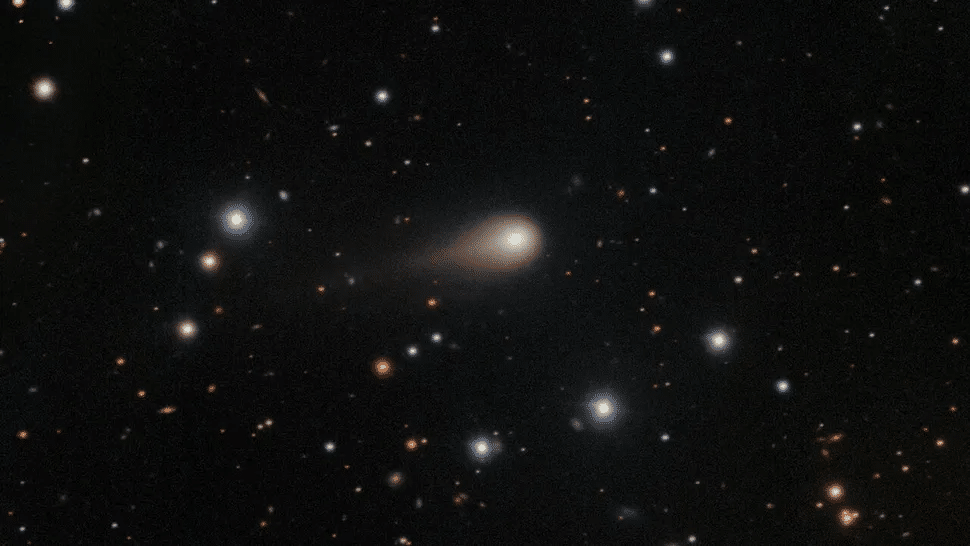
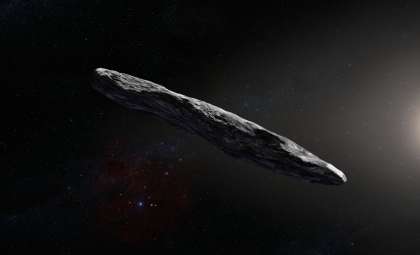
3I/ATLAS represents the third verified interstellar object detected, following 1I/‘Oumuamua and 2I/Borisov. These rare observations allow astronomers to study objects formed in distant star systems that journeyed incredible distances before entering our solar system. Unlike native solar system comets and asteroids, these visitors have survived solitary travel through the galaxy, offering a window into cosmic materials beyond our immediate environment.
Analysis of 3I/ATLAS provides a unique opportunity to examine the chemical and physical endurance of such objects. Its intact state after extensive interstellar passage sparks questions about the material properties and evolution of star system debris. Passing through our solar system, 3I/ATLAS serves as a natural archive, bearing information that could illuminate variations between star systems.
Detecting the hydroxyl radicals confirms the presence of water ice in 3I/ATLAS, paralleling characteristics often observed in solar system comets. Examining and comparing how 3I/ATLAS emits gas and dust in response to solar heating enhances our knowledge about comet formation and volatile behavior in diverse galactic contexts.
The Critical Role of Radio Astronomy in Studying Distant Objects
Radio astronomy is essential when exploring remote celestial bodies emitting wavelengths beyond visible light. Unlike traditional optical telescopes, devices like MeerKAT capture much longer electromagnetic waves, revealing phenomena hidden from conventional observation methods. Studying these radio signals yields insights into an object’s composition, temperature, and motion across immense cosmic distances.
The recent identification of radio emissions from 3I/ATLAS enriches our comprehension of interstellar visitors. Detection of OH absorption lines provides compelling proof of the comet’s chemical constituents and the physical mechanisms influenced by solar exposure. These findings contribute significantly to understanding how extrasolar objects behave upon entering our local space.
3I/ATLAS’ hydroxyl emissions clearly indicate ongoing outgassing; as the comet warms, water ice sublimates to release gases forming the characteristic coma and tail. This defining process distinguishes comets from other celestial bodies and sheds light on fundamental cometary dynamics during solar approach.
Separating Fact from Fiction: Addressing Alien Spacecraft Claims
The intriguing finding of 3I/ATLAS sparked public fascination and some speculation about extraterrestrial origins. Nevertheless, researchers quickly discredited the notion of alien technology, stressing that observed phenomena are consistent with known cometary science.
The detected outgassing of hydroxyl molecules matches expected natural processes for cometary bodies under solar influence. As Harvard astronomer Avi Loeb noted,
“Given that 3I/ATLAS was separated from the Sun by 1.38 times the Earth-Sun separation, its surface temperature was smaller than that of Earth by roughly the square root of 1.38.”
This heating induces sublimation-driven gas release, a hallmark of comet activity governed by solar irradiation. Additionally, the absence of artificial signal signatures strongly supports the conclusion that 3I/ATLAS is a natural interstellar comet rather than an alien probe. While the possibility of extraterrestrial life captivates imaginations, scientific evidence continues to point toward a purely cosmic origin for this visitor.
- Categories:
- Space





0 comments
Sign in to Comment