
For the very first time, scientists have detected radio emissions from a Type Ibn supernova, an uncommon type of stellar explosion linked to massive stars that shed helium-rich material shortly before collapsing. The occurrence, known as SN 2023fyq, is offering researchers an unprecedented glimpse into the activities of a star during its last years, beyond just observing the explosion itself.
Type Ibn supernovae remain enigmatic due to their rarity and the fact that observations typically happen post-explosion. Originating from massive stars that expel large amounts of helium-rich gas immediately prior to detonation, these stars form a dense envelope around themselves. Experts at the University of Virginia College and Graduate School of Arts & Sciences emphasize that this surrounding material significantly influences the explosion's features and progression, despite being generated before the star’s collapse.
Most prior knowledge of these events relied on optical telescopes, which primarily capture the explosion’s aftermath but offer limited insights into the star's pre-explosion phase. This new research, detailed in The Astrophysical Journal Letters, utilizes radio wave data to monitor the interaction between the supernova’s expanding remnants and the surrounding gas.

Unveiling the Star’s Environment Through Radio Signals
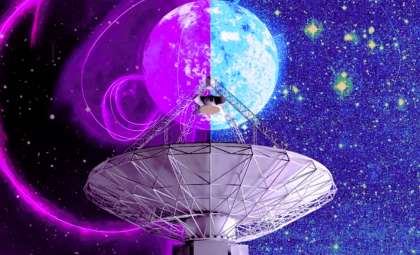
Scientists used the National Science Foundation’s Very Large Array in New Mexico to detect the faint radio signals from SN 2023fyq over an 18-month period. Published in The Astrophysical Journal Letters, the observations span frequencies ranging from 3 to 35 GHz and cover 58 to 525 days after the explosion.
The radio emission originates from a collision where the supernova shockwave crashes into helium-rich material the star had shed before detonating. This interaction generates radio waves that enable astronomers to map the quantity and distribution of the surrounding gas.
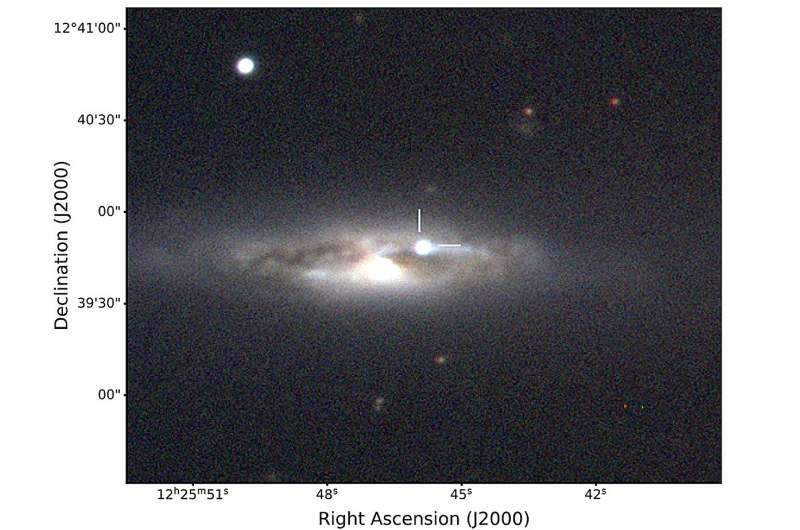
Raphael Baer-Way, the principal author and a doctoral student at the University of Virginia, described this as an opportunity to peer back through time in a press release.
“We were able to use radio observations to ‘view’ the final decade of the star’s life before the explosion,” he said, explaining that the strongest clues come from the last few years when the star was losing mass more aggressively.
Reconstructing the Last Years of the Star
Analysis of the radio signal patterns indicates the star experienced a phase of intensified material loss rather than a steady wind before its demise. The team suggests this heightened activity occurred during the last five years prior to the supernova. Baer-Way likened the findings to reconstructing the star's final timeline.
“We were able to use radio observations to ‘view’ the final decade of the star’s life before the explosion. It’s like a time machine into those last important years, especially the final five when the star was losing mass intensely,” he stated.
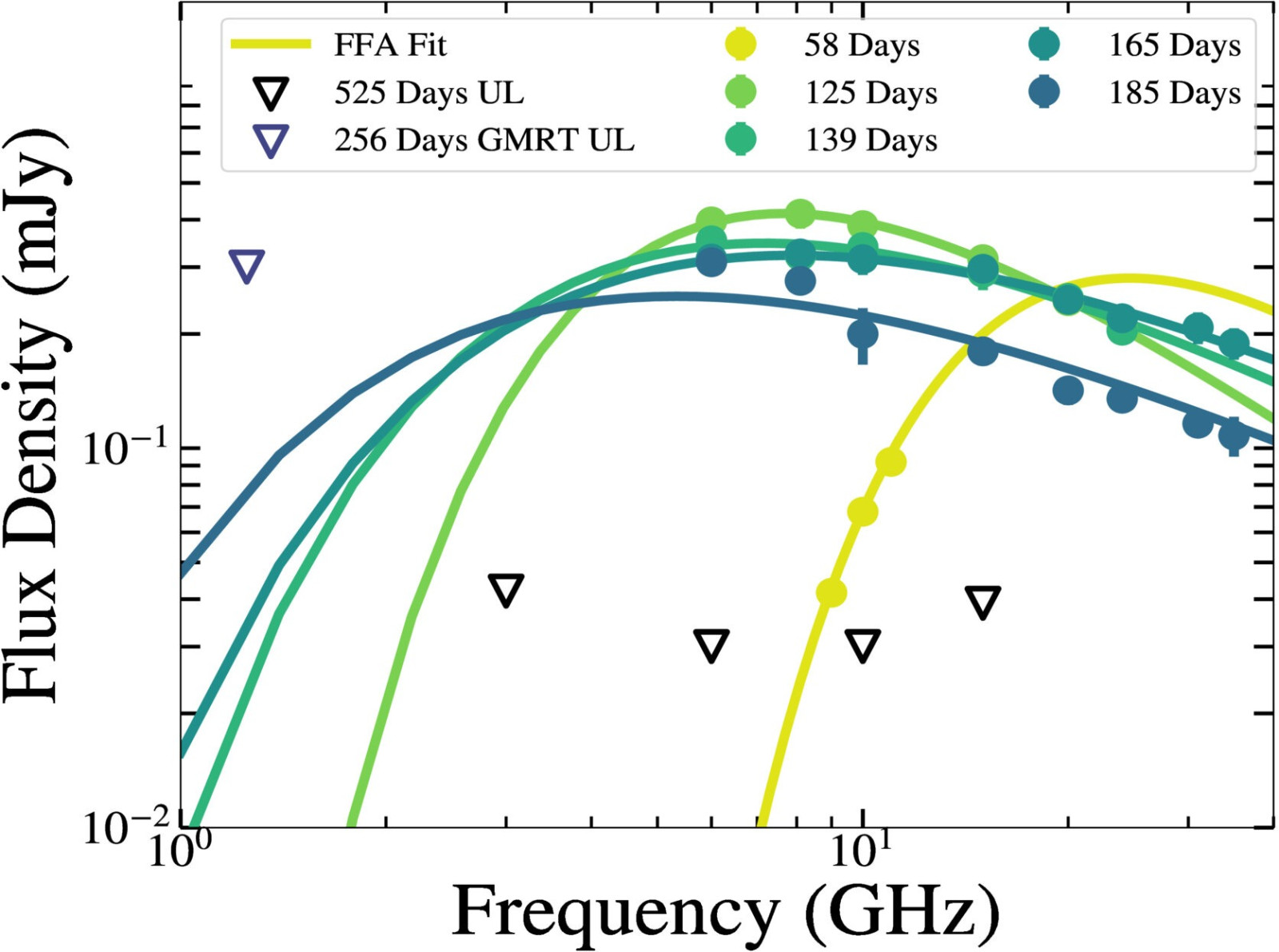
The principle behind this is straightforward: denser regions of gas trigger stronger radio emissions when impacted by the blast wave. This allows scientists to examine how the explosion is interacting with the material left behind by the star.
Could a Binary Companion Trigger the Mass Loss?
A pressing question remains: what caused the star to lose such a significant amount of material so rapidly? Researchers from the University of Virginia propose that a nearby companion star might have induced this. Baer-Way observed that the extent of mass loss is difficult to attribute to a single star alone. A companion’s gravitational influence could have pulled or disturbed the star's outer layers, accelerating the shedding of matter ahead of the supernova.
This work underscores a growing trend in astrophysics—radio astronomy’s increasing importance in probing the final stages of stellar evolution. Maryam Modjaz, a professor at the University of Virginia and co-author, commented:
“Raphael’s paper has opened a new window to the universe for studying these rare, but crucial supernovae, by revealing that we must point our radio telescopes much earlier than previously assumed to capture their fleeting radio signals.”
- Categories:
- Space




0 comments
Sign in to Comment