

In an unexpected cosmic mix-up, astronomers recently reported spotting a new near-Earth asteroid—only to later discover the object was actually Elon Musk’s Tesla Roadster, launched into orbit in 2018. The iconic electric vehicle was sent into space aboard a SpaceX Falcon Heavy rocket and has been circling the sun ever since.
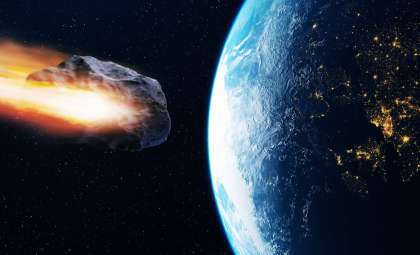
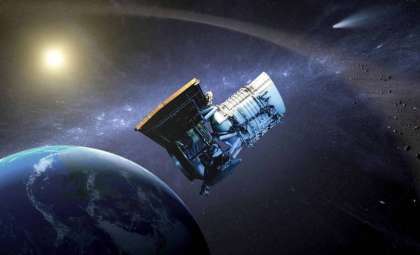
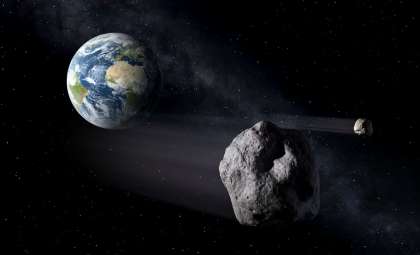
This amusing error also highlights a more serious issue: the growing presence of human-made debris complicates space observation efforts and poses challenges for astronomers.
A Mistaken Discovery
The mix-up began on January 2, 2024, when the International Astronomical Union’s Minor Planet Center (MPC) announced a new object called 2018 CN41 as a near-Earth asteroid. The sighting was attributed to an amateur astronomer in Turkey who used accessible data to make the identification.
But just 17 hours later, the MPC retracted the announcement. The supposed asteroid was actually the Tesla Roadster and its mannequin passenger, “Starman”, which had been launched during SpaceX’s historic Falcon Heavy test flight nearly six years prior.

While the incident was somewhat embarrassing for astronomers, it brought attention to the increasing difficulties in discriminating between artificial space debris and natural celestial bodies.
SpaceX’s Tesla: A Spaceborne Artifact
The Tesla Roadster, originally a vibrant cherry-red sports car, has now completed approximately 4.5 orbits around the sun at an astonishing speed of 45,000 mph (72,000 km/h). Although its initial mission was to settle into a stable orbit near Mars, it missed the mark and instead became another piece of space junk drifting within the solar system.
After receiving widespread attention for its unconventional cargo—a mannequin clad in a SpaceX spacesuit tuned to David Bowie’s Space Oddity—the Roadster’s condition has likely deteriorated significantly.
Years of bombardment by solar radiation and micrometeorites have probably eroded its paint, damaged its interior, and weakened its frame. As for Starman? Space’s harsh environment has likely obliterated him.
The Escalating Hazard of Orbital Debris
This incident is far from isolated. Over time, many spacecraft, rocket stages, and other debris have been misidentified as asteroids. Some well-known cases include:
- NASA’s Lucy spacecraft, briefly confused for a natural asteroid.
- ESA’s Rosetta probe, similarly mistaken for a celestial body.
- Multiple rocket boosters, which have caused several false asteroid alarms.
With the surge in space missions and the volume of artificial objects in orbit, such misidentifications are projected to become more common.
Potential Ramifications of Misidentifications
Though this error was benign, future mistakes like this could have costly scientific and financial repercussions.
Jonathan McDowell, an astronomer from Harvard-Smithsonian, warns that a worst-case scenario might involve spending billions on a mission only to find the target is a piece of discarded equipment instead of an asteroid.
Inaccurate tracking of space debris could also lead to:
- False asteroid impact alerts.
- Misallocated research resources investigating junk mistaken for celestial objects.
- Increased risk of collisions endangering functional satellites and spacecraft.
The Tesla’s Future Journey
Despite its battered state, Elon Musk’s Tesla stands as a testament to SpaceX’s innovative spirit—a promotional icon turned interplanetary artifact. It will persist in its solar orbit, occasionally nearing Earth and Mars, for potentially millions of years—unless it eventually impacts a planet or burns up.
Next time scientists spot an unknown object racing through space, they might think twice before labeling it an asteroid. It might simply be another fragment of humanity’s expanding footprint in space.
- Categories:
- Space







0 comments
Sign in to Comment