
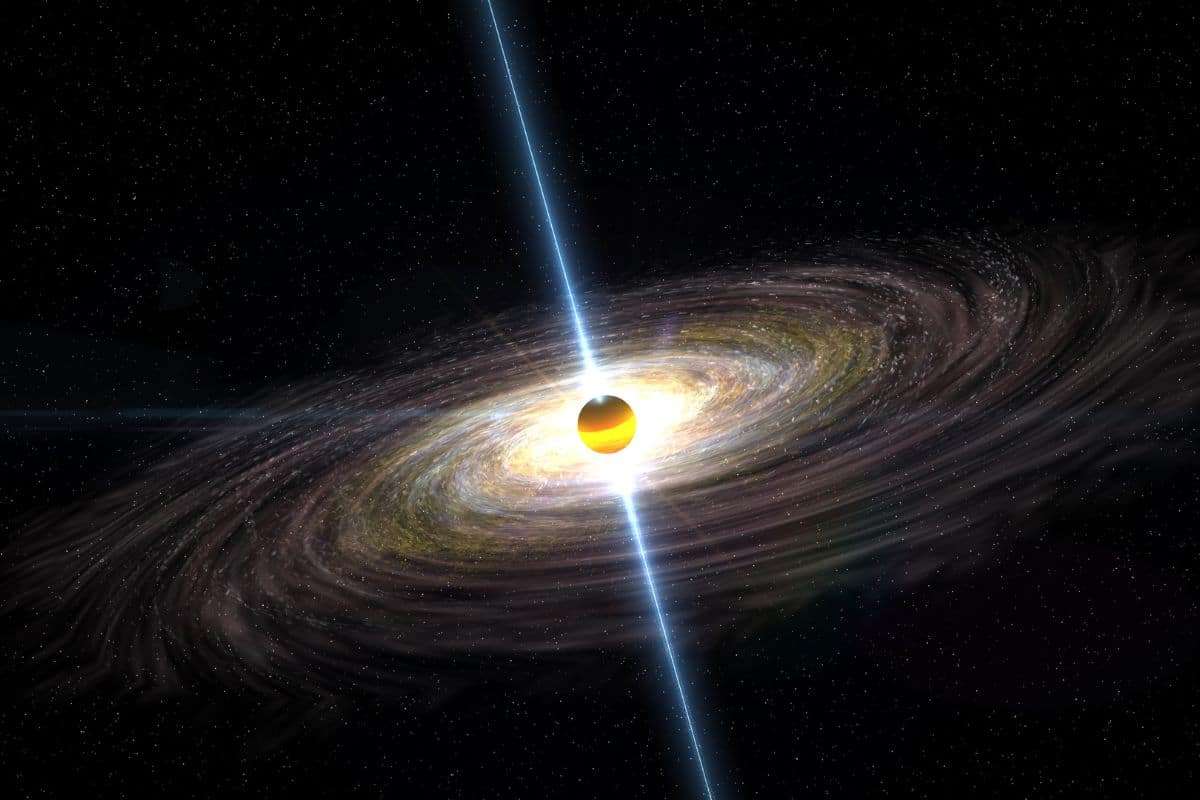
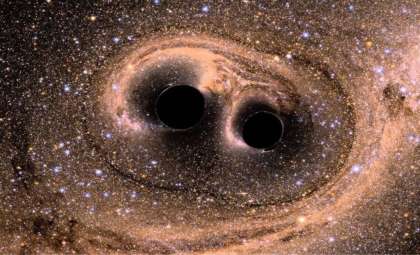
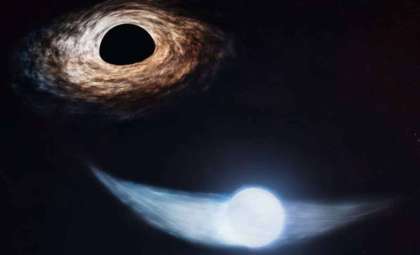
In a groundbreaking discovery, scientists have observed a supermassive black hole from the early cosmos devouring matter at a rate never seen before. Situated at the heart of galaxy LID-568, this black hole is visible just 1.5 billion years after the Big Bang and is expanding at over 40 times the Eddington limit—the theoretical cap on black hole growth speed.
Understanding the Eddington Limit and This Black Hole's Remarkable Growth
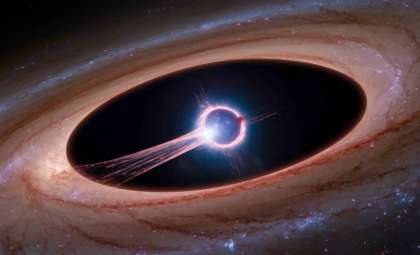
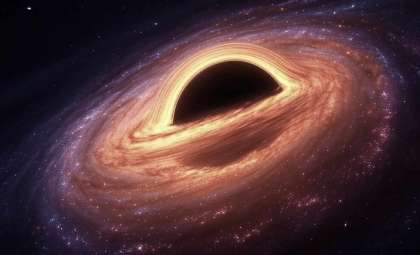
The Eddington limit defines the balance point where a black hole's radiation pressure pushes back against incoming material, forming a boundary for how fast it can accumulate mass. Typically, accreted matter forms a luminous disk spinning around the event horizon, and this radiation prevents inflow beyond a certain pace.
However, the black hole within LID-568 is surpassing this boundary, accreting material so rapidly that its brightness far exceeds expectations for an object of its scale. Astronomers used data from the JWST’s NIRSpec and the Chandra X-ray Observatory to verify this extraordinary behavior.

Investigating Rapid Growth in Early Supermassive Black Holes
A major question in astrophysics is how gigantic black holes—millions or billions times the Sun’s mass—formed swiftly after the universe’s birth. Traditional thinking holds that black holes grow slowly at or under the Eddington limit.
Discoveries like LID-568, however, indicate some black holes can undergo bursts of intense feeding, known as super-Eddington accretion episodes.
This observation supports theories that certain primordial black holes expanded quickly by ingesting massive amounts of matter during short, intense periods. It also adds evidence to the theory that the earliest supermassive black holes might not have formed from usual stellar collapses.
A Remarkable and Fortunate Observation
Capturing a black hole mid-way through such an extreme feeding phase is extraordinarily rare. Led by Hyewon Suh from Gemini Observatory and NSF’s NOIRLab, the research team was fortunate to detect LID-568 during this brief, super-Eddington stage.
Since these accelerated accretion episodes are expected to be fleeting, many black holes that have undergone rapid growth are no longer observed in this state. This makes LID-568 a valuable candidate for detailed future studies.
Implications for Black Hole Formation Theories
This finding implies that super-Eddington accretion might be fundamental in explaining the formation of the earliest and most massive black holes. Such brief, intense growth periods could clarify how these enormous cosmic objects developed so quickly.
Upcoming JWST missions alongside next-generation observatories have the potential to identify more black holes exhibiting similar extreme growth, sharpening astronomers’ understanding of black hole and galaxy coevolution in the young universe.
- Categories:
- Space




0 comments
Sign in to Comment