
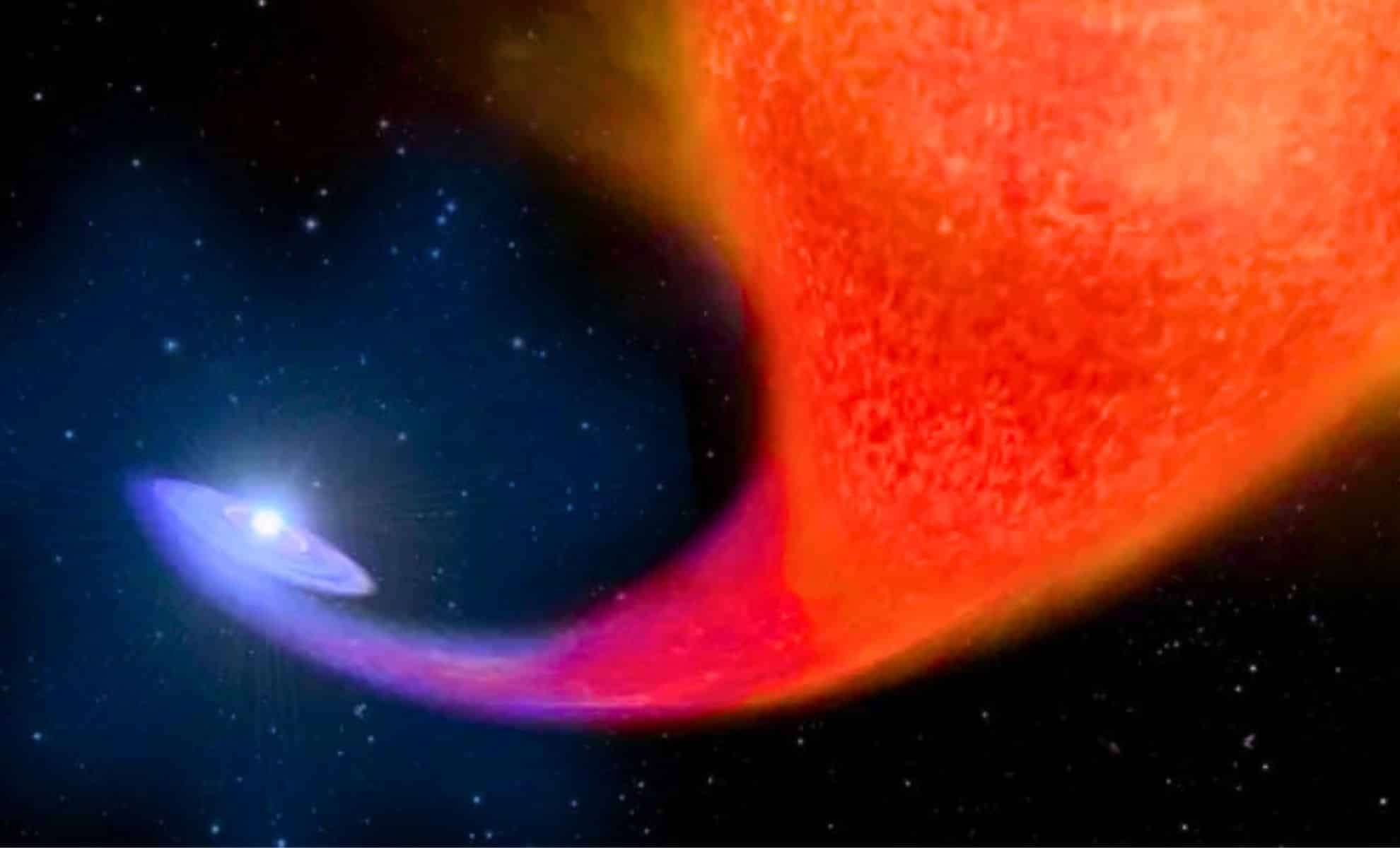
Despite significant advancements by 2025, astronomers continue to encounter surprising stellar phenomena in the Milky Way. Back in 1953, Alan Sandage transformed our perspective on star clusters by identifying the intriguing blue stragglers. More recently, the Hubble Space Telescope has revealed an entirely new category of stars called blue lurkers. Found within the open cluster M67, these mysterious stars challenge conventional stellar evolution theories and shed light on the complexities of multiple star systems.
The Legacy of M3 and the Origin of Blue Stragglers
Understanding blue lurkers requires a look back at the globular cluster M3 (or NGC 5272). Discovered in 1764 by French astronomer Charles Messier, M3 ranks among the largest and most luminous globular clusters in the Milky Way. Positioned about 33,300 light-years away in the constellation Canes Venatici, this cluster holds nearly half a million stars, mostly old, low-mass, and reddish in hue.
In a groundbreaking 1953 observation, Alan Sandage identified a peculiar blue, youthful star nestled among these age-worn stellar inhabitants. This blue straggler appeared incongruous given that the cluster’s stars formed over 8 billion years ago. The explanation for its presence lies in stellar collisions and mass transfer events occurring within binary pairs, common due to the dense environments of globular clusters.

How Blue Stragglers Form
Two primary processes generate blue stragglers:
- Stellar Collisions: Within densely packed cluster cores, stars may collide and merge, resulting in a hotter, more massive star that shines with a bluer light.
- Mass Transfer between Binary Stars: In binary systems, one star can donate material to its partner, effectively rejuvenating it and boosting its brightness and temperature.
These mechanisms account for why blue stragglers, despite their old environments, appear younger and more massive than the majority.
Introducing Blue Lurkers: A Newly Identified Stellar Puzzle
The Hubble Space Telescope has now spotted a fresh stellar anomaly dubbed blue lurkers. Detected in the open cluster M67, these stars exhibit traits reminiscent of blue stragglers but possess distinct differences. For instance, one studied star is yellow, resembling the Sun in mass yet spinning at an unusually rapid rate.
Notable Features of the Blue Lurker
- Unusually Fast Rotation: Unlike the Sun, which completes a rotation in about 30 days, this blue lurker rotates every four days, an indicator of its dynamic past.
- Ultraviolet Observations: Hubble detected the blue lurker circling a white dwarf with a surface temperature roughly three times hotter than the Sun (approximately 17,000 K). This white dwarf weighs in at 0.72 solar masses, notably exceeding the typical 0.5 solar masses for white dwarfs in M67.
- Complex Triple System: The blue lurker and the white dwarf form a triple star system. The white dwarf likely originated from a merger of two stars around 500 million years ago. During its transition to a white dwarf, it probably transferred mass and angular momentum to the blue lurker, explaining its rapid spin.
Emily Leiner, an astrophysicist at the Illinois Institute of Technology, notes: “This star has had a super complicated evolutionary history. It’s really exciting because it’s an example of a star that has interacted in a triple-star system.”
Insights from Triple Star Systems on Stellar Development
Stars in triple systems make up roughly 10% of Sun-like stars, yet their evolutionary pathways remain elusive. The blue lurker observed by Hubble offers critical insights. The unusually massive white dwarf orbiting it implies a past stellar merger. Prior to becoming a white dwarf, this merged star likely transferred mass and momentum to the blue lurker, fueling its fast rotation.
Broader Astrophysical Consequences
- Testing Models of Triple Star Evolution: Blue lurkers provide a rare window into the complicated gravitational and mass exchange processes in triple systems, allowing scientists to refine theoretical models.
- Evolutionary Processes in Open Clusters: Discovering blue lurkers in M67 suggests that even open clusters, with their lower stellar densities compared to globular clusters, undergo significant star interactions, prompting a re-evaluation of cluster evolution.
“We know that these multiple-star systems are quite common and that they lead to really interesting outcomes. We just don’t yet have a model that can reliably connect all these evolutionary stages,” adds Emily Leiner. Blue lurkers, carrying the imprint of complex histories, may be crucial in constructing comprehensive evolutionary frameworks.
The Cosmos Continues to Amaze
The identification of blue lurkers is a reminder that myriad cosmic mysteries await discovery. With tools like Hubble, humanity steadily uncovers stellar secrets and enhances understanding of star life cycles. Exotic stars such as blue stragglers and blue lurkers stretch our theoretical boundaries and inspire ongoing exploration of multiple star systems. The universe remains an endless wellspring for astronomical inquiry.
- Categories:
- Astronomy







0 comments
Sign in to Comment