
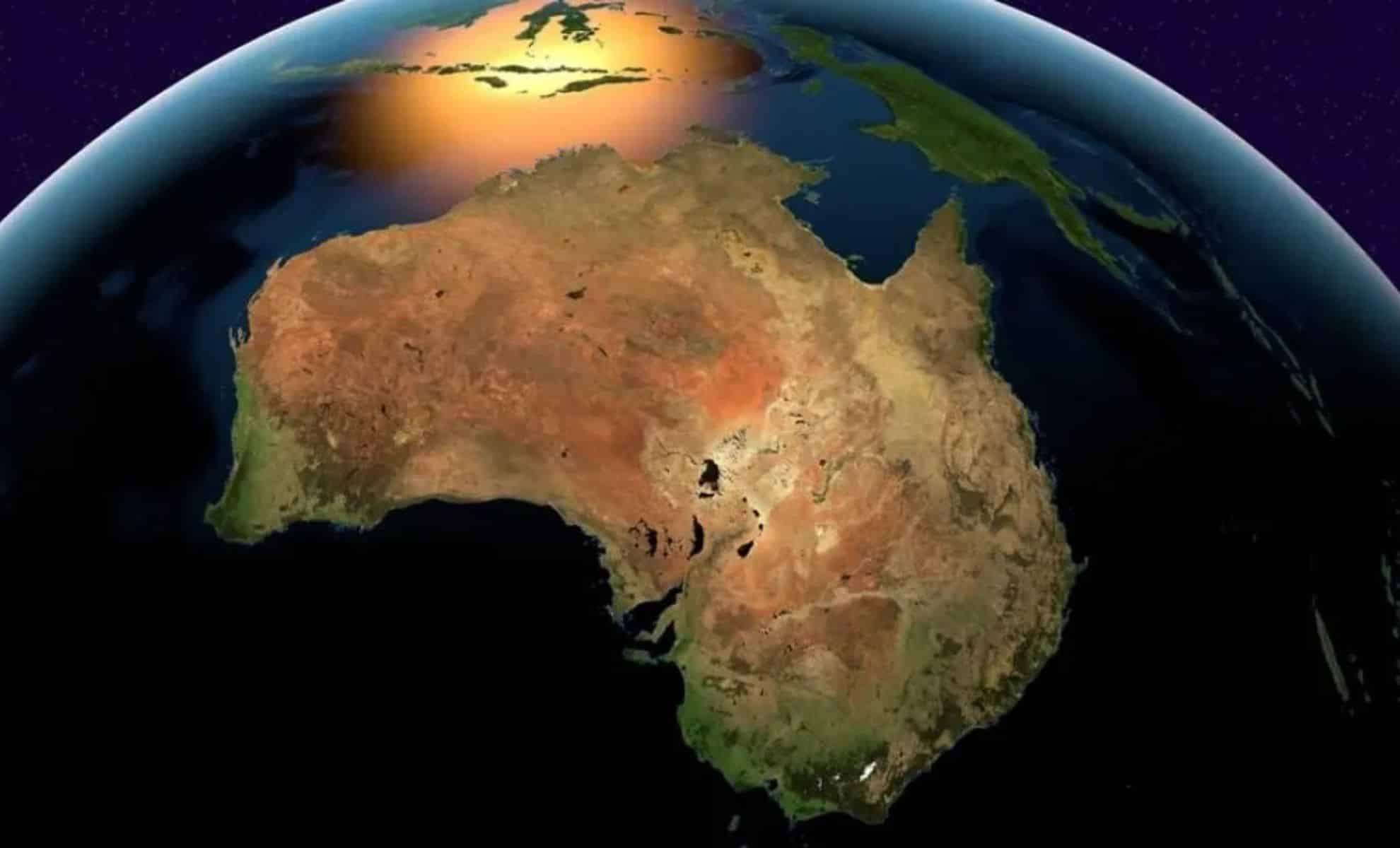
Often viewed as a stable landmass, Australia is gradually moving northward toward Asia at an unexpected pace. Researchers reveal that the continent shifts approximately 7 centimeters (2.8 inches) annually—comparable to the growth rate of human fingernails. While this progress might seem minimal, over geological timescales it results in significant transformations affecting the landscape, climate, and biodiversity of the region.
This shift is driven by the ongoing process of plate tectonics, which has continuously shaped Earth's landmasses for hundreds of millions of years. Roughly 80 million years ago, Australia separated from Antarctica, and since then, it has been steadily progressing north. Scientists predict that the Indo-Australian Plate, which carries Australia, will eventually collide with the Asian continent, leading to profound geological and environmental impacts.
Consequences of Australia’s Approach to Asia
Though the full collision remains far into the future, its effects are already detectable. The tectonic boundary stress is increasing seismic events, potentially causing more frequent earthquakes and geological disturbances across the area.

Professor Zheng-Xiang Li from Curtin University has extensively researched this subject. Back in 2009, he remarked, “Whether we like it or not, the Australian continent is going to collide with Asia.” He emphasizes that this movement is part of a recurring cycle where continents drift apart and later reunite—a pattern that has repeated multiple times throughout Earth's history.
A notable outcome of such tectonic shifts was the creation of the Great Barrier Reef. As Australia moved into warmer tropical waters, the environment became ideal for coral proliferation, giving rise to the world’s largest reef. Continuing its northward journey may result in new geological structures, mountain formations, and shifts in oceanic currents that could significantly alter local ecosystems.
Impact on Australia’s Distinct Wildlife
The impending collision is expected to influence not only geological features but also the diversity of life. Australia hosts a remarkable array of unique creatures such as kangaroos, wombats, and the enigmatic platypus. What will happen when this continent merges with Asia, which harbors a completely different fauna?
This topic sparks considerable discussion among scientists and conservationists. Some argue that Australia’s native marsupials might face fierce competition from Asian mammals, risking extinction. Others suggest that adaptable species like wombats, possums, and tree kangaroos could survive and prosper, while specialized animals such as koalas may face uncertain prospects.
Technological Adjustments Needed for Ongoing Drift
Australia’s steady northward motion is not just a future concern; it’s impacting technology right now. In 2016, researchers discovered discrepancies in the country’s GPS framework caused by continental drift, registering an offset of 1.5 meters (4.9 feet). Consequently, Australia updated its official coordinates by 1.8 meters (5.9 feet) to maintain navigation precision.
As the continent continues its advance, constant recalibrations of navigation tools, infrastructure, and satellite-based systems will be necessary to avoid errors. These adaptations are crucial for sectors reliant on pinpoint accuracy, including autonomous vehicles, precision farming, and air travel.
The Relentless Process of Plate Movements
While the vision of Australia colliding with Asia may seem alarming, the fact remains that plate tectonics exemplify Earth's persistent and unstoppable geological forces. Continents gradually shift, and despite the slow pace, the cumulative effects over millions of years are extraordinary.
Australians need not fret about dramatic changes in the immediate future, but the continent’s gradual shift is undeniable and already influencing everyday life in subtle ways. From changing coastlines and growing seismic activity to the long-term implications for unique wildlife, Australia’s northward journey is a fascinating geological story still unfolding.
- Categories:
- News








0 comments
Sign in to Comment