
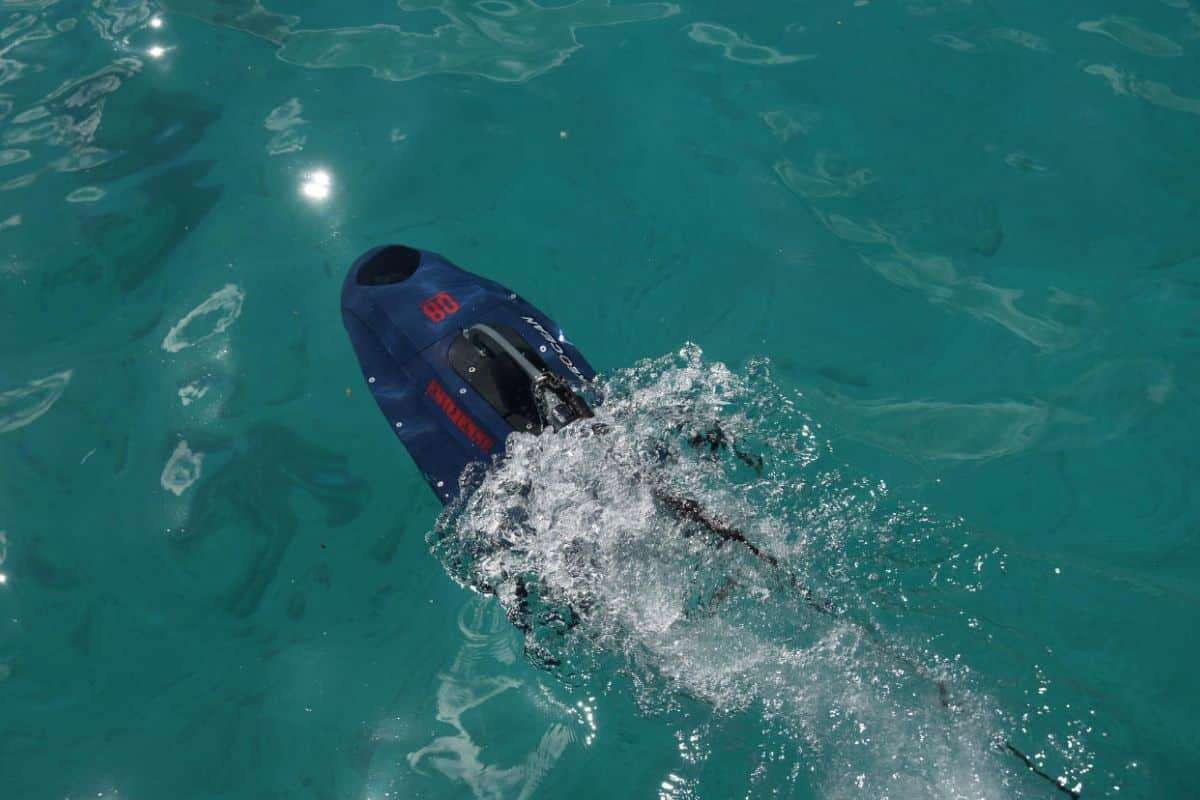
An innovative program utilizing autonomous underwater vehicles (AUVs) aims to revolutionize marine ecosystem preservation by overseeing and nurturing artificial reef environments. Researchers at the Cyprus Marine and Maritime Institute (CMMI) are deploying advanced, compact submersibles to monitor the flourishing marine communities around reefs constructed through cutting-edge 3D printing techniques.
Known as the EONIOS initiative, this project is underway in Cypriot waters, where these engineered reefs are designed to establish thriving ecosystems in otherwise lifeless seabeds. Fitted with sensors, ultra-high-definition video equipment, and batteries built for extended missions, these AUVs have the potential to transform reef management and serve roles in marine surveillance and offshore energy exploration.
Enhancing Artificial Reef Monitoring with Underwater Drone Technology
Artificial reefs play a crucial role in restoring habitats for aquatic species such as fish and corals. Historically, assessing their impact has been hampered by limited accessibility and the high costs linked to manned submarines or diver operations.

The AUVs deployed around Cyprus offer a self-sufficient and affordable alternative. Unlike traditional manned submersibles requiring continual human control, these compact drones can submerge for up to a month, delivering uninterrupted monitoring and rich data streams. Each unit includes:
- Ultra-clear imaging systems capturing the reef’s growth dynamics
- Environmental sensors measuring water quality, temperature, and marine diversity
- Acoustic communication arrays enabling remote data transmission
- Recharge docks integrated within the artificial reef structures
These features empower scientists to observe reef health continuously and identify unauthorized fishing or disruptive activities in conservation zones. The drones can instantly notify authorities if intrusions occur, providing a dynamic protection network for underwater habitats.
Expanding the Reach of Marine Preservation Globally
The EONIOS system, currently trialed in Cyprus, holds promise for widespread adoption among coastal regions aiming to replenish fish stocks and rehabilitate underwater ecosystems. Developed through a partnership between Arkeocean (France), SignalGeneriX (Cyprus), and Lanego (France), this breakthrough technology might soon be commercialized to bolster sustainable fisheries management.
The autonomous underwater vehicles (AUVs) provide compelling advantages over conventional approaches: one swarm of six drones can operate much more cost-effectively than a single traditional submersible; they currently function at depths of 300 meters (984 feet) with plans to extend to 3,000 meters (9,842 feet) in the future; plus, their long-lasting batteries enable them to utilize ocean currents for energy-efficient mobility.
Advancing the Future of Oceanic Autonomous Systems
The deployment of interconnected AUV swarms marks a significant leap in aquatic science, combining environmental protection with technological innovation and economic efficiency.
While focused presently on artificial reef monitoring, the EONIOS platform’s capabilities have potential applications spanning maritime security, resource management, and even climate change research.
Should this technology prove effective, it may become a vital global asset, aiding conservationists in restoring marine habitats and ensuring artificial reefs successfully rejuvenate ocean biodiversity.
- Categories:
- Science






0 comments
Sign in to Comment