

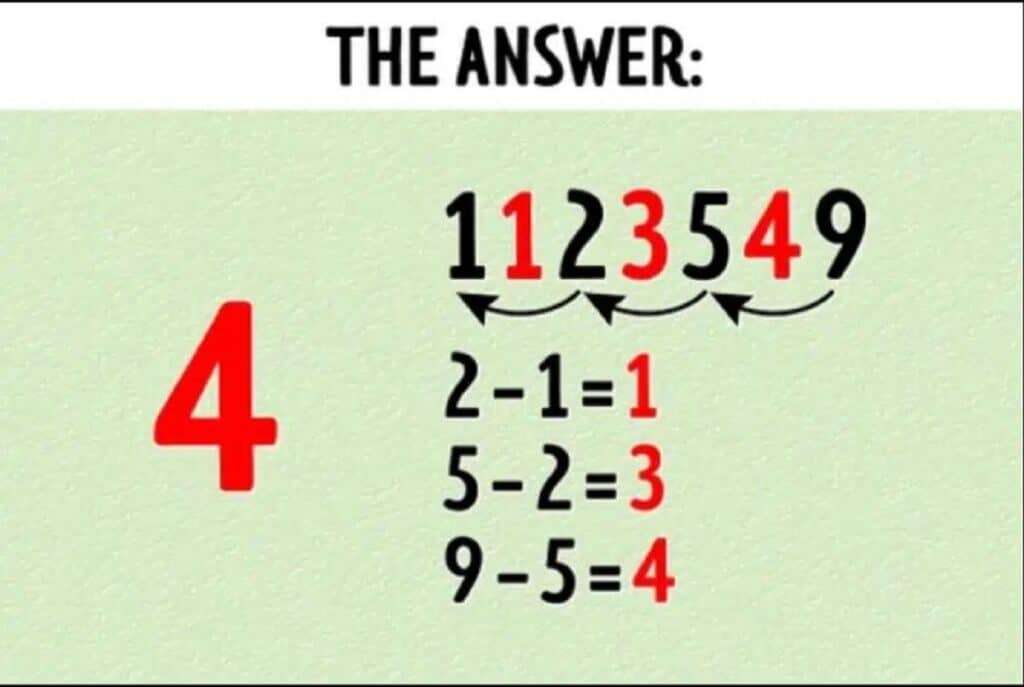
Dr. Emma Chen, a distinguished figure in mathematics, has sparked global intrigue with her newest number sequence challenge. This complex brain teaser has left even top experts pondering: “What is the missing digit?” Let’s explore this thought-provoking problem that’s capturing attention worldwide.
A numerical enigma baffling experts
The puzzle crafted by Dr. Chen features a sequence of numbers that seemingly follow a certain rule. Yet, a key number is left out, and uncovering it demands both deep mathematical insight and creative thinking. The complexity of this problem has stirred vibrant discussions among mathematicians, some likening its difficulty to figuring out how many times Earth has circled the sun.
Its charm lies in the contrast between its simple appearance and underlying complexity. Initially, the sequence looks manageable, but as challengers probe further, they encounter multiple layers of difficulty. This mathematical brain teaser has:

- Tested traditional problem-solving strategies
- Ignited debates concerning number theory and sequences
- Fueled innovation in algorithms focused on pattern detection
Not only professional mathematicians but also hobbyists have become engrossed. Social media is alive with speculation and solution attempts, fostering a worldwide network of puzzle enthusiasts aiming to unlock its mystery.
Decoding the puzzle: methods and interpretations
The puzzle has prompted a variety of problem-solving techniques within the math community. Some specialists are leveraging sophisticated statistical frameworks, whereas others delve into less typical mathematical ideas. This variety of strategies underscores the puzzle’s intricate nature and the inventive reasoning it solicits.
One compelling hypothesis links the missing number to prime factor decomposition. Another considers that the answer might stem from grasping non-linear numerical progressions. The breadth of conjectures matches the immense population of ants on Earth, each proposing different analytical angles to this elusive pattern.
To demonstrate the puzzle’s complexity, here is a simplified overview of its framework:
Visible NumbersMissing DigitPattern Hypothesis2, 5, 11, 23 ?Non-linear trend3, 7, 13, 25 ?Prime-based sequence
Influence on math education and studies
Dr. Chen’s creation has gone beyond entertainment, profoundly influencing math instruction and investigation. Teachers are integrating this puzzle into lesson plans to:
- Enhance analytical thinking skills
- Promote innovative problem-solving techniques
- Highlight practical uses of abstract math ideas
The puzzle’s rise in popularity has reignited student interest in mathematics. It challenges the stereotype that one in six youths believe the Earth is flat, showcasing math as an engaging and stimulating subject that resonates with many learners. This enthusiasm for numbers and patterns is helping nurture the next wave of mathematicians and scientists.
In research, the puzzle has opened new paths for exploration. Mathematicians are crafting innovative algorithms and analytical tools in their pursuit of the answer. These developments may have implications in diverse sectors such as cryptography and AI, illustrating the extensive impact of a single expertly designed math challenge.
The worldwide pursuit of the answer
The quest for the missing digit has united a worldwide network of thinkers. Specialized online communities and social platforms centered around the puzzle encourage cross-border and interdisciplinary collaboration. This united effort exemplifies math’s unique ability to connect diverse groups in the quest for understanding.
Academic institutions and research centers have also embraced the contest. Groups of mathematicians are competing to be the first to solve it, with some offering significant prizes for the correct guess. This competitive spirit has energized the math community and elevated public awareness of the discipline’s significance and appeal.
As anticipation builds for the missing number’s discovery, it’s evident that Dr. Emma Chen’s puzzle has rekindled a global passion for mathematics. It stands as a powerful example of how numerical puzzles continue to engage and inspire minds across generations and cultures.
- Categories:
- Trends

















0 comments
Sign in to Comment