
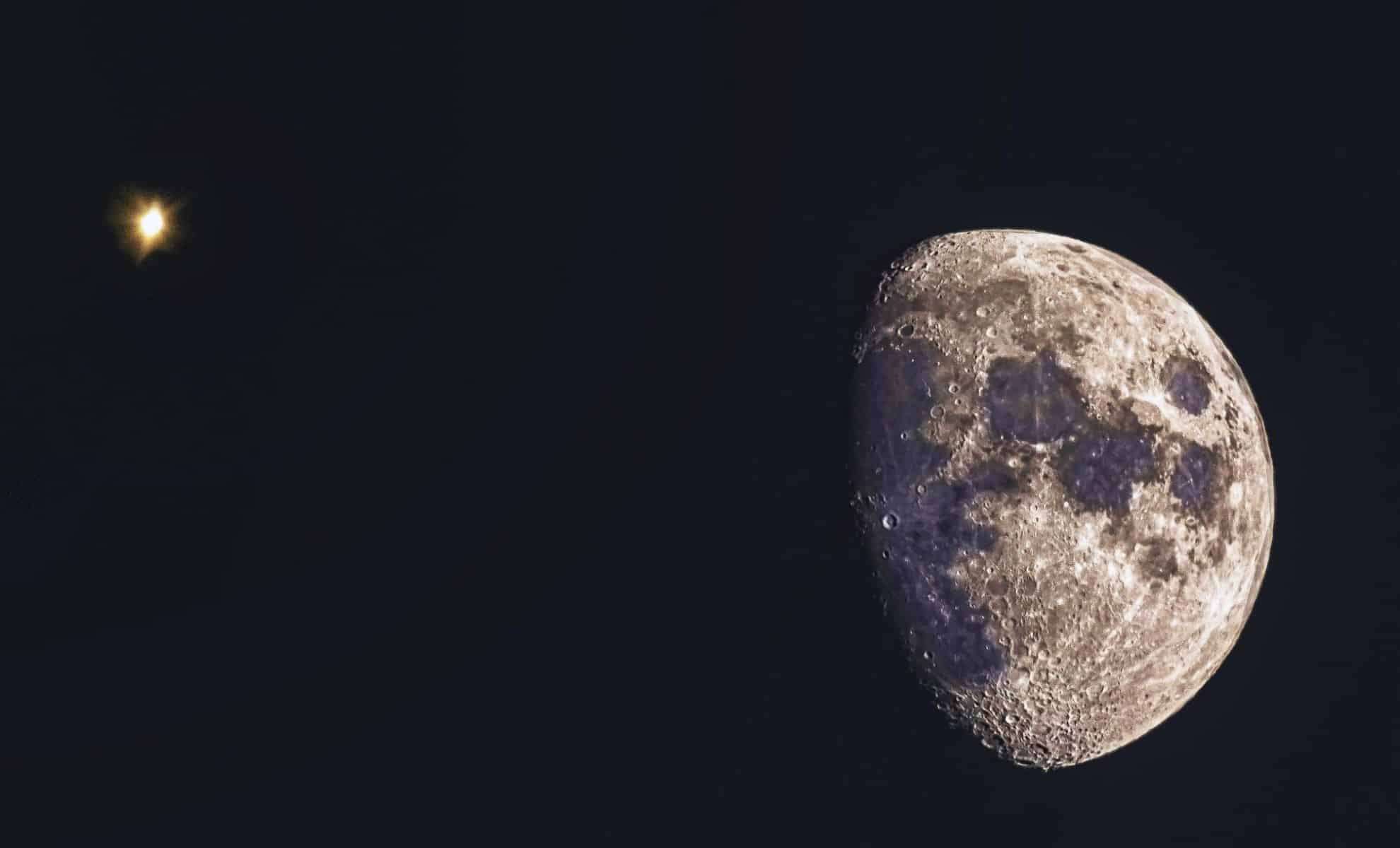
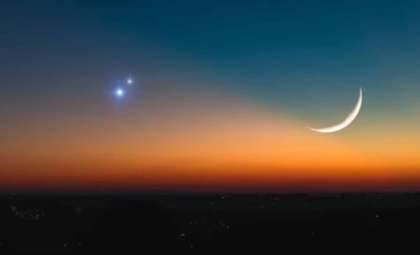
July offers stargazers throughout Southern California a captivating celestial display as the crescent Moon draws near Mars in a beautiful astronomical pairing. As highlighted in National Geographic’s July 2025 guide to the night sky, this event is part of a fantastic array of cosmic phenomena this month, featuring meteor showers, supermoons, and notable planetary movements. The Moon and Mars meeting on July 28 is especially remarkable, offering a clear and graceful vision just after dusk. Facing west at that time will reveal the Moon and the Red Planet glowing side by side, creating a striking contrast in the twilight sky.
A Beautiful Twilight Encounter of Celestial Neighbors
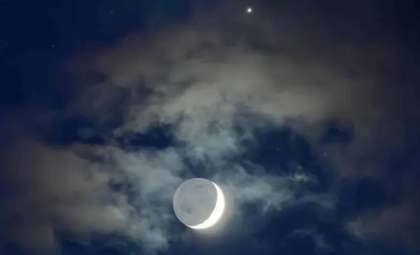
About 45 minutes post-sunset, as the sky darkens enough to reveal dimmer objects, the crescent Moon will shine with its familiar delicate glow. Nearby, Mars will appear slightly lower and cast a warm reddish hue. To onlookers, this will resemble a gentle dance suspended above Earth’s horizon—a type of celestial event called a conjunction, where two objects seem close together from our earthly perspective. Observers in Los Angeles and surrounding areas can view this spectacle with the naked eye, especially from locations offering a , such as coastal areas, hills, or lookout points. The scene makes for a peaceful and enchanting twilight moment.
Understanding the Significance of the Moon–Mars Conjunction
While encounters between the Moon and Mars occur periodically, not all make for captivating sights. This occurrence stands out thanks to Mars's intense orange radiance paired with the thin crescent Moon, lit only in part. Their contrasting brightness and color make them easy to distinguish even as dusk sets in. Astronomically, conjunctions represent alignments along our line of sight, not actual spatial proximity, but they still offer insights into planetary orbits and motions. Such events demonstrate the progression of bodies along the ecliptic plane—the apparent path followed by the Sun—and offer a perfect opportunity for educators and astronomy enthusiasts alike. For the public, it presents a stunning display easily enjoyed without the need for telescopes or specialized knowledge.

Tips for Optimal Viewing Across Southern California
Choosing the right time and place enhances this experience. Plan to find a vantage point by 8:15 p.m. on July 28, shortly after sunset. Because Mars and the Moon will appear near the western horizon, select spots where the view isn’t obstructed by trees, buildings, or hills. Although light pollution in cities such as Los Angeles can dim fainter stars, the brightness of both the Moon and Mars ensures clear visibility under most conditions. Binoculars or a compact telescope can boost details, like the lunar surface or Mars’s disk, but are completely optional. Smartphone cameras with night photography capabilities—especially when stabilized by a tripod—may effectively capture the event. For those interested in photography, wide-angle shots incorporating silhouettes of local scenery can offer striking results.
- Categories:
- News





0 comments
Sign in to Comment