
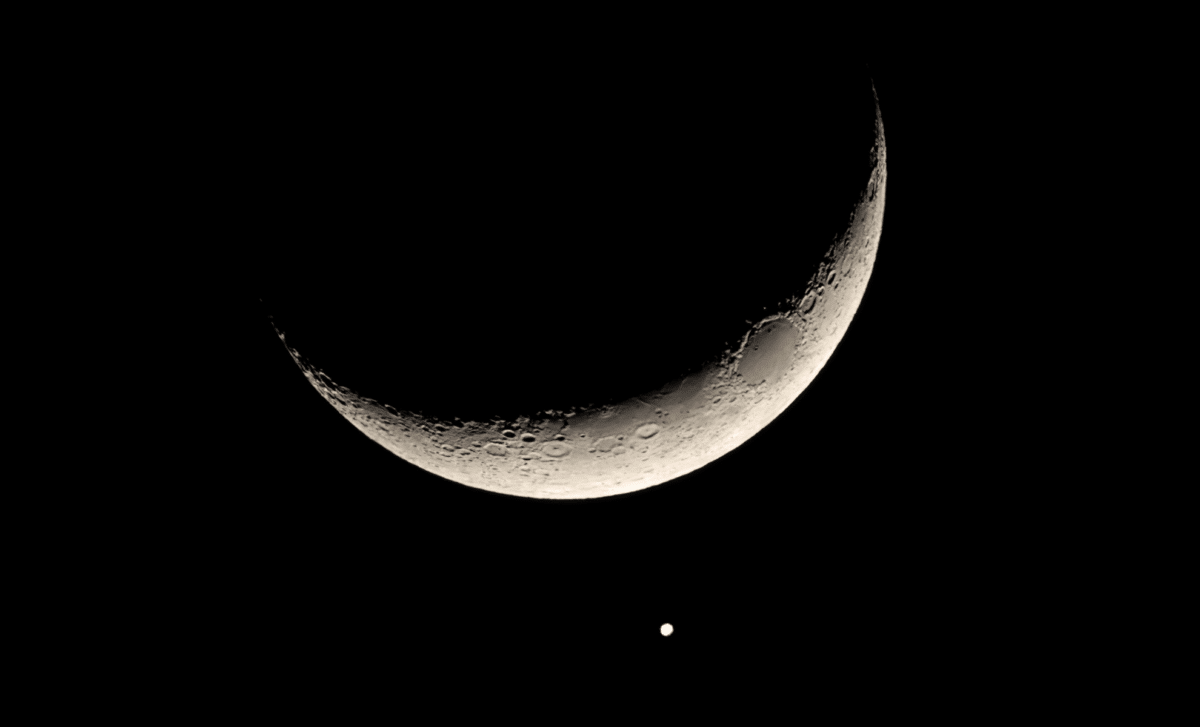
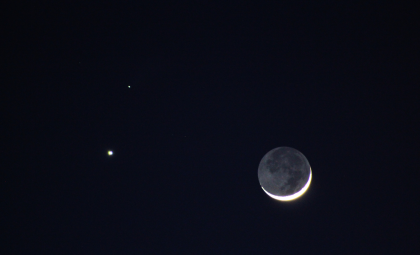
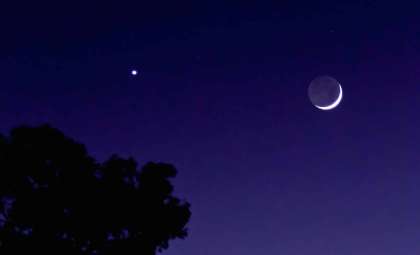
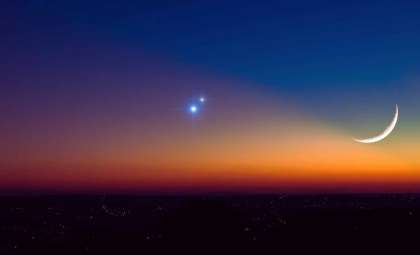
This evening, March 19, stargazers are in for an extraordinary sight as Venus, commonly called the “Evening Star,” will lead observers to a razor-thin crescent moon that is just under a day old. This exceptionally young lunar crescent, illuminated at merely 1%, will be visible beside the radiant planet, creating a rare view few get to experience. Provided the skies stay clear, this fleeting cosmic pairing offers a unique chance to witness the moon in its earliest phase.
Venus: Your Celestial Guide
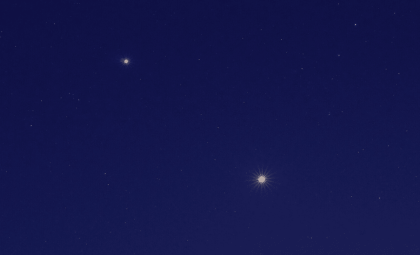
As twilight descends on March 19, Venus will command the western horizon, glowing brilliantly against the dimming sky. Space.com notes that while the sky will still retain some light from sunset, Venus will shine with prominence, acting as a celestial pointer to the elusive moon nearby. Just barely 20 hours past new moon, the crescent will be perched closely below Venus, presenting a challenging yet rewarding target for avid skywatchers.
Locating this fragile crescent depends largely on Venus’s position. The moon will sit approximately 7 degrees beneath and to the right of Venus, hovering low between 2 and 5 degrees above the horizon. Given this tiny gap and low altitude, timing is crucial; observers should venture outside within 30 to 60 minutes after sunset to catch this delicate lunar silhouette.

The Lunar Phenomenon: What Makes This Crescent So Distinctive?
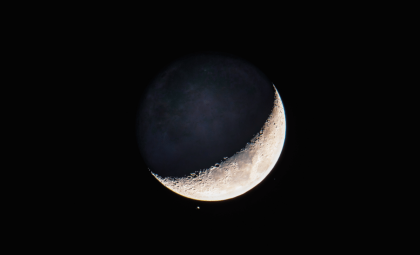
Understanding the rarity of this event requires appreciating just how thin the moon’s crescent will be. As Joe Rao of Space.com explains, only about 1% of the moon’s face will be lit, forming a sliver spanning about 130 degrees along its edge. This is significantly slimmer than the typical crescent moon’s illumination, which often covers 180 degrees or more. Usually, new moons go unnoticed because they’re nearly invisible at night, but this waxing crescent will offer a fragile, fleeting glimpse into the moon’s early stage.
Adding to its uniqueness, the timing aligns closely with the March equinox the next day, causing the Sun, Moon, and planets to align so the crescent moon will appear near the sunset point on the horizon. This alignment enhances the moon’s visibility, creating a viewing opportunity difficult to replicate during other times of the year.
Viewing Tips: Best Places and Times to See the March 19 Crescent
To experience this spectacle, find a location with an unobstructed view of the western sky. Ideal spots include open parks, fields, or any area free of tall buildings and dense trees that could block low-horizon views. This event will be observable across much of the Northern Hemisphere, especially in North America, Europe, and Asia.
If you're in an urban area, seek out elevated or open spaces to maximize your chance of spotting the moon and Venus. The optimal window to observe is between half an hour and an hour after sunset when Venus’s brightness helps locate the crescent. Binoculars may assist if the sliver appears faint, but many viewers may be able to see it unaided if they focus carefully on the sky’s western edge.
- Categories:
- News


0 comments
Sign in to Comment