
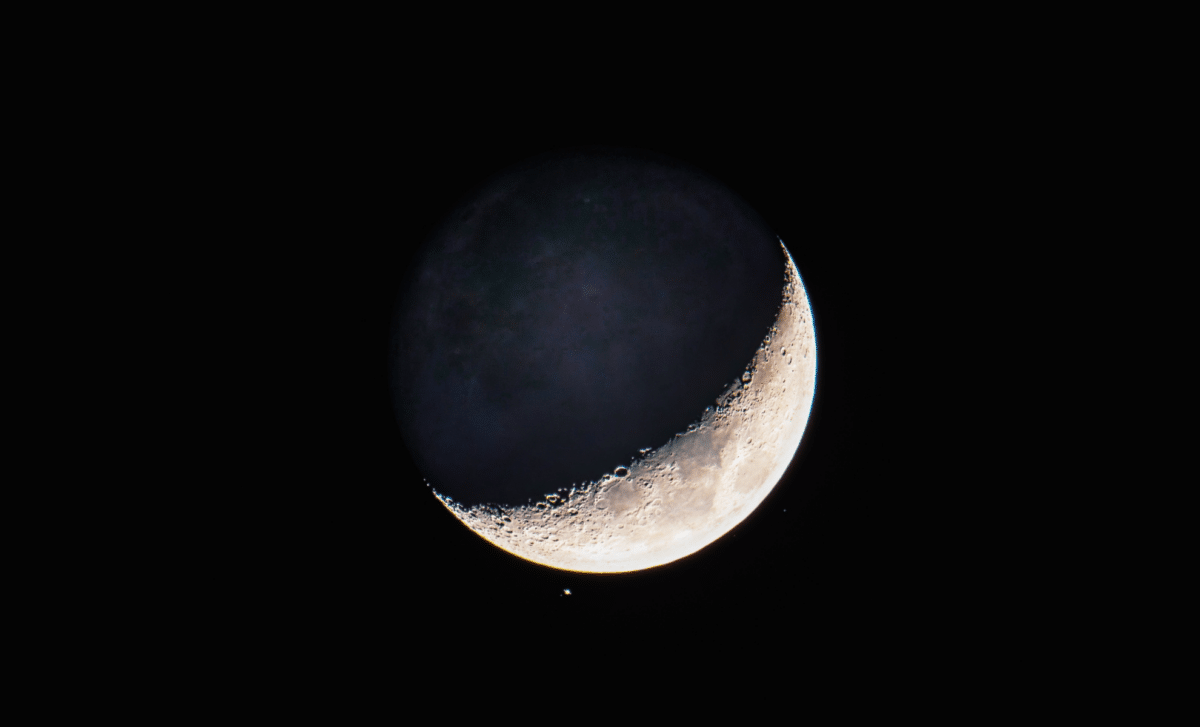
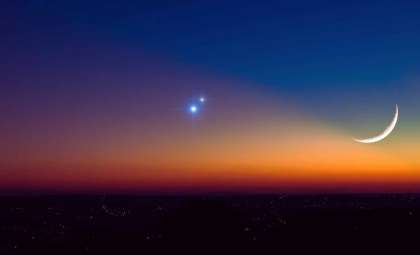
On the evening of January 21, 2026, sky enthusiasts will be treated to a stunning astronomical spectacle. A delicate crescent moon will be visible alongside Saturn shortly after sunset, creating a calming scene in the twilight visible across many regions. Illuminated by Earthshine on its dark side and Saturn shining brightly within the faint constellation Pisces, this uncommon pairing presents an excellent opportunity for both expert astronomers and casual viewers to admire the wonders of the night sky.
An Evening of Stellar Synchrony
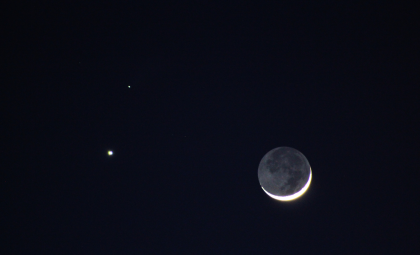
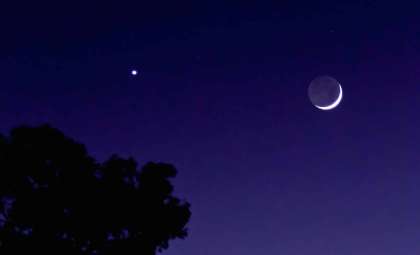
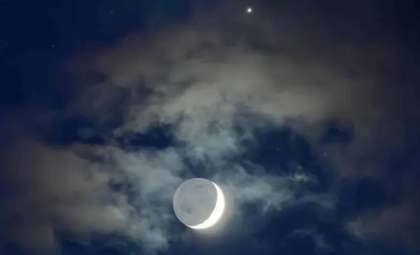
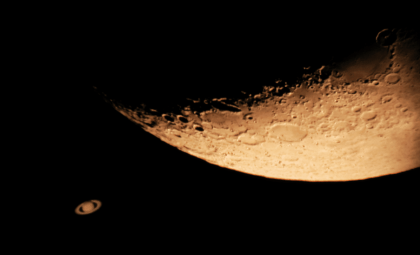
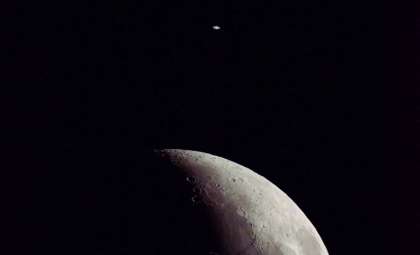
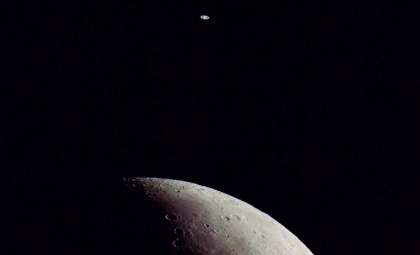
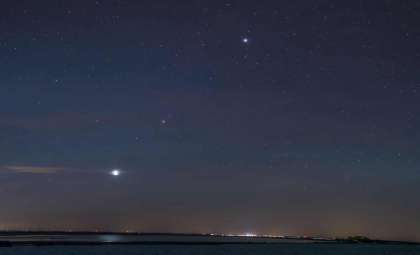
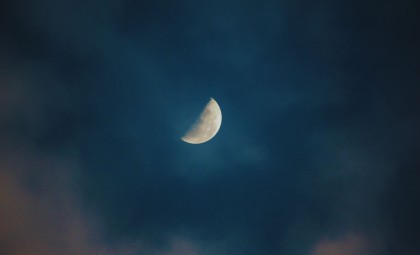
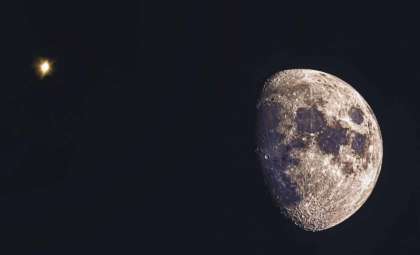
As darkness settles, the sky will reveal a captivating sight: a waxing crescent moon positioned near the ringed planet Saturn, which glimmers gently in the constellation Pisces. According to Space.com, this beautiful conjunction will be best spotted shortly after sunset, close to the west-southwest horizon. The moon will display around 10% illumination, accompanied by Saturn’s steady, golden light positioned just above it to the left.
Though Saturn’s iconic rings require a telescope to be observed, the moon’s Earthshine—a soft glow resulting from sunlight reflecting off Earth’s atmosphere and oceans—will highlight the darker part of the crescent. From the lunar surface perspective, Earth would appear almost fully lit and about fifty times brighter than how the moon appears to us, showcasing the fascinating relationship between these celestial bodies.

This alignment arises during the moon’s early phases, heralding a week filled with stunning celestial sights for enthusiasts. Those equipped with binoculars or small telescopes will find this a perfect occasion to observe Saturn’s subtle radiance near the slender moon.
The Importance of This Celestial Event
Though conjunctions between planets and the moon occur from time to time, they symbolize the majestic harmony of orbital mechanics within our solar system. As the moon waxes toward its first quarter, its path reflects Earth’s rotation and tilt, occasionally leading to remarkable encounters with bright planets such as Saturn or Jupiter. These events not only enchant skywatchers but also offer scientists valuable opportunities to analyze light reflection, atmospheric effects, and planetary movements.
Per insights from Space.com, this tonight’s viewing highlights how the geometry of celestial bodies determines the spectacle we witness from Earth. The subtle Pisces constellation provides a gentle backdrop for this cosmic ballet, reminding us of the vastness and constant motion of the universe.
Visibility is influenced by local weather and light pollution, making rural or coastal locations ideal for clearer observations. While observers in cities may catch glimpses through some haze, the deepening twilight will cause Saturn’s soft glow to stand out more against the moon’s faint light.
Exploring the Phenomenon of Earthshine
A highlight of this event is the Earthshine effect, where the moon’s shadowed portion becomes faintly lit. This glow happens when sunlight reflects off Earth and illuminates the lunar surface. The intensity of Earthshine varies with Earth’s reflectivity, influenced by cloud coverage and ice extent.
Astronomers utilize this subtle illumination to study changes in the planet’s climate. Long-term observations have linked fluctuations in Earthshine to shifts in global cloud formations and atmospheric reflectance. What appears as a delicate shimmer on the moon’s edge is actually a testament to Earth’s evolving weather dynamics.
Viewing Earthshine with the unaided eye offers a profound sense of connection between Earth’s radiant presence and the moon’s quiet, distant landscape. Such moments elevate ordinary stargazing into an experience of cosmic unity.
Tips for Watching the Event
To see the crescent moon and Saturn together, look toward the west-southwest sky about 45 minutes after sunset. Using a stargazing app like Sky Guide can help identify Pisces if conditions are difficult. Binoculars or a modest telescope will enhance this view, revealing Saturn’s warm golden tint and the moon’s delicate features.
Choose an open space free from obstructions such as buildings or trees blocking the horizon. The observation window is limited since both Saturn and the moon will set within a few hours after sundown. Photographers may find this an excellent chance to capture stunning images during the blue hour, when the sky’s colors beautifully frame the glowing crescent.
- Categories:
- News

0 comments
Sign in to Comment