
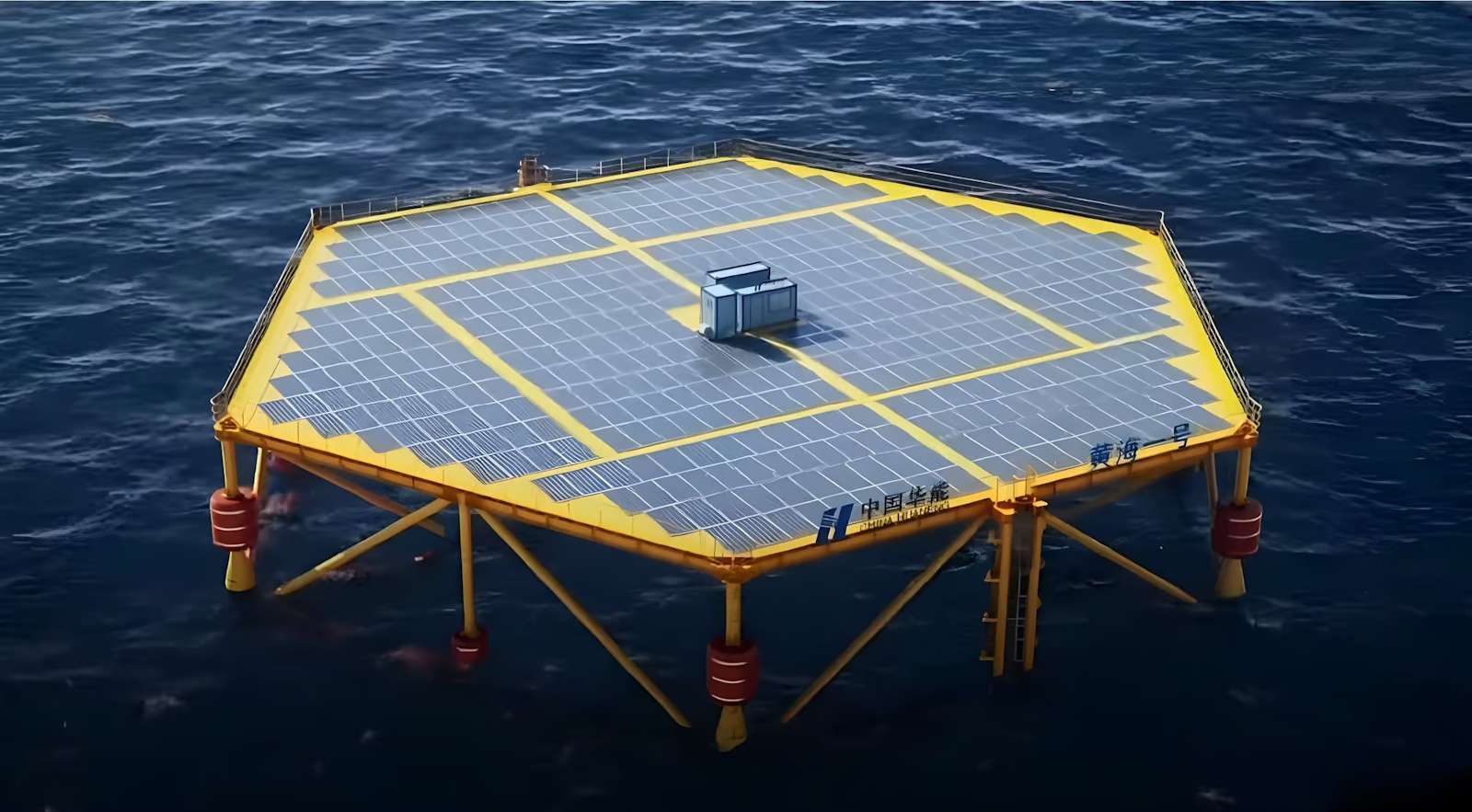
The Yellow Sea No. 1 solar platform, located off the coast of Shandong Peninsula, exemplifies China’s dedication to enhancing its renewable energy initiatives. This groundbreaking structure rises nine meters above the water and uses 64 buoys to stay afloat. Engineered to endure waves reaching heights of up to 10 meters, it showcases exceptional durability in tough oceanic environments.
Designed to thrive in severe marine conditions, the platform incorporates three distinct photovoltaic technologies with different capacities. This setup enables engineers to assess the performance and durability of various solar panel types under offshore conditions, optimizing for both efficiency and resilience.
While offshore wind farms have been widely recognized for their contributions to clean energy, floating solar platforms open new possibilities for generating renewable power. The combination of wind and solar energy from offshore locations has the potential to transform the energy landscape. Some firms are already exploring hybrid solutions that integrate both wind and solar technologies, boosting the overall effectiveness of renewable energy production.

Marine solar technology: Overcoming obstacles with innovation
Although promising, the Yellow Sea No. 1 platform must confront numerous environmental challenges. The marine setting can adversely affect solar panel efficiency and lifespan. Salt deposits from sea spray can accumulate on the panels, diminishing their ability to convert sunlight into electricity. Moreover, exposure to seawater raises concerns about corrosion risks for both photovoltaic cells and electrical components.
To mitigate these issues, developers have raised the platform to minimize direct seawater contact. This elevation is key to preserving the panels’ functionality and durability. Ensuring that these environmental obstacles are addressed is fundamental to achieving high energy output.
Advances in materials science offer promising solutions. For example, recent developments in self-repairing metal alloys might inspire enhancements in solar panel construction, increasing resilience to corrosion and environmental wear and tear.
Monitoring performance and envisioning the future
Currently, the Yellow Sea No. 1 platform is undergoing a year-long evaluation roughly 30 kilometers offshore in waters 30 meters deep. During this testing period, key criteria under review include:
- Ability to withstand wind and wave forces
- Structural stability and strength
- Efficiency of electrical power generation
- Maintenance frequency and complexity
The outcome of this trial will guide decisions about scaling up offshore solar platforms. Should the results prove favorable, these installations could work alongside offshore wind farms to significantly increase China's renewable energy production capacity.
The implications of this technology extend well beyond energy generation. Advances in offshore power platforms may intersect with emerging fields such as neural devices and remote operation systems, potentially enabling smarter, more automated energy management solutions.
To put offshore solar platforms into perspective, here is a comparison with terrestrial solar farms:
Aspect Offshore Solar Platforms Conventional Land-Based Solar Farms Land Usage Utilizes ocean surfaces without occupying land Requires extensive land areas Environmental Effects Minimal terrestrial impact, possible marine ecosystem considerations Changes to land use and habitat disruption Maintenance Difficulty High due to harsh sea conditions Moderate and more accessible Energy Production Potential Consistent with ample sun exposure Variable based on location and weather
As China forges ahead in renewable energy innovation, initiatives like the Yellow Sea No. 1 platform mark a significant leap toward a sustainable energy future. These offshore solar arrays could usher in a new era of eco-friendly power generation, unlocking the vast energy potential found in marine environments.
- Categories:
- Tech














0 comments
Sign in to Comment