
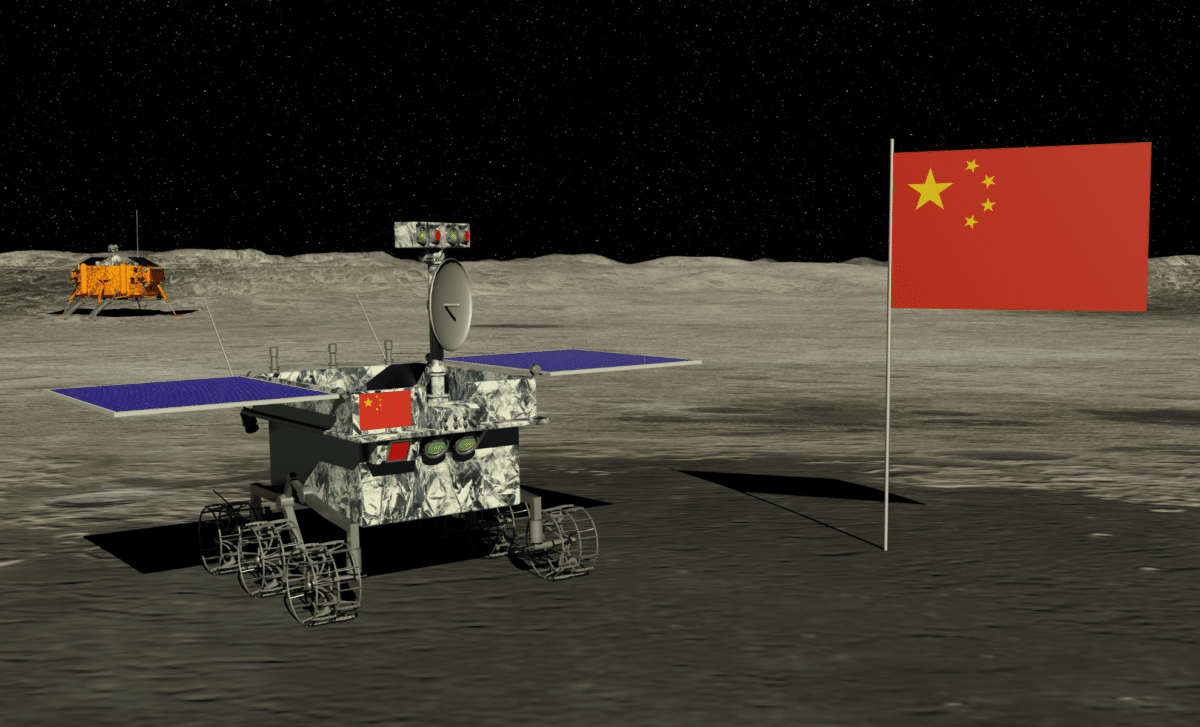
A team of Chinese scientists has introduced the planet’s inaugural timekeeping software tailored specifically for the Moon’s environment, where clocks run faster than on Earth due to lower gravitational pull. Created by researchers at the Purple Mountain Observatory in Nanjing, the innovative system aims to ensure ultra-accurate synchronization between Earth-based and lunar-based networks, a crucial breakthrough as global lunar missions increase rapidly.
Understanding the Variance Between Lunar and Earth Time
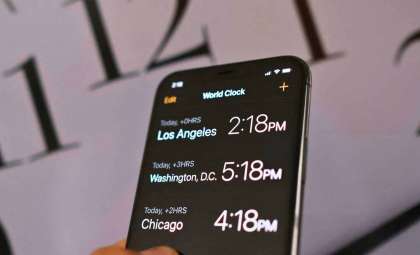
Because the Moon exerts less gravity, timepieces there advance slightly quicker, by about 56 microseconds per day, compared to those on Earth. While subtle, this discrepancy stems from Einstein’s theory of general relativity and becomes significant with prolonged duration. With the rise of lunar expeditions, this continuous drift could jeopardize precise navigation, communications, and scientific data integrity.
The advanced software created by the Chinese astronomical team accounts for both gravitational influences and the Moon’s orbital motion. The developers assert their system can maintain accuracy within tens of nanoseconds even over 1,000 years, marking an unprecedented advancement for managing time in space exploration.

Harvard’s astronomer and space historian Jonathan McDowell remarked,
“If you want to use the equivalent of GPS on the moon – which we’ll probably want to do in just a few years from now, especially for precision landing locations – you’ll need to handle this somehow.”
His insight, cited in SCMP, underscores the immediate demand for high-precision lunar positioning as numerous space agencies and private entities gear up for ongoing lunar operations.
From Concept to Reality: China’s Advancement in Lunar Timekeeping
Distinguishing itself from previous theoretical frameworks, this Chinese innovation is now encapsulated in operational software, enabling users to effortlessly convert between lunar and Earth time without delving into complex relativistic formulas. This capability is critical for upcoming moon missions involving coordinated activity amongst spacecraft, robotic explorers, and future human habitats.
SCMP details that the Purple Mountain Observatory, part of the Chinese Academy of Sciences, developed this tool and published its findings in the peer-reviewed journal Astronomy and Astrophysics last December. This milestone highlights China’s dedication to enduring lunar exploration and its collaborative spirit within the international scientific community.
As McDowell pointed out in the article, “This emphasises that China is serious about the moon, and is being quite open about sharing its lunar-related research.”
This transparent approach could encourage global partnerships just as countries including the U.S., Russia, India, and ESA members intensify their lunar exploration programs.
Strategic Timing Amid a New Era of Moon Exploration
The launch of this software coincides with a crucial phase for lunar exploration. With NASA’s Artemis program aiming to return astronauts to the Moon and China advancing its own Chang’e 7 and lunar base initiatives, dependable timekeeping is becoming as essential as propulsion systems or communications infrastructure. The Moon is evolving into a vital hub for space operations.
Accurate time synchronization on the lunar surface is not simply a scientific curiosity but a fundamental requirement for enabling autonomous navigation, long-duration stays, and resource harvesting. Future rovers, astronauts, and orbiting equipment will rely on timing accuracy down to the microsecond, achievable only with advanced solutions like this.
McDowell emphasized the operational urgency: “Differences as small as a microsecond could quickly become significant in navigation systems, affecting calculations over timescales of a minute.”
If these timing discrepancies are not addressed, it could lead to navigation inaccuracies, missed landing targets, or a breakdown in communication between lunar installations and Earth.
The Global Imperative for Unified Lunar Time Standards
As more nations prepare for continuous lunar presence, establishing a standard lunar time system is increasingly vital. At present, Earth time is adjusted individually for each mission, but this fragmented method will prove inadequate as multiple spacecraft operate simultaneously in lunar orbit and on its surface.
China’s software might lay the groundwork for future worldwide lunar timing protocols, similar to how GPS and UTC standards operate on Earth. While other spacefaring powers recognize the importance of lunar timing, China’s delivery of functional software places it at the forefront of operational readiness.
By openly sharing this technology, China is positioning itself not only as a key contributor in lunar exploration but also as a potential leader in setting standards. This could shape the management of lunar infrastructure, including timekeeping, communication, and coordination across governmental and commercial ventures.
- Categories:
- News








0 comments
Sign in to Comment