

Chinese scientists have achieved a major milestone in agriculture by creating a novel rice variety that can grow on lands previously considered infertile. This remarkable strain is designed to flourish on approximately 14 billion acres of soil affected by salinity, alkalinity, and other challenging environmental factors.
This development comes at a critical time as global agriculture faces mounting challenges due to climate change, shrinking arable land, and population pressures. But what makes this innovative rice capable of thriving where conventional crops fail?
Unlocking Agricultural Potential Through Scientific Innovation
This resilient rice was engineered through advanced genetic modification by teams at the Chinese Academy of Sciences and Shanghai Jiao Tong University. Central to their approach is the regulation of gibberellin, a hormone that governs plant growth. By adjusting this hormone’s activity, researchers developed a strain that not only survives but prospers amid tough conditions such as soil saltiness, elevated alkalinity, and intense heat.

This rice variety stands out for its adaptability. Unlike traditional crops that merely withstand stress, it thrives in hostile environments, transforming once barren soils into viable farmland. Regions previously dismissed as too saline or too alkaline for agriculture could soon supply abundant harvests thanks to this breakthrough.
A Heat-Resistant Gene Enhancing Rice Yields
In tandem with the stress-resistant rice, researchers at Huazhong Agricultural University discovered the QT12 gene, which boosts rice’s resilience to extreme heat. Field tests carried out in the Yangtze River basin recorded an impressive 77.9% yield increase under severe heat conditions.
The QT12 gene functions by interacting with a protein complex within rice grains, effectively shielding them from heat damage while preserving essential starch and protein production.
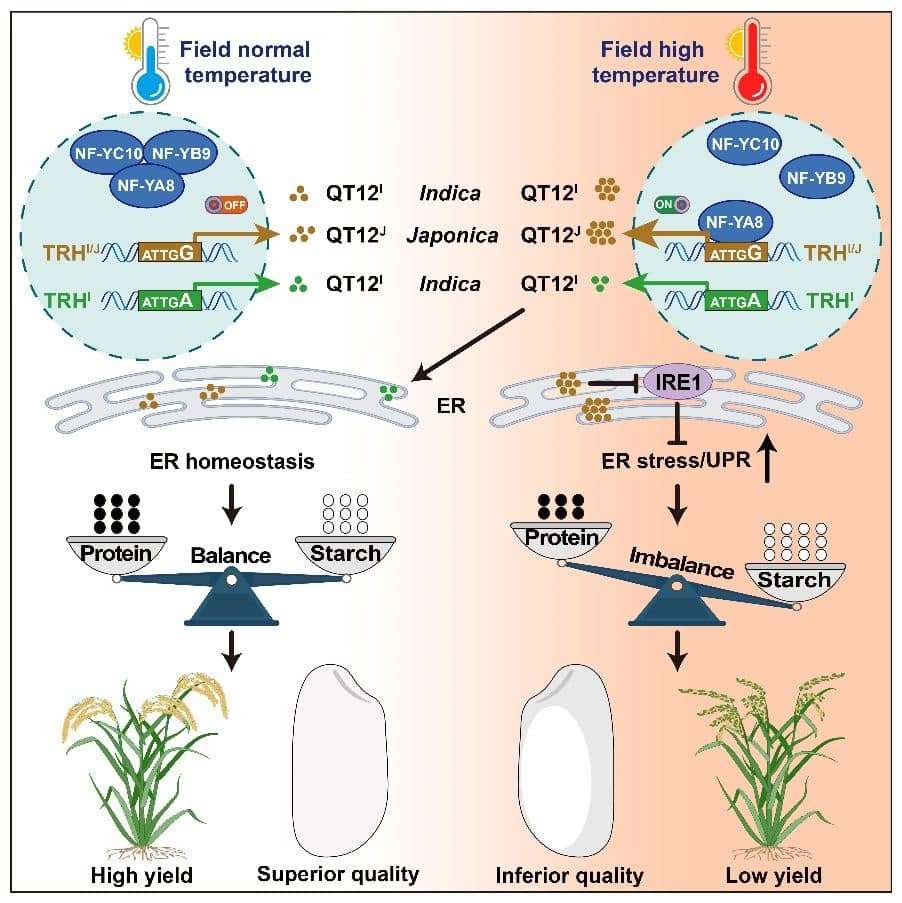
Published in the journal Cell, this discovery addresses long-standing challenges related to heat stress and crop quality in rice cultivation.
Reclaiming Degraded Lands for Agriculture
Approximately 1.4 billion hectares worldwide suffer from salinization, representing over 10% of global arable land. Historically deemed unsuitable for farming, these lands now hold new promise through the introduction of this stress-tolerant rice.
The impact could be transformative, with yield improvements reaching up to 101% in some regions. In an era of shrinking farmland, unlocking these marginal zones could substantially elevate food production needed to support a growing population.
Addressing Climate Change Challenges in Food Production
With escalating extreme weather events, including higher temperatures and erratic rainfall patterns, many farming areas are becoming less viable. This innovative rice variant offers a potential buffer against these changes.
Given that rice is a dietary cornerstone for nearly half the world's population, enhancing its resilience and stability has profound implications for food security amid climate uncertainties.
- Categories:
- News








0 comments
Sign in to Comment