
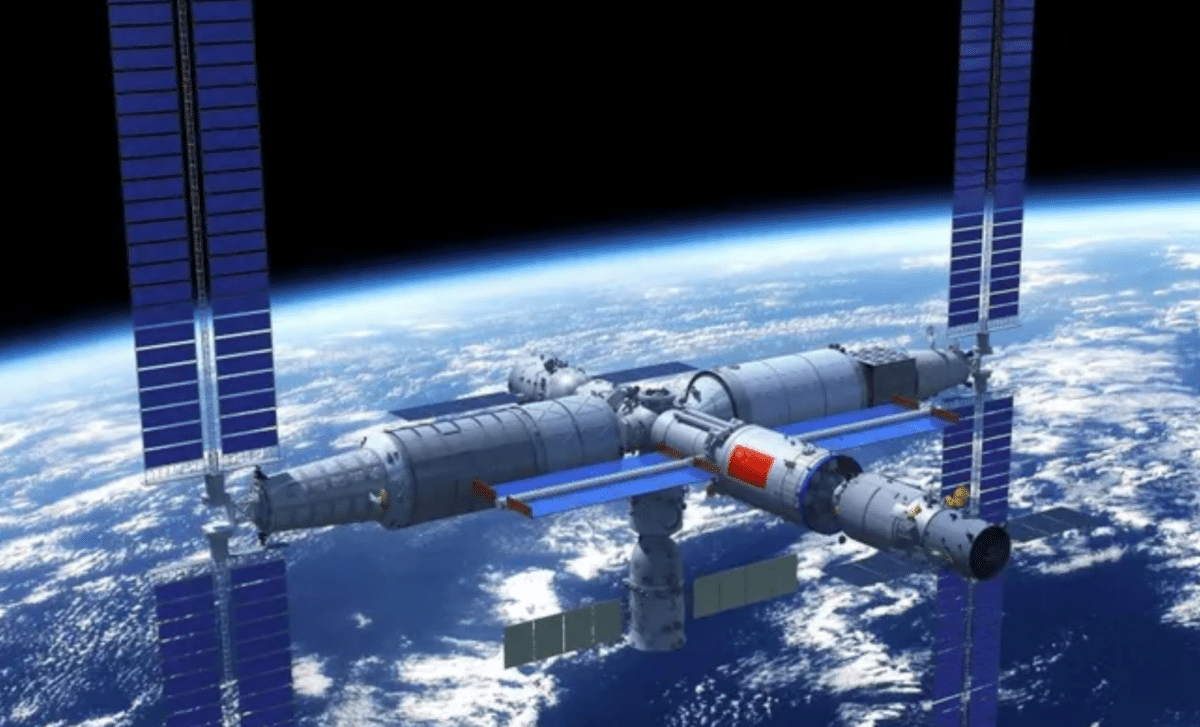
China is set to significantly enlarge its Tiangong space station, a development that may alter the balance of power in low Earth orbit just as NASA prepares to decommission the International Space Station (ISS) by 2031, reports the South China Morning Post.
An Ambitious Growth Strategy to Strengthen Orbital Presence
The planned expansion of Tiangong is far from a minor enhancement. Plans include adding a fourth module to the existing T-shaped layout, transforming it into a cross-shaped structure designed to support further expansion. This forthcoming module will serve as a central hub, outfitted with multiple docking ports to enable attachment of future laboratory components. Ultimately, the goal is to develop a six-module station approaching 180 tonnes in mass, substantially increasing its operational capacities.
This growth occurs at a critical juncture. The ISS, a collaborative project involving 15 countries, has dominated space-based research for decades, hosting thousands of scientific experiments and symbolizing international cooperation. With its scheduled retirement in the early 2030s, a gap is emerging in low Earth orbit activities. China aims for Tiangong to occupy that space, aligning with rising demand for microgravity research across both scientific and commercial fields.

Rising Scientific Needs Fueling the Expansion
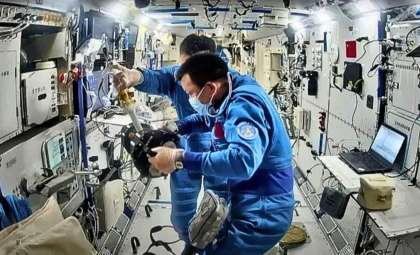
Since its full operation began in 2022, Tiangong has facilitated over 260 experiments and 26 spacewalks, proving its dependability and research value. The South China Morning Post reports the station offers around 110 cubic meters of living volume, comparable to a spacious three-bedroom apartment, capable of supporting three astronauts on long missions and up to six during crew turnover.
However, this space is becoming increasingly constrained. International cooperation, including payloads from partnerships with the United Nations Office for Outer Space Affairs, is intensifying competition for available areas. As CCTV stated, “At this pace, the Tiangong will soon run out of space,” reflecting the trend that low Earth orbit is growing more congested, contested, and valuable scientifically.
The upcoming module will incorporate a more advanced airlock for spacewalk operations and improved logistical systems to manage more frequent delivery missions. These advancements mark a transition from a nationally focused modular station to a multi-user orbital facility with expanding global involvement.
Technological Advances and Engineering Challenges
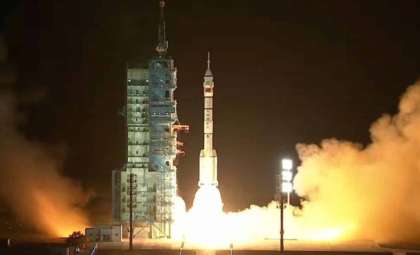
Realizing this significant expansion demands substantial improvements in launch and assembly technologies. China is upgrading its Long March 5B rocket with a bigger payload fairing and an extra stage to boost its lift capabilities. These enhancements are essential to carry heavier and more sophisticated station modules into orbit.
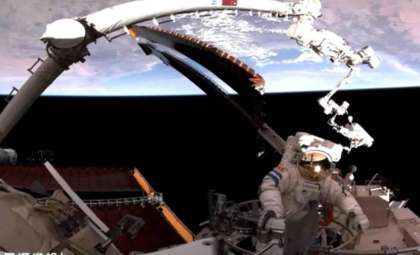
Within the station, upgrades are also progressing. The China Academy of Space Technology is refining robotic arm systems, enabling them to undertake more complex assembly and maintenance operations. These robotic tools will be key for managing a larger, more intricate station while minimizing risky astronaut spacewalks and boosting operational efficiency.
Although originally designed to last 15 years, the station's enhancements indicate China's intention to keep Tiangong operational and scientifically relevant well beyond this timeframe. As the ISS nears its final decade, Tiangong is emerging as a major scientific platform for the future.
Geopolitical Dynamics and International Participation
China is gradually inviting more international collaboration aboard Tiangong, signaling a potential reshaping of global space partnerships. Astronauts from Pakistan, Hong Kong, and Macau are slated to participate in upcoming missions, marking the station's role as a center for global cooperation under China’s leadership.
This strategy contrasts with the ISS’s multinational ownership model primarily led by the U.S. and its allies. As Western-led orbital infrastructure diminishes, more nations may turn to China for opportunities in space-based research.
The timing also prompts considerations about future regulation of orbital operations. With commercial stations still under development and the ISS scheduled for retirement, China’s expansion offers a first-mover edge in shaping humanity’s next chapter in low Earth orbit.
- Categories:
- Space





0 comments
Sign in to Comment