
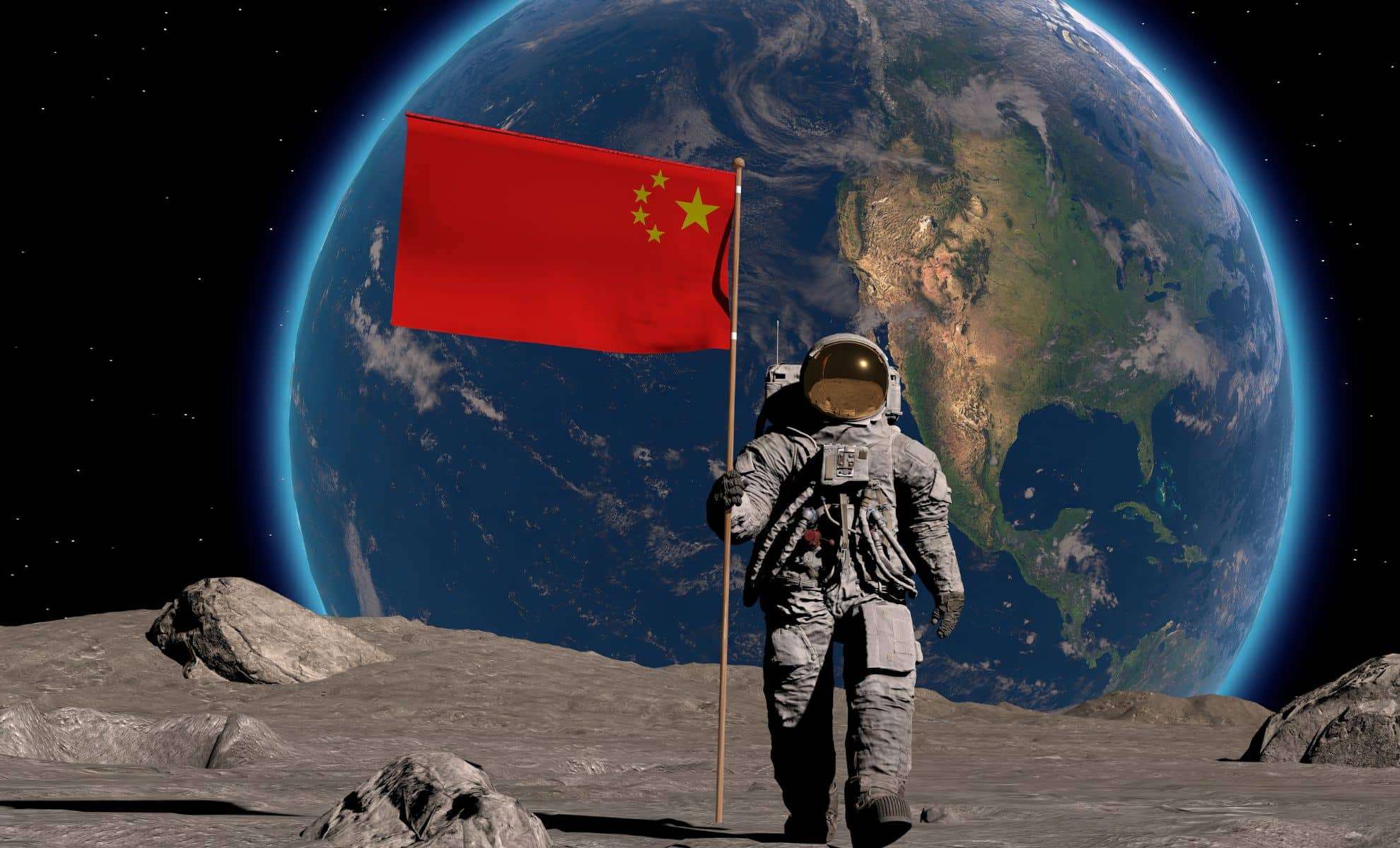
A recent analysis from the Commercial Space Federation, titled Redshift, indicates China’s space exploration capabilities could overtake those of the United States within five to ten years. The report highlights intensifying competition as China transitions from trailing to leading the next chapter of space discovery.
Rapid Advances in China’s Space Capabilities
China’s progress spans across numerous spaceflight sectors. The nation successfully established the Tiangong space station in 2023, maintaining continuous human presence aboard it. This station is set to become the world’s sole major government-operated orbital facility once the International Space Station is scheduled to retire later this decade.
The Chang’e lunar program has also seen remarkable progression, from successful retrieval of lunar samples to plans for crewed lunar landings by 2030. The report remarks that China is simultaneously managing projects akin to the “Apollo, ISS, and commercial space” phases, accelerating developments on multiple fronts at once.

Competition Focused on Lunar Exploration
The moon has become a hotspot for rivalry. While NASA’s Artemis mission continues to struggle with setbacks, including technical complications with SpaceX’s Starship, China has consistently fulfilled its lunar objectives. These include high-resolution lunar surface mapping, return of material from the moon’s far side, and enhancing heavy-lift rocket technology for manned spaceflights.
China aims to construct a permanent lunar base by 2035 powered by an autonomous nuclear reactor. This station would not only reinforce China’s lunar resource claims but also serve as a stepping stone toward future manned missions to Mars.

Expanding Infrastructure and Global Collaborations
In addition to lunar goals, China is broadening its influence in low-Earth orbit. Operating six active spaceports, the country has ramped up its rocket launch cadence. Plans include deploying satellite megaconstellations comparable to Starlink, building an orbital solar energy platform, and developing a telescope with capabilities rivaling the James Webb Space Telescope.
The report attributes this expansion to substantial government investment, noting a growth from $164 million in 2016 to $2.86 billion in 2024 for commercial space projects. The “Space Silk Road” initiative has forged over 80 international collaborations, involving countries like Russia, India, and Japan, gradually shifting the balance of influence in global space affairs.
Implications for U.S. Space Leadership
Though the U.S. maintains an edge in certain technologies, the report warns that China is rapidly narrowing the distance. The trend is described as “unmistakable,” with China not only striving to catch up but also redefining space leadership standards.
Former NASA chief Jim Bridenstine has warned lawmakers that the U.S. is unlikely to outpace China’s timeline for crewed lunar missions unless NASA's funding climbs significantly. Proposed deep cuts to NASA’s budget threaten to stall key projects and weaken partnerships that underpin American space dominance.
Jonathan Roll, co-author of the Redshift report, remarked on the rapid transformations in space capabilities, stating, “That almost everything needed to be updated, or had changed three years later, was pretty scary,” underscoring how swiftly China’s ambitions have reshaped the global space race.
- Categories:
- News











0 comments
Sign in to Comment