
Across many Chinese cities, storefronts adorned with Russian flags and colorful matryoshka dolls are popping up more frequently. These outlets feature neatly arranged shelves stocked with vodka, honey, chocolate, and milk powder, all proudly labeled as “Made in Russia.” However, as this retail trend grows, questions about the true origin and authenticity of these products are becoming increasingly prominent.
Geopolitical Shifts Drive Emerging Market Trends
The rise of Russian-themed retail outlets in China is closely linked to geopolitical dynamics initiated by Russia’s 2022 invasion of Ukraine.
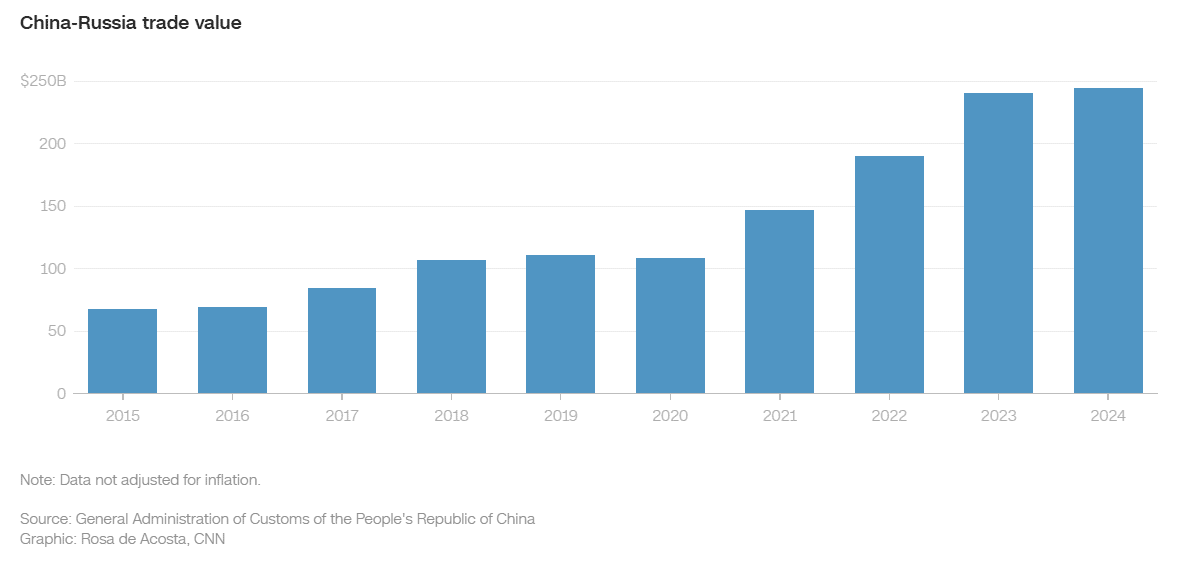
Western sanctions severely restricted Russia's international trade, prompting China to become its primary economic ally, with bilateral trade reaching unprecedented levels.

While energy resources like oil and coal make up the bulk of imports, consumer goods and food items branded as Russian have simultaneously experienced rapid growth in the Chinese market.
This movement began gaining momentum following the viral popularity of the “Russian State Pavilion,” an online store launched with support from the Russian embassy in China shortly after hostilities intensified.
Within just three days, Chinese consumers spent almost 6 million yuan (around $826,000) on Russian products, according to CNN reports.
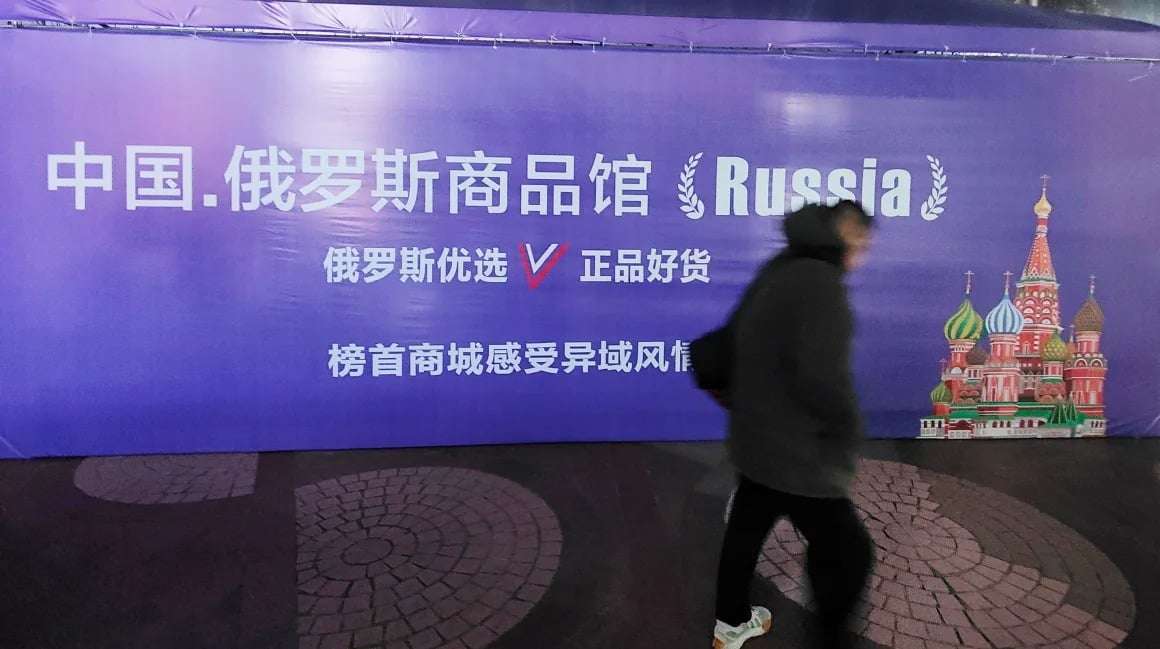
Following this success, physical retail outlets featuring Russian-themed products have launched nationwide, attracting buyers with the allure of foreign quality and exclusivity.
Expanding Retail Landscape Supported by Official Channels
Business registry data reveals that more than 2,500 companies specializing in Russian goods have been established in China since 2022, with nearly half registered in just the last year.
While many focus on Heilongjiang, the northeastern province adjoining Russia, this trend has spread to metropolitan hubs like Beijing, Shanghai, as well as smaller cities such as Pingliang in Gansu province.
In Pingliang, entrepreneur Su, aged 20, has opened three shops since late 2024. Although her stores also stock items from Sri Lanka and Australia, she notes that Russian merchandise sells best.
“I think Russian products are a better fit for the local taste,” she said.
These initiatives enjoy backing from official institutions such as the Russian Export Center, a state-run body that has organized trade fairs in cities including Shenyang, Dalian, and Chengdu. At these events, over 150 businesses collectively sold goods worth around $2.3 million.
The center has also authorized eight official “Russian State Pavilion” locations and aspires to open up to 300 additional outlets across China throughout 2025.
Growing Concerns Over Product Authenticity and Label Accuracy
As interest in Russian-branded goods amplifies, concerns have emerged about deceptive practices. Investigations reveal that numerous items marketed as Russian imports are, in fact, produced locally in China or occasionally in Malaysia.
According to a report by the state-affiliated Jiemian News, bakery products, sausages, and milk powder destined for these stores are manufactured in northeastern Chinese factories and falsely labeled as imported.
Consumer outrage has spread through social media platforms like Douyin (China’s version of TikTok), where Russian influencers residing in China have posted videos exposing counterfeit products. “There’s absolutely nothing like this in Russia,” one influencer remarked while showcasing a sausage in a Shanghai shop.
The Russian embassy in China has issued warnings to purchasers about fake items that often fail to meet quality criteria and misuse Russian packaging.
Responding to public complaints, Shanghai authorities conducted inspections at 47 stores, uncovering seven outlets falsely advertising as official state pavilions. Some retailers faced fines, others were ordered to cease operations, and many had to disclose their products’ real origins.
Distinguishing Genuine Russian Products from Fakes
With consumer confusion mounting, the Russian Export Center encourages shoppers to seek out a distinctive dove-shaped “Made in Russia” emblem to verify authentic Russian manufacture.
At the latest Made in Russia Festival held in Shenyang, Director General Veronika Nikishina underscored transparent labeling’s significance, hoping Chinese buyers will gain access to “authentic, high-quality Russian-made products.”
Despite the controversies, demand for Russian-branded merchandise remains robust, with both sanctioned and unsanctioned outlets continuing to grow across China.
- Categories:
- News








0 comments
Sign in to Comment