
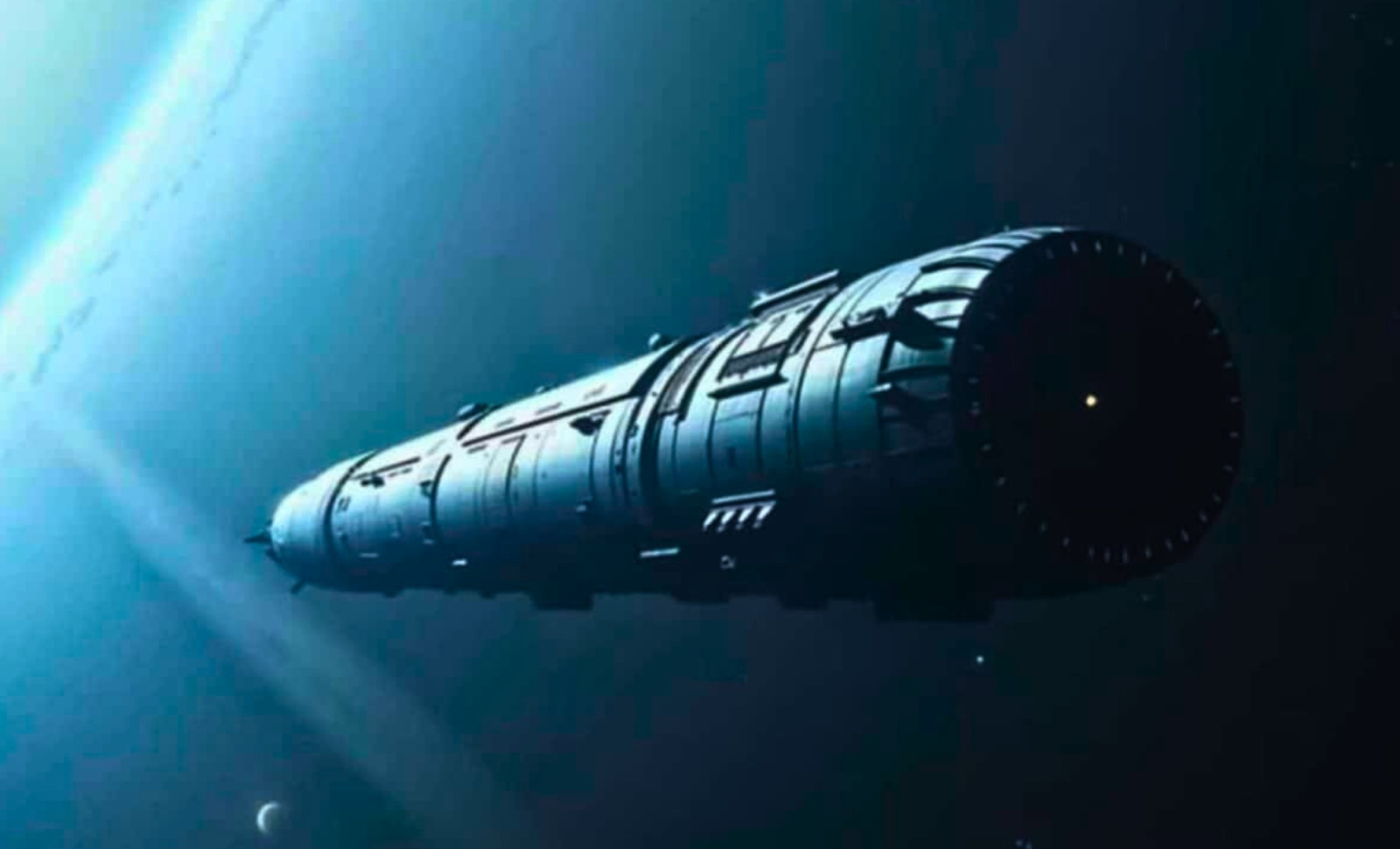
Imagine a colossal spacecraft that rotates to simulate gravity, creating a self-sustaining environment where 1,000 people cultivate their own food and recycle air continuously. This vessel embarks on an interstellar journey lasting several centuries with no chance of return.
This is the vision behind Chrysalis, a concept for a generation ship developed as part of the Project Hyperion Design Competition. The plan features a 36-mile rotating habitat designed to support a thousand inhabitants during an estimated 250-year expedition to a nearby star system. Unlike traditional spacecraft carrying small crews on short missions, Chrysalis imagines a home in space that travels indefinitely.
The team, including Andreas M. Hein from the University of Luxembourg and designer Frederic Spiedel, took a novel approach. Instead of programming the craft for a fixed mission with a definitive destination, they conceptualized it as a space-bound settlement drifting through the cosmos.

As detailed in the team’s official report from Project Hyperion, “Chrysalis is envisioned as a dual environment: a physical habitat essential for human survival and a cyberspace/metaverse designed to liberate occupants’ minds from the isolation of deep-space travel.”
The Critical Role of Rotation
Prolonged exposure to zero gravity severely harms the human body, causing bones to weaken and muscles to shrink without regular resistance. Circulation deteriorates, and fluid shifts can damage the brain and eyes. While astronauts aboard the ISS counteract these effects through consistent exercise, such measures fall short for multi-generational missions.
Chrysalis combats this through rotational artificial gravity. The centrifugal force pushes inhabitants toward the habitat's outer wall, simulating Earth-like gravity. According to a thorough analysis by ABC Science, smaller rotating vessels must spin faster to create enough gravity, often causing dizziness and uneven gravitational pull from head to toe, resulting in blood pooling and disorientation.
To avoid these problems, Chrysalis features an enormous rotating ring, enabling slower spins that maintain a uniform gravity level across the body. The massive 36-mile diameter isn't just a design choice; it’s vital for ensuring comfortable long-term living with minimal motion sickness. The gentle rotational speed also limits Coriolis effects that would otherwise disrupt everyday activities like walking or turning.
Creating a Living Ecosystem Within Space
Rather than a sterile corridor in space, Chrysalis’ interior incorporates agricultural zones and communal areas designed to evoke natural environments. Vertical farms harvest crops through optimized light conditions for photosynthesis, supplying food and oxygen. The oxygen produced supports the crew, while their exhaled carbon dioxide nourishes the plants. Organic waste regenerates nutrients, forming a sustainable cycle.
Project Hyperion’s documentation highlights this as a completely closed environmental loop. Nothing is discarded; no external inputs are added. The system must function seamlessly for centuries without Earth’s assistance. Any failure—be it crop diseases, nutrient imbalances, or pathogen outbreaks—threatens the entire community. Maintaining ecological harmony is just as crucial as propulsion technology.
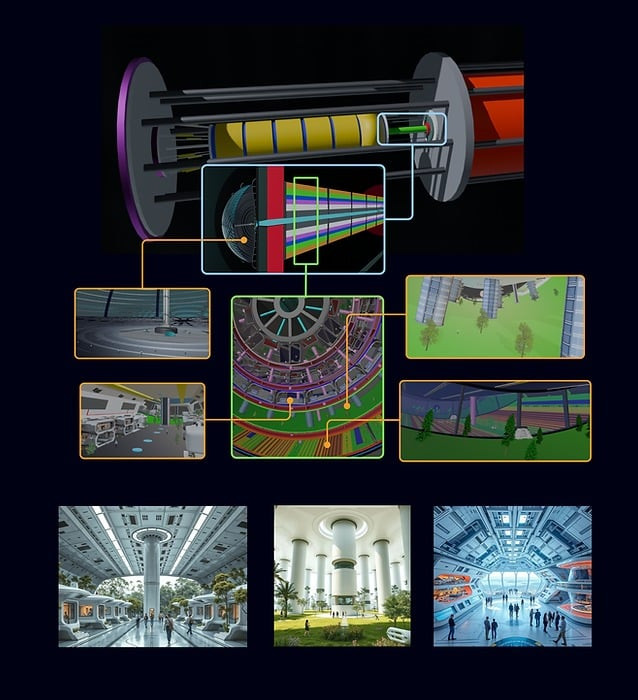
The design team also examined the psychological welfare of those born and living entirely aboard the ship. Green areas, varied landscapes, and open sightlines aim to minimize feelings of confinement and foster a sense of home rather than imprisonment. The designers note that “the phenomenological experience of dwelling in deep space, and understanding our cosmic existence, is a cornerstone of the project.”
Water reservoirs placed around the habitat’s outer layers serve dual functions: they shield occupants from cosmic radiation by absorbing high-energy particles, while also supplying vital life support, integrating safety and sustenance.
Building a Spaceborne Metropolis
Launching Chrysalis fully assembled from Earth is impossible given its massive size and mass. Instead, construction is proposed at the Earth-Moon L1 Lagrange point, a location where gravity from Earth and the Moon balances orbital momentum, allowing structures to maintain position with minimal energy use.
NASA explains that Lagrange points are ideal for extended construction projects in space. The L1 point provides a stable assembly site where components launched separately from Earth can rendezvous and gradually join together over many years.

The sourcing of materials presents a significant challenge. Project Hyperion explores harvesting resources from lunar soil or asteroids to minimize payloads launched from Earth. Upon completion, Chrysalis would embark on its journey using nuclear thermal propulsion, a more efficient alternative to conventional rocket engines.
Life and Legacy in the Void
Those residing aboard Chrysalis will never see Earth again. Successive generations born on the ship will assume the vital role of maintaining technological and ecological systems initiated by their ancestors. Seamless knowledge transfer and education are vital to avoid gaps in expertise without support from planetary infrastructure.
The competition mandated that participating teams incorporate strategies for governance, education, and preserving knowledge across generations. How a population of 1,000 can effectively manage itself without migration or external aid is a core concern, addressed in equal detail as the engineering challenges.
Facilities for schooling, research, and social life are integrated throughout the habitat. Autonomous robots regularly inspect and repair the ship’s exterior, eliminating the need for human spacewalks. The Project Hyperion team envisions “a dynamic living spaceship where humans, robots, and AI collaboratively share information and decision-making responsibilities.”
- Categories:
- Space








0 comments
Sign in to Comment