
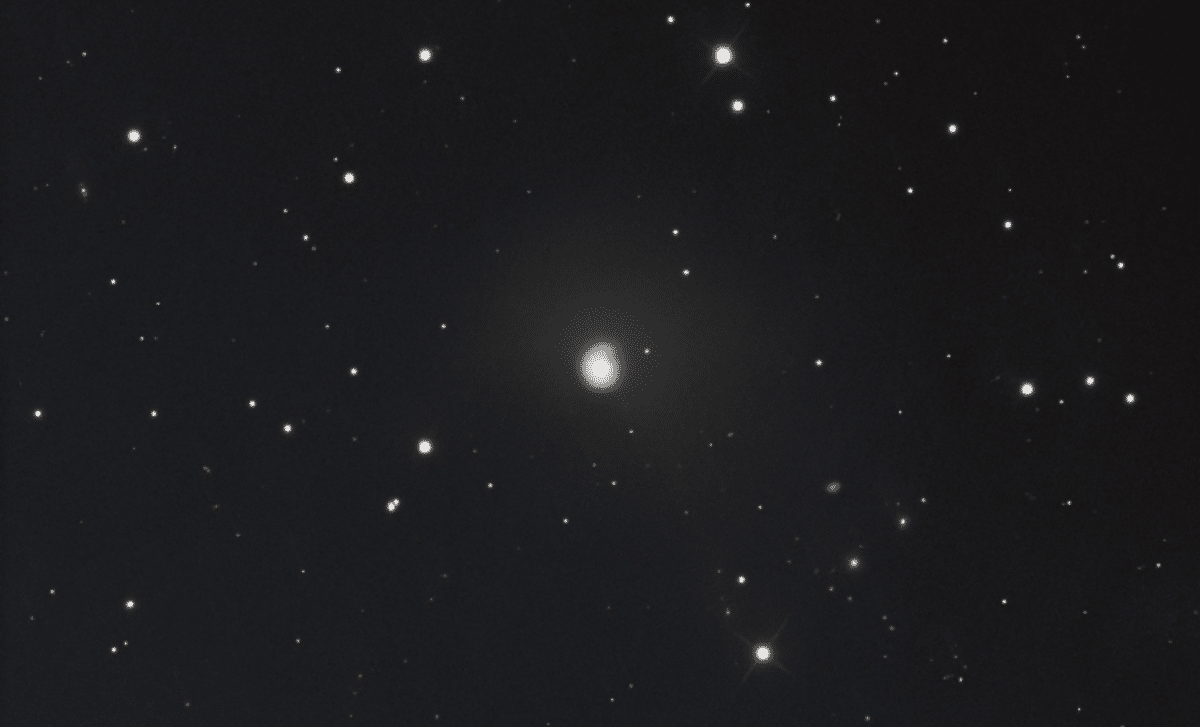
Comet 29P/Schwassmann-Wachmann, known for its cryovolcanic activity, recently captured scientific attention with an extraordinary event. On February 10, 2026, the comet underwent a powerful explosive outburst that expanded its surrounding coma into a mesmerizing spiral pattern, reminiscent of a fossilized snail shell. This unusual occurrence has left researchers eager to understand the forces behind such a striking transformation.
An Unexpected Spiral Forms Around Comet 29P
At the outset of 2026, Comet 29P/Schwassmann-Wachmann, an icy comet orbiting between Jupiter and Saturn, experienced a significant eruption. According to LiveScience, this event unleashed nearly a million tons of cryomagma—a frozen blend of dust and gases inside the comet. This eruption caused its coma, the gas and dust envelope around the nucleus, to swell dramatically. While 29P is known for such eruptions, the spiral shape it adopted on this occasion was unlike anything seen before, bearing a resemblance to ancient ammonite shells or snail spirals.
Astronomer and astrophotographer Eliot Herman documented this captivating spiral formation from Chile’s Rio Hurtado valley. His images reveal a breathtaking yet puzzling structure, believed to form as cracking on the comet’s icy crust released cryomagma unevenly. This phenomenon highlights the ever-evolving and unpredictable nature of Comet 29P, keeping astronomers deeply engaged.

Understanding Cryovolcanism and Its Role
Cryovolcanism describes volcanic-like eruptions involving icy materials instead of molten lava. Unlike terrestrial volcanoes that erupt molten rock, cryovolcanic comets vent mixtures of gas and ice when internal pressures rise. Comet 29P is part of a unique class of such bodies. These comets, although situated far from the Sun, periodically erupt as sunlight warms their frozen interiors. The material expelled not only causes the coma to enlarge but also makes the comet noticeably brighter from Earth’s perspective.
The February 2026 flare-up wasn’t 29P’s first dramatic eruption, but it ranked among the most intense. As reported by Spaceweather.com, the comet’s brightness surged by a factor of 100 after this event. Such a rapid increase reveals an eruption of significant magnitude, comparable to the most powerful outbursts recorded over the past quarter-century.
The Enigma Behind 29P’s Frequent and Unpredictable Eruptions
Despite regular activity, Comet 29P remains one of the solar system’s most puzzling objects. What confounds scientists is the comet’s near-constant distance from the Sun during its orbit. Unlike many long-period comets that erupt when nearing the Sun, 29P’s outbursts occur independent of its solar proximity. This unusual behavior sparks ongoing investigations into what triggers these explosive phenomena.
On average, Comet 29P undergoes about 20 eruptions annually, mostly minor and often unnoticed. However, larger blasts like the February 2026 event are rare and expel enormous volumes of cryomagma. The irregular nature of these explosions complicates efforts to predict when the next major event might happen. Researchers remain uncertain about the mechanisms driving these dramatic outbursts.
In a discussion with Spaceweather.com, Richard Miles, an astronomer affiliated with the British Astronomical Association, noted that significant eruptions are frequently followed by a series of smaller "aftershocks" lasting from days to weeks. This series of aftershocks adds another layer of unpredictability, making it challenging to forecast subsequent eruptions. The ongoing mystery surrounding Comet 29P continues to captivate the scientific community.
- Categories:
- Astronomy





0 comments
Sign in to Comment