
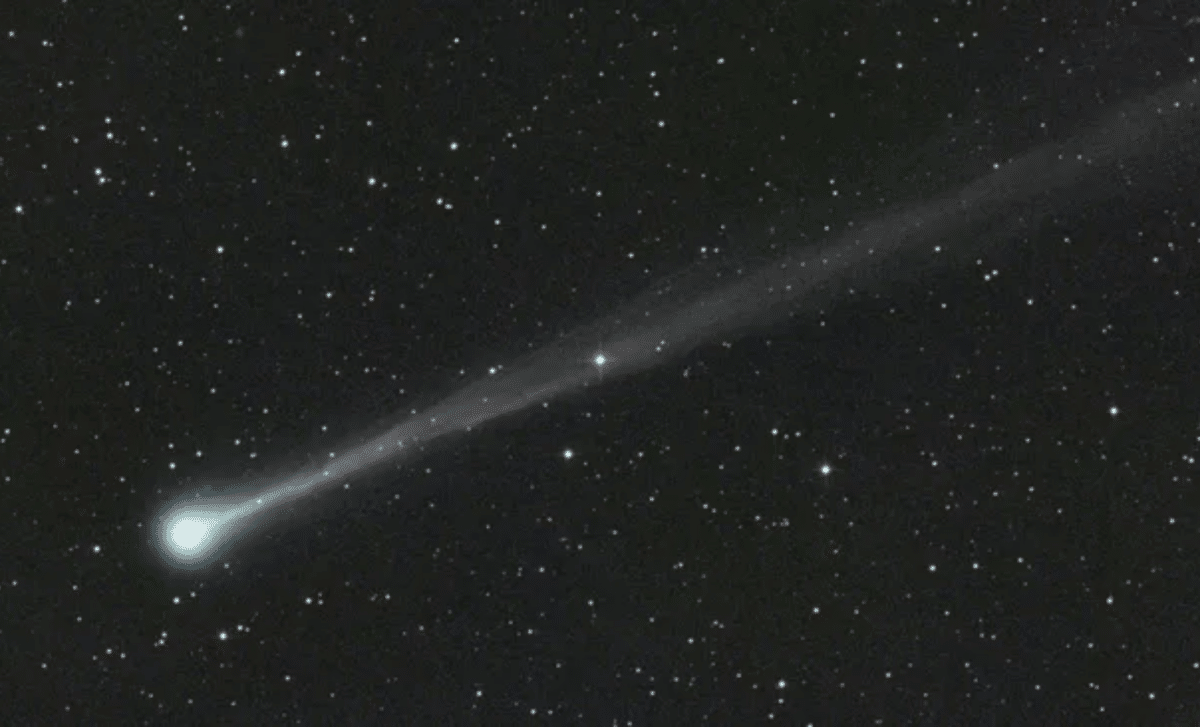
An extraordinary celestial event is unfolding as Comet C/2025 R3, originating from the far reaches of the Oort Cloud, makes its closest approach to the Sun in approximately 170,000 years. This rare appearance provides a unique opportunity for astronomy enthusiasts to witness the comet's rising brilliance, possibly visible without any optical aid. Discovered only in 2025, the comet has already exceeded initial brightness predictions, with the British Astronomical Association indicating it may soon become a striking sight in the night sky.
Unveiling Comet C/2025 R3
Comet C/2025 R3, sometimes referred to as PANSTARRS, was first detected on September 8, 2025, when it was positioned about 3.6 astronomical units away from the Sun, roughly 3.6 times the Earth-Sun distance. Initially faint at magnitude 20, it was barely visible through telescopes. As it nears the Sun, its luminosity has surged, drawing significant attention from both amateur and professional stargazers.
This comet follows a long-period orbit, completing its journey around the Sun roughly every 170,000 years. To put this in perspective, its last orbit coincided with a prehistoric era when humans had just started crafting clothing. This underscores the comet's rarity, offering observers a scene unlikely to be repeated in any modern lifetime.

Current Visibility and Upcoming Highlights
By April 8, 2026, the comet brightened to an apparent magnitude of 6, making it observable through binoculars and potentially even naked-eye visible under dark skies. According to the British Astronomical Association, the comet may reach a magnitude of 3 as it arrives at its closest point to the Sun, or perihelion, around mid-April. While this brightness would allow for unaided observation, viewing conditions could be less favorable due to the comet’s proximity to the Sun during morning hours.
Nick James from the British Astronomical Association comments on the comet’s increasing brightness:
“At the current rate of brightening, the comet could reach 3rd magnitude at perihelion although the small elongation will then make observations in a dark sky impossible. Forward scattering may even enhance that magnitude to some extent so it is definitely worth observing the comet as far into the morning twilight as possible.”
For those located in the Northern Hemisphere, optimal viewing will occur within the next few days, before the comet draws too close to the Sun. After April 20, 2026, observation will become nearly impossible due to solar glare in the morning sky.
Tips for Spotting Comet C/2025 R3
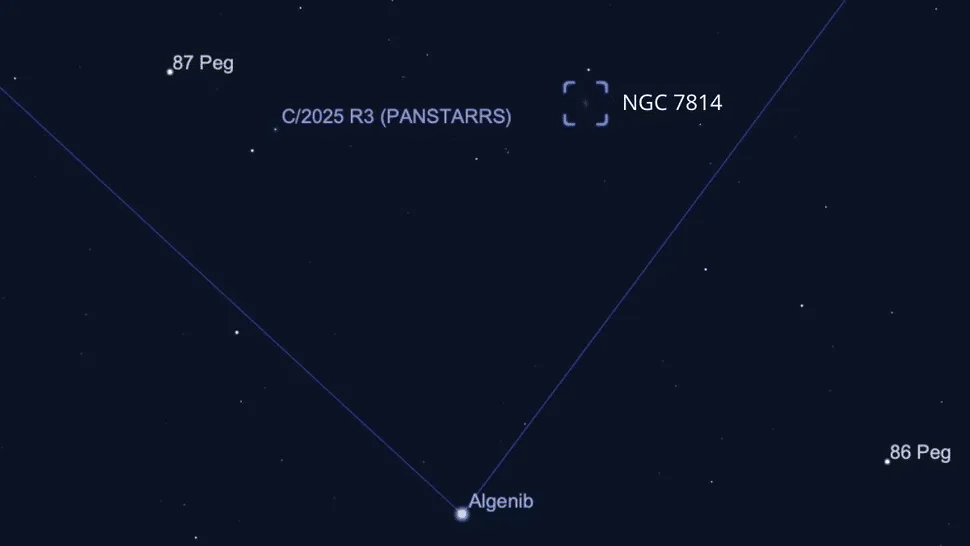
Successfully observing this exceptional comet calls for precise timing. Experts recommend rising at least one hour before sunrise to catch it in the eastern sky, close to the Great Square of Pegasus, a well-known feature of the constellation Pegasus. To the naked eye, the comet might appear as a faint, fuzzy patch, but using binoculars can reveal its distinctive coma—a halo of gas and dust—and possibly its tail. Employing a telescope will yield an even sharper and more detailed view.
Observers in the Southern Hemisphere can expect to spot the comet starting in late April. For them, the comet will likely remain bright and impressive for an extended timeframe compared to the Northern Hemisphere.
- Categories:
- News







0 comments
Sign in to Comment