
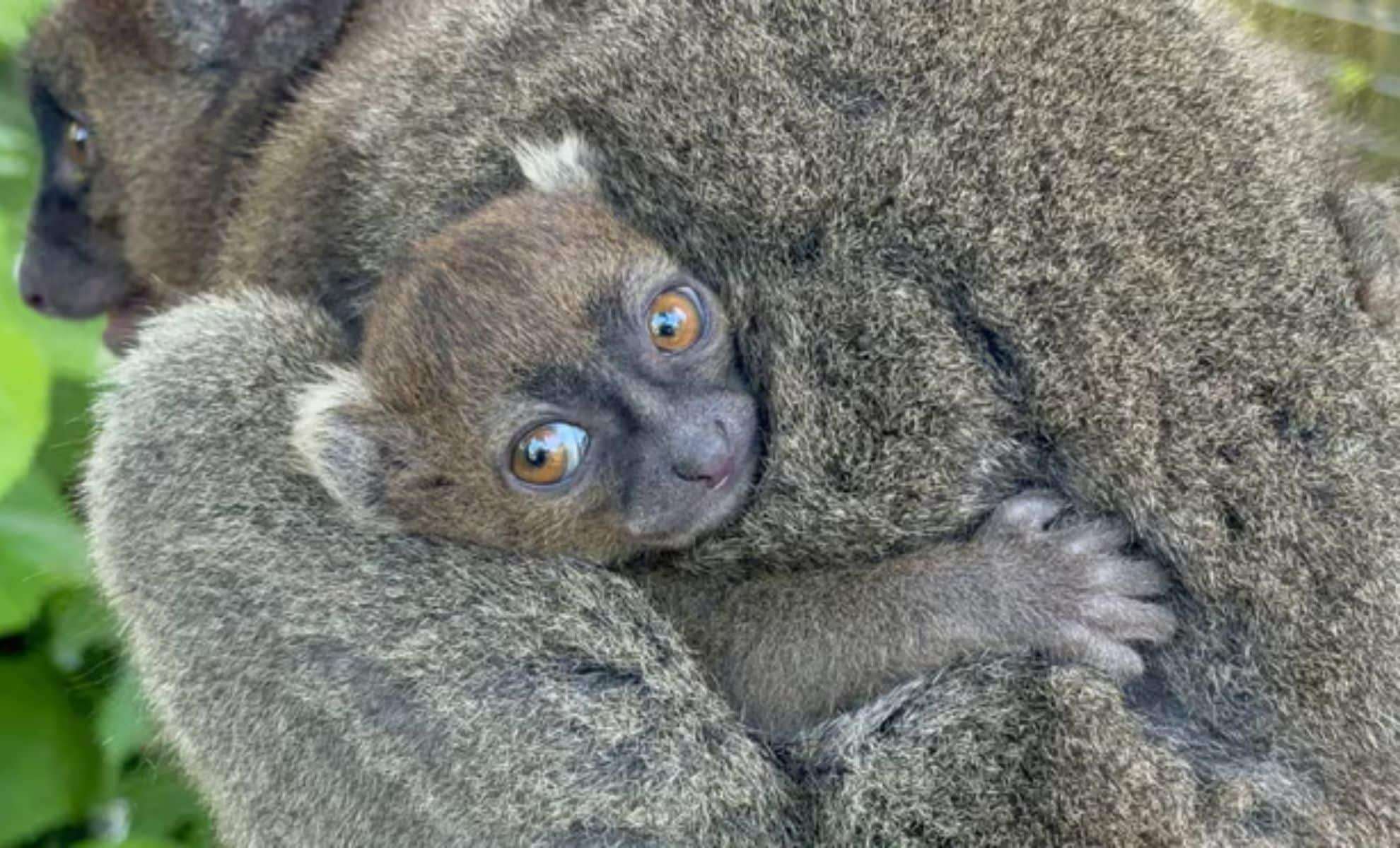
Cotswold Wildlife Park in Oxfordshire has achieved a major conservation milestone by successfully welcoming a greater bamboo lemur, one of the planet’s most threatened primates.
This rare birth represents a significant breakthrough for both the park and global conservation, offering renewed hope for this species, which struggles to survive in its native Madagascar. With fewer than 36 greater bamboo lemurs held in captivity worldwide, this new addition is vital for safeguarding their future.
Highlighting a Key Conservation Achievement
The newborn lemur, offspring of Raphael and Bijou, marks the fourth year in a row that Cotswold Wildlife Park has bred this endangered species. This makes the park the sole organization in the UK to successfully breed greater bamboo lemurs in 2024 and one of only two worldwide. Breeding these lemurs in captivity is exceptionally uncommon, placing this event as a crucial success. Jamie Craig, general manager at the park, stresses the challenges this species endures in the wild.

“Lemurs in Madagascar face intense threats from habitat loss and human population growth,” Craig explained. “Raising awareness about these unique primates is vital before it becomes too late.” His statement draws attention to the urgent threats posed by deforestation, illegal logging, and agricultural expansion in Madagascar that endanger the lemurs’ future.
The species’ survival depends heavily on bamboo, which constitutes nearly all of their diet, making them vulnerable to deforestation. The International Union for Conservation of Nature (IUCN) classifies the greater bamboo lemur as critically endangered. Without conservation actions, their wild populations will likely continue to decline. Thus, the park’s accomplishment in breeding this species is regarded as a vital lifeline.
Promoting Conservation and Awareness
This lemur’s birth is a triumph not only for the Cotswold Wildlife Park but also for international conservation endeavors. The park actively contributes to a European Breeding Programme aimed at enhancing the species’ long-term viability by preserving genetic variety within captive groups. This program coordinates breeding projects across zoological institutions, providing a safeguard population against extinction in the wild.
Beyond captive efforts, the park supports on-site conservation initiatives in Madagascar. It funds key habitats and collaborates with various groups to protect essential ecosystems. As Craig noted, “We at Cotswold Wildlife Park are dedicated to protecting this species. We fund a critical conservation area in Madagascar and participate in multiple projects through the Cotswold Wildlife Park Conservation Trust.”
The lemur, still too young to determine its sex or receive a name, has begun exploring the park’s Madagascar exhibit. The park hopes visitors will be inspired to understand these animals' vulnerabilities and contribute to their conservation. In Craig’s words: “We are honoured to care for these rare species. Their presence supports our fundraising and awareness initiatives.”
The Greater Bamboo Lemur’s Struggle for Survival
Native to Madagascar’s rainforests, the greater bamboo lemur ranks among the most endangered lemur species. Once widespread, its population has drastically diminished due to habitat destruction. As human populations rise, expanding agriculture and increased logging have steadily erased vital bamboo forests, pushing the species toward extinction with only a few hundred left in the wild.
Captive care is challenging due to their specialized diet almost exclusively based on bamboo shoots, which contain cyanide—harmful to most animals but tolerated by these lemurs in small doses. This unique dietary need complicates captive management. Nonetheless, breeding programs like Cotswold’s offer hope that captive populations can be maintained and potentially reintroduced to their natural habitats.
Conservationists emphasize the need for global cooperation to preserve Madagascar’s bamboo forests and secure a viable future for this species. With habitat loss accelerating, the role of zoos and wildlife parks in saving endangered species becomes increasingly vital.
Essential Contributions to Worldwide Conservation
Cotswold Wildlife Park’s achievement in breeding the greater bamboo lemur underscores the critical function institutions play in species preservation. While captive breeding is not a permanent fix, it serves as an indispensable measure to protect animals facing extinction in the wild. For species like this lemur, which endure intense environmental pressures, such programs act as an essential safety net.
The park’s conservation commitment extends beyond captive care, as it funds in-situ projects in Madagascar preserving biodiversity and endangered species habitat. Craig highlighted the importance of public involvement, stating, “They serve as remarkable ambassadors for our fundraising efforts.”
The greater bamboo lemur stands as a powerful symbol of nature’s fragility and the urgent need for protective action. By educating the public through visits to Cotswold Wildlife Park, there is hope to foster broader support for conservation initiatives worldwide.
- Categories:
- News













0 comments
Sign in to Comment