
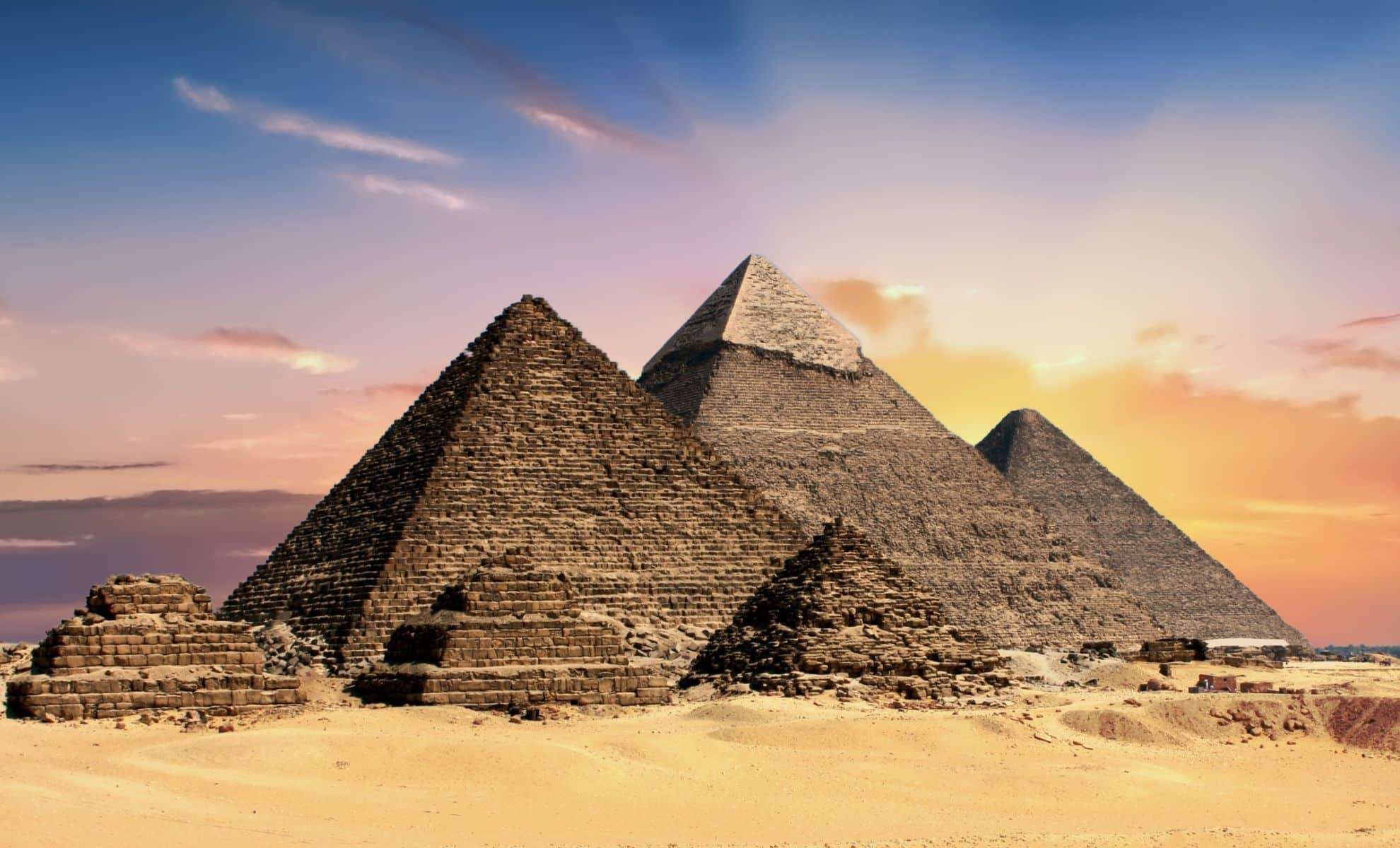
The Great Pyramid of Giza has fascinated historians and archaeologists for centuries, traditionally attributed to Pharaoh Khufu during Egypt’s Fourth Dynasty. Yet, emerging controversial data challenges this established timeline, suggesting the pyramid’s origins may extend far beyond what was previously believed. British author Graham Hancock is a key proponent of this view, proposing that an ancient civilization, potentially existing 12,500 years ago, could have been responsible for the pyramid's initial creation.
Ancient Civilization and Climate Clues
In a recent discussion on the American Alchemy podcast, Hancock elaborated on his hypothesis. He pointed to geological and celestial evidence that might indicate the monument was built well before Khufu’s era, challenging the conventional belief that its construction dates strictly to Egypt’s Old Kingdom.
“Parts of the Great Pyramid were undoubtedly finished by ancient Egyptian hands,” Hancock explained to host Jesse Michels. “However, the Egyptians likely inherited and completed an extremely old structure already present on the Giza Plateau.”

A pivotal element of Hancock’s argument lies in the erosion seen on the Great Sphinx nearby. He suggests that this weathering pattern was caused by significant rainfall over millennia, a climatic condition absent from the region 4,500 years ago but prevalent after the last Ice Age. This interpretation has stirred debate among experts.
Conversely, Dr. Zahi Hawass, a leading Egyptologist renowned for his extensive work on the Giza Plateau, strongly contests Hancock’s claims. In a statement to the Daily Mail, Hawass dismissed the idea of an ancient lost civilization, attributing the Sphinx’s weathering to wind erosion accumulated over thousands of years.
The Enduring Enigma of Pyramid Construction
The Great Pyramid continues to stand as one of antiquity’s most puzzling marvels. Built during Khufu’s reign, it is the largest of the Giza pyramids and is enveloped in questions about its precision, architectural ingenuity, and purpose. While the mainstream consensus credits its construction to a 23-year period, Hancock finds this improbable, suggesting the project could have extended for centuries due to its monumental complexity.
He also highlights the extensive bedrock platforms beneath the pyramids, which he believes are older than traditionally thought. Though often seen by archaeologists as natural formations, Hancock argues these foundations were deliberately shaped to serve as stable bases for the pyramid constructions, linking to his broader theories on ancient engineering.

Refuting Alternative Theories: Dr. Hawass's Evidence
With over five decades of excavation experience at Giza, Dr. Hawass has uncovered substantial evidence supporting the conventional timeline. Among his key discoveries are the Wadi El-Jarf Papyri—ancient documents describing the logistical efforts for the pyramid’s construction. These texts include accounts from Merer, a supervisor during Khufu’s reign, who detailed the transportation of limestone blocks to the site.
Hawass argues that these explicit records firmly contradict the lost-civilization premise, asserting that no credible proof exists to predate the pyramid’s construction beyond the Fourth Dynasty. He notes, “Egyptian history is well-documented without significant gaps that would permit dating the pyramids to 12,000 or even 20,000 years ago.” He also emphasizes that the Epipaleolithic period, which began in that timeframe, marked an early stage of human development, far less advanced than needed to build such monumental architecture.
Moreover, Hawass maintains that the Egyptians left enough archaeological and written evidence to confirm their role in erecting the Great Pyramid, upholding the established scholarly consensus against alternate hypotheses like those proposed by Hancock.
- Categories:
- News







0 comments
Sign in to Comment