
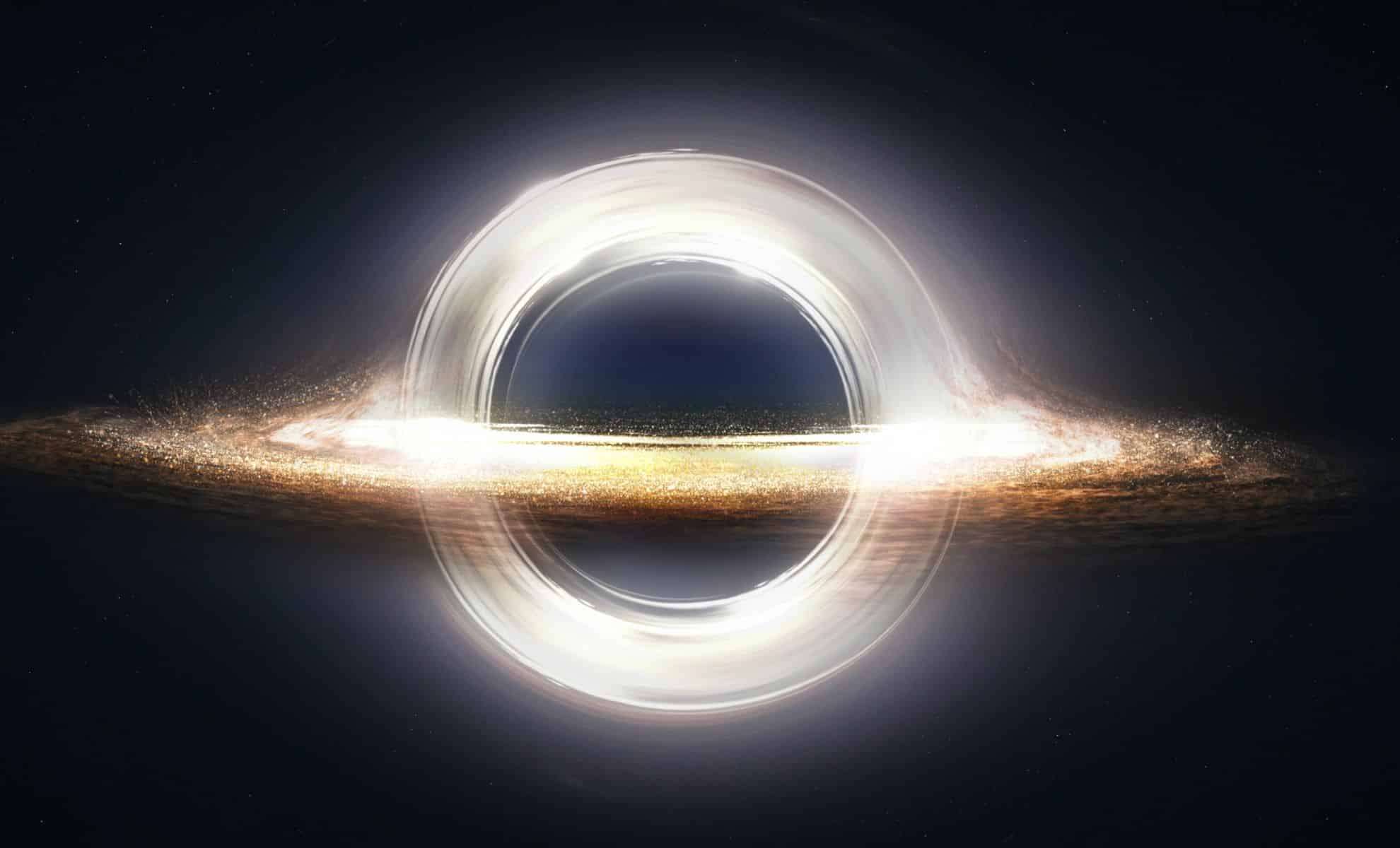
A recent investigation, available since March 2025 on arXiv, indicates that ultralight dark matter might have been crucial in the emergence of supermassive black holes shortly after the universe’s birth.
Unraveling the Enigma of Early Supermassive Black Holes
Astronomers have identified immense black holes, billions of times the Sun’s mass, that existed merely a few hundred million years post the Big Bang.
The rapid appearance of such colossal black holes challenges traditional theories. The typical pathway—black holes forming from the collapse of massive stars—requires longer periods than the observed timespan.

Introducing Ultralight Dark Matter as a Game-Changer
Researchers led by Hao Jiao from McGill University propose that ultralight dark matter may have assisted in the accelerated growth of these cosmic titans.
They describe ultralight dark matter not just as an invisible entity but as a quantum-like medium on galaxy-wide scales, enabling wave-like behaviors that create dense dark matter concentrations called resonances.
The Mechanics Behind Ultralight Dark Matter
The early cosmos, filled with hydrogen and helium gas, was permeated by these dark matter waves. As the waves intensified, high-density dark matter areas emerged, which could produce photons, infusing light into a universe prior to the formation of stars.
Still, this faint energy wasn’t sufficient to hinder gas clouds from fragmenting into stars. The team suggests these photons were thermalized, heating the gas enough to emit ultraviolet (UV) radiation capable of suppressing star birth and enabling direct black hole formation.
Gas Cloud Turbulence’s Crucial Contribution
Turbulence within primordial gas clouds may have amplified minor fluctuations, allowing low-energy radiation to evolve into the high-energy radiation necessary to dissociate molecular hydrogen.
This mechanism could have prevented gas fragmentation, promoting the direct collapse of gas clouds into supermassive black holes.
Implications for Early Cosmic Evolution
If validated, this concept reshapes our understanding of how supermassive black holes formed so rapidly after the universe’s inception. Rather than depending on stellar deaths, interactions between ultralight dark matter and gas clouds might have catalyzed the birth of these massive entities. This insight also paves the way for new strategies in detecting ultralight dark matter, a component that has remained elusive.
Looking Ahead: The Future of Dark Matter and Black Hole Studies
Though compelling, this hypothesis is preliminary and awaits peer review. Further investigation through advanced early-universe simulations is essential to test its robustness across varying scenarios.
Concurrently, the quest continues to directly detect ultralight dark matter, an achievement that would represent a monumental leap in astrophysics research.
- Categories:
- Astronomy




0 comments
Sign in to Comment