
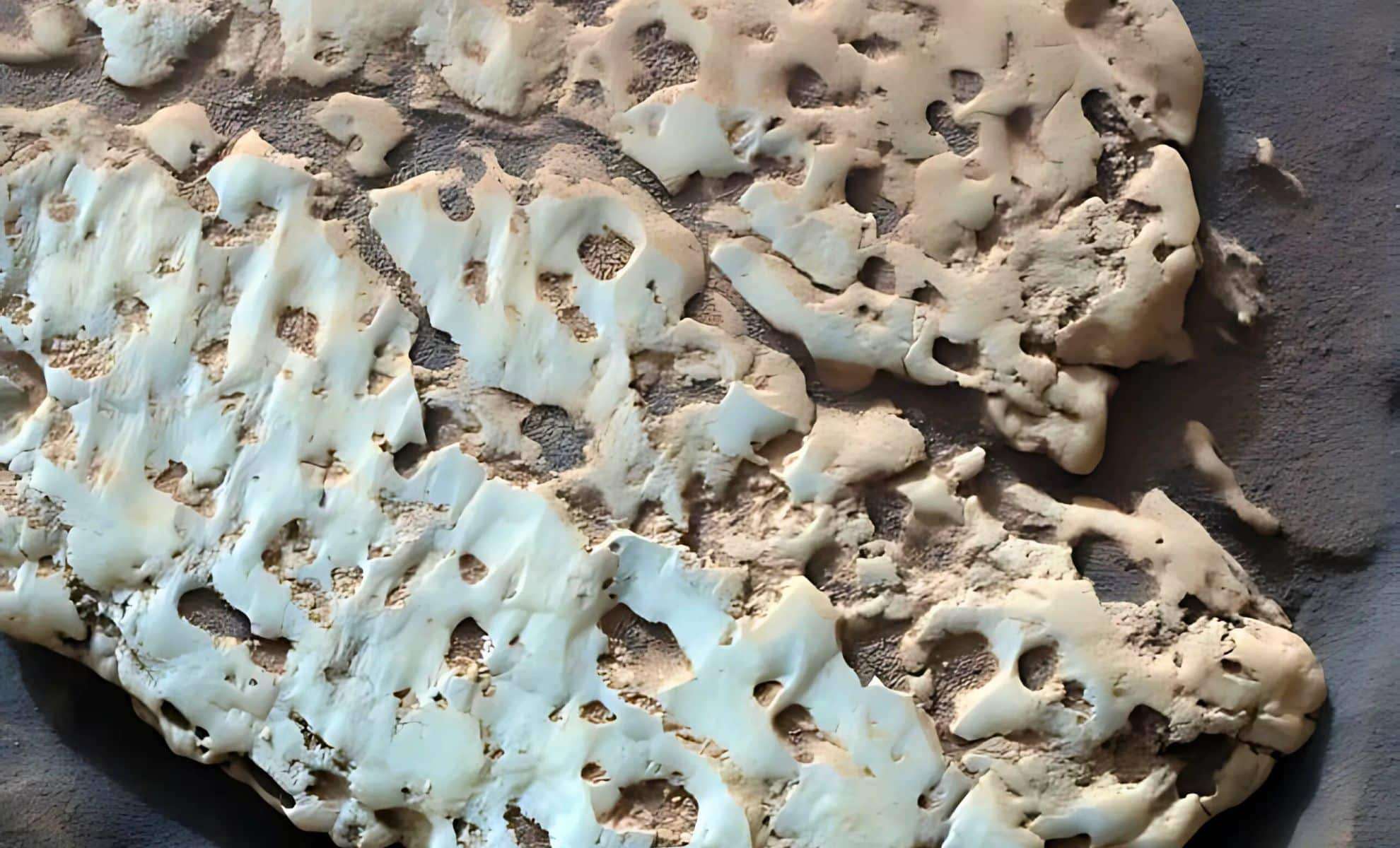
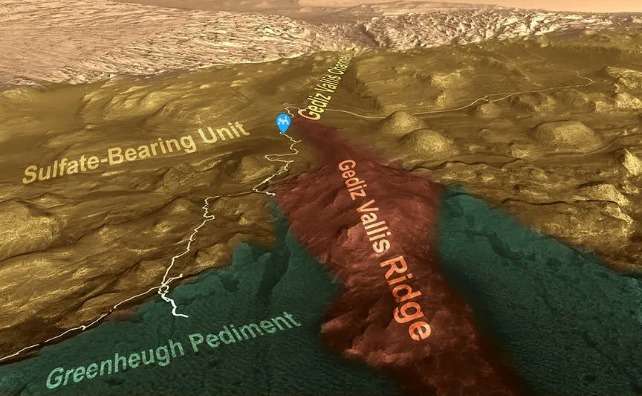
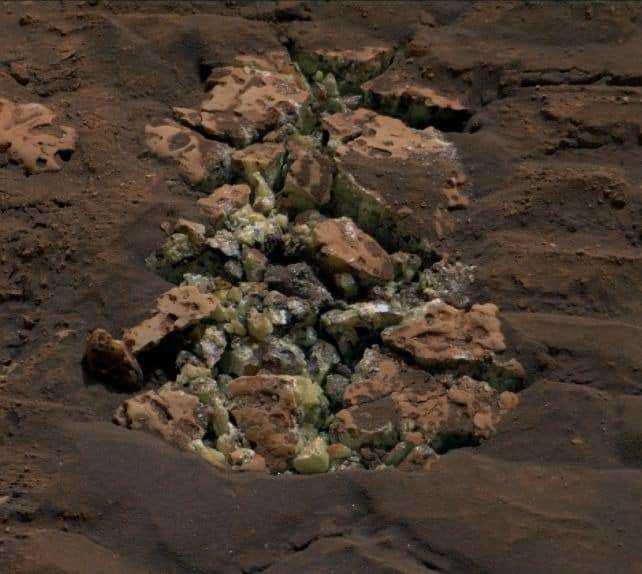
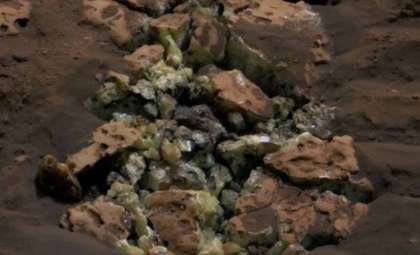
NASA’s Curiosity rover has made a striking discovery while investigating the Gediz Vallis Channel on Mars. As the rover traversed this historic watercourse, it inadvertently fractured a seemingly ordinary rock, revealing vibrant yellow crystals composed of elemental sulfur—a form not previously observed on the Martian surface. This unexpected find opens new pathways to understanding Mars’s geological evolution and its past habitability.
An Unexpected Sulfur Reservoir on the Red Planet
The discovery came when the rover’s hefty 899-kilogram frame caused a rock to break open, exposing pure sulfur crystals often known as brimstone. Though sulfates—sulfur compounds bound with water—are known to exist on Mars, this marks the first instance of detecting sulfur in its elemental form.
Ashwin Vasavada, the Curiosity project scientist at NASA’s Jet Propulsion Laboratory, explained, “Encountering a field of pure sulfur stones is akin to finding a rare oasis in a desert. Its presence defies our current expectations, prompting us to unravel the mystery.” The abundance of similar rocks across the Gediz Vallis Channel suggests a rich source of elemental sulfur, challenging established views on Martian geological processes.

Sulfur’s Role in the Search for Martian Life
Sulfur is a vital element for life on Earth, integral to the formation of amino acids, fundamental components of proteins. While this find does not confirm life on Mars, it contributes to the accumulating evidence of Martian elements and conditions, such as water and potentially habitable environments, that may have supported life long ago.
Elemental sulfur forms only under unique conditions, adding to the enigma of this discovery. “There’s a significant aspect about Mars we have yet to understand,” said Vasavada, emphasizing the urgency of deciphering the planet’s complex geological narrative.
Decoding Mars’s Geological Story
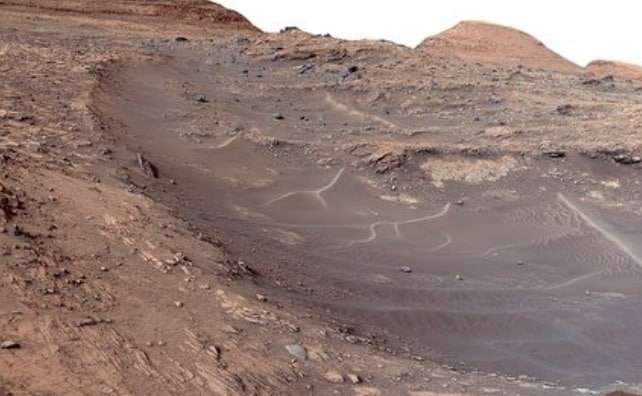
The Gediz Vallis Channel acts as a window into Mars’s rich past. This ancient riverbed holds rocks bearing evidence of flowing water billions of years ago. While Curiosity’s onboard tools have begun analyzing the sulfurous rock, fully understanding how and why elemental sulfur was formed and preserved here will demand comprehensive geological modeling. Unveiling these processes could dramatically reshape our perception of the planet’s history.
Scientists are intrigued by the prospect that elemental sulfur might be more prevalent throughout Gediz Vallis than first recognized, painting a more intricate portrait of Mars’s development over time.
The Road Ahead for Curiosity
Continuing its journey through the Gediz Vallis Channel, Curiosity is gathering samples, studying rocks, and relaying invaluable information to Earth. As Vasavada notes, “Encountering unexpected phenomena is what makes exploring other worlds so thrilling.” With each step deeper into the valley, Curiosity’s data holds the potential to transform our understanding of Mars and aid future missions in the search for life beyond our planet.
- Categories:
- Space ,
- Extraterrestrial life









0 comments
Sign in to Comment