
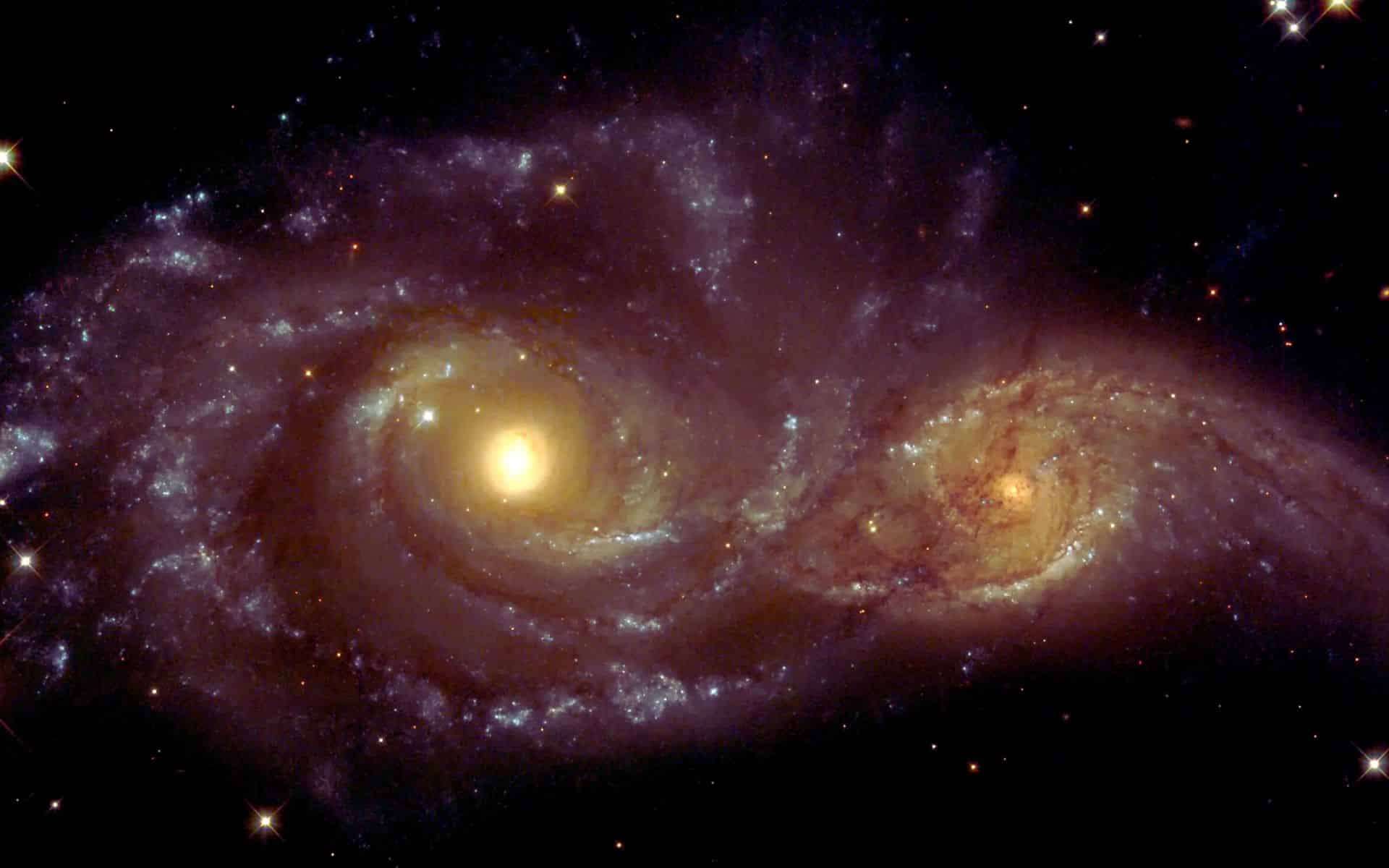
From a mind-boggling distance of 80 million light-years, a pair of eerie, unblinking "eyes" peers back at us—captured through the combined power of NASA’s Hubble and James Webb Space Telescopes.
As philosopher Friedrich Nietzsche once remarked, “If you gaze for long into an abyss, the abyss gazes also into you.” Today, this haunting idea takes on new meaning, as these cosmic entities seem to watch us across time and space.
But these aren’t literal eyes—they’re far grander and more awe-inspiring: the colliding galaxies NGC 2207 and IC 2163. This stunning image conveys a profound message from the universe, reminding us how small and fleeting we are within the vast cosmos.

Unfolding the Drama of a Galactic Merger
Prepare to be amazed: what looks like a cosmic crash is actually the slow and intricate dance of two galaxies locked in an intense gravitational embrace. Their encounter began millions of years ago and will continue to evolve for eons beyond humanity’s existence.
After a close approach that set the cosmic stage, these galaxies now orbit each other, inexorably pulled together by gravity. Their spiral arms still remain visible, but the turbulent forces at play ignite the darkness with bursts of star formation.
Galaxies Producing Scores of Stars Annually
Within this swirling chaos, stars emerge with astonishing frequency. The gravitational compression of gas clouds in these galaxies sparks intense star-forming activity, churning out the equivalent of dozens of Suns each year. This dazzling pace vastly surpasses the star birth rate of our Milky Way.
Star creation is a violent process. Many of the massive newborn stars live fast and die young in explosive supernova deaths. These blasts send shockwaves through nearby gas, triggering cascades of new star formation—a dramatic cycle of cosmic death and rebirth.
A Symphony of Dust and Stellar Light
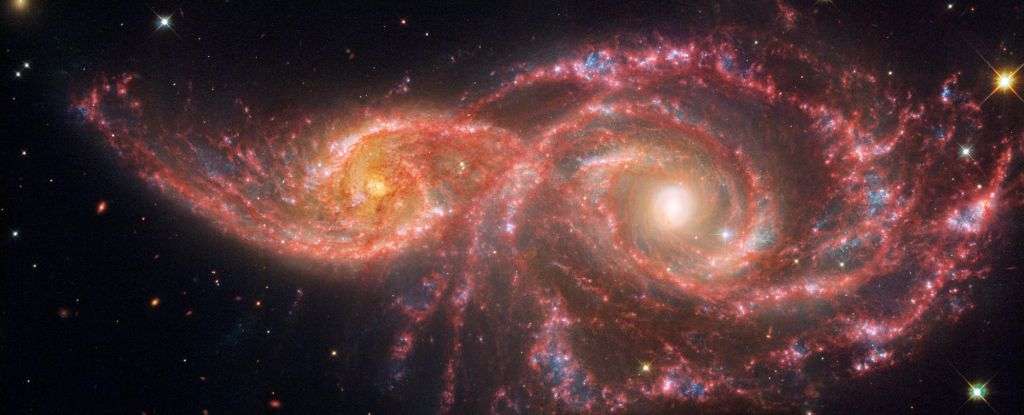
The Hubble Space Telescope highlights these active star-forming zones in vibrant ultraviolet hues, casting them in icy pale blue. Meanwhile, the James Webb Space Telescope peers deeper, revealing intricate webs of cosmic dust in the mid-infrared spectrum.
This dust forms an ethereal network threading through the galaxies, acting as the lifeblood that fuels future generations of stars and planets. Together, these revolutionary telescopes expose the galaxy’s complex and mesmerizing ecosystem in remarkable detail.
- Categories:
- Space





0 comments
Sign in to Comment