
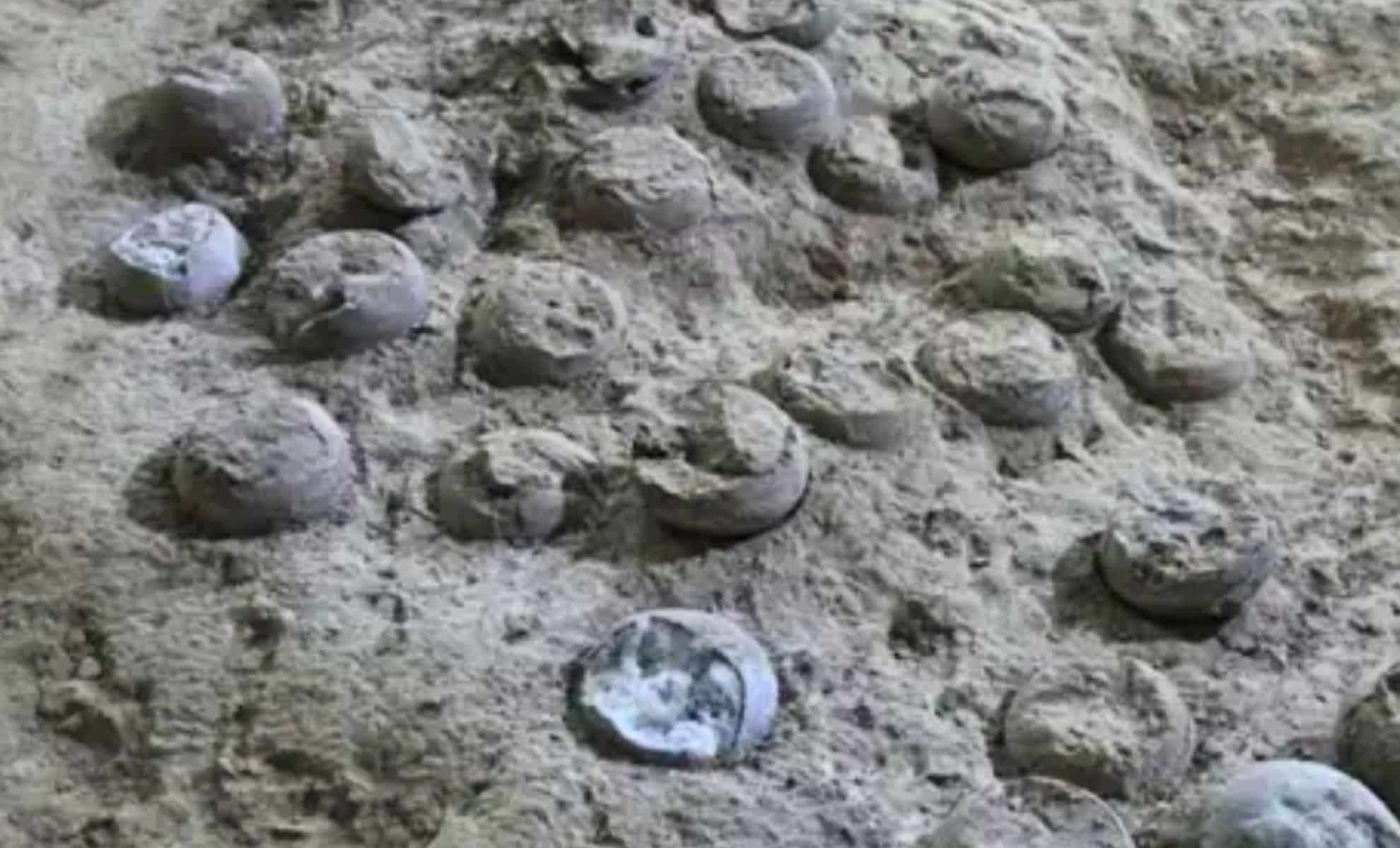
Scientists have precisely determined the age of 85-million-year-old dinosaur eggs using a method typically reserved for dating cave formations. The findings, published in Frontiers in Earth Science, reveal how uranium-lead dating, often called an “atomic clock for fossils,” can provide new insights into ancient life eras. This research marks the first application of this technique directly to fossilized dinosaur eggs.
Innovative Use of Lasers and Crystals
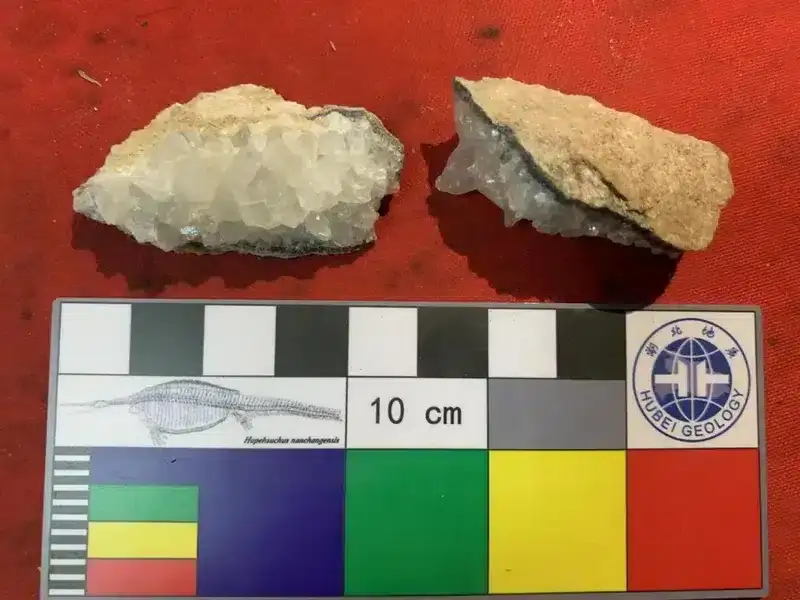
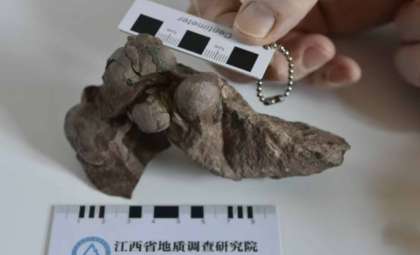
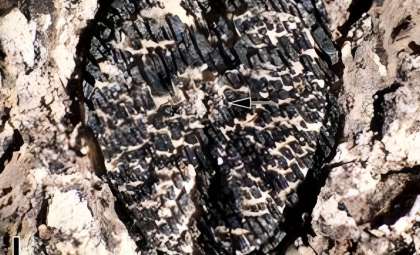
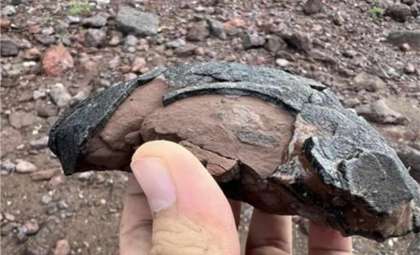
In 2023, Dr. Bi Zhao from the Hubei Institute of Geosciences uncovered fossil eggs at the Qinglongshan locality featuring remarkably large calcite crystals within their shells. Upon discussing this with a stalagmite expert, the team considered applying uranium-lead dating to these eggs.
The method involves directing a microscopic laser at the eggshell, vaporizing small mineral sections. The resulting vapor is analyzed in a mass spectrometer to detect uranium content. Because uranium decays consistently over time, it establishes a natural chronological record. Initially, the team aimed to date the internal crystals, but as Zhao noted, “the calcite embedded in the eggshell yielded more reliable and consistent U-Pb age data.”


Establishing the Precise Age of Qinglongshan Eggs
The study confirmed the eggs were deposited approximately 85 million years ago, during the Late Cretaceous era. This represents the first definitive dating of Qinglongshan eggshell fossils. Prior to this, age estimates depended on indirect clues like nearby volcanic ash or rock layers, often yielding imprecise results.
Situated in the Yunyang Basin, Qinglongshan is a significant paleontological hotspot. It is China’s premier national dinosaur egg fossil reserve, where over 3,000 eggs have been recovered, predominantly from the species Placoolithus tumiaolingensis. Co-author Dr. Zhang Shukang has conducted extensive studies on this species, annually collecting roughly 100 new specimens.
A New Benchmark for Fossil Dating
This research indicates that biogenic calcite within dinosaur eggshells maintains the original crystal formation age, enabling direct dating of fossils rather than relying on nearby geological materials. This breakthrough has the potential to revolutionize how paleontologists date fossils worldwide.
The implications extend beyond dinosaur eggs. Scientists believe this uranium-lead dating technique might be applicable to other fossil types, helping to close chronological gaps in Earth's biological history. The concept that eggshells possess their own intrinsic atomic clock is a major advancement that could redefine fossil dating standards.
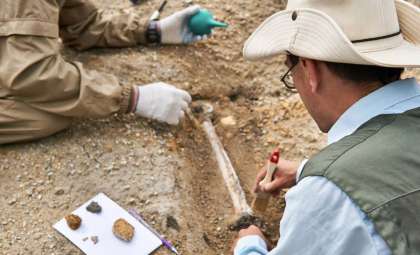
Fieldwork at Qinglongshan continues, with researchers uncovering many new eggs each year. As Zhao reflected, “these discoveries can transform fossils into vivid stories about our planet’s past.” With lasers effectively converting ancient eggshells into timekeepers, future findings promise even more astonishing insights.
- Categories:
- News

0 comments
Sign in to Comment