
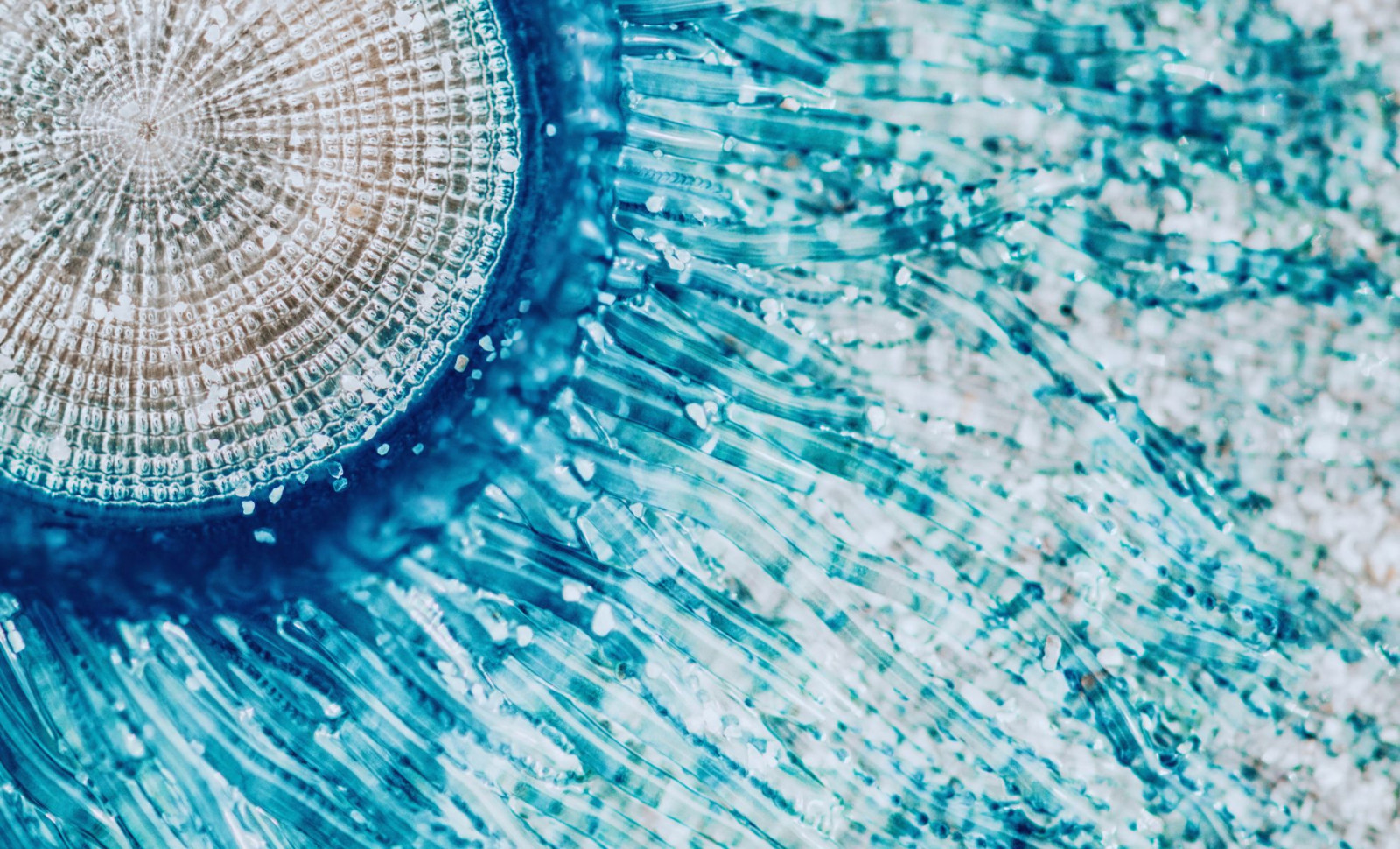
Sporting a striking electric-blue float and luminous, radiant tentacles, the blue button jelly resembles a being out of science fiction rather than a marine organism. This intriguing creature, commonly found gliding along the surface of warm seas, fascinates scientists due to both its striking look and its unclear biological classification.
While it shares the translucent allure of jellyfish, Porpita porpita actually belongs to a distinct branch of marine life. Experts remain uncertain whether it represents a single organism or a coordinated colony of specialized individuals, a mystery that continues to puzzle marine researchers.
An Oceanic Entity With Complex Composition
Belonging to the phylum Cnidaria—like corals, sea anemones, and the Portuguese man-of-war—this creature defies straightforward categorization. According to research featured in Marine Ecology, unlike many relatives, it neither actively swims nor sinks but drifts atop the ocean, propelled by currents while serving simultaneously as predator and prey.

The complexity lies in its anatomy. The circular, buoyant disc visible on the water’s surface forms only part of the whole organism. Hanging beneath are tentacle fringes—some armed with stinging cells for capturing prey, others involved in defense or reproduction.
As described by Popular Science, Larry Madin of Woods Hole Oceanographic Institution characterizes the blue button jelly as a "quasi-colonial organism." It appears to operate as an integrated system, with different parts carrying out roles such as feeding, defense, and reproduction.
Distinct from true colonial animals like corals—composed of genetically identical units—this species seemingly originates from a single larval form.
Not Quite Jellyfish, Not Entirely a Colony
The uncertainty surrounding Porpita porpita stems partly from its resemblance to more familiar creatures. Its floating disc and trailing tentacles closely mirror those of the Portuguese man-of-war, a genuine colonial organism consisting of specialized zooids. However, fundamental biological differences set them apart.
“It’s considered sort of a colony because there are tentacles that some of them are for catching food, they have stinging cells on them. Some of them are defensive tentacles to sort of attack things that might attack this, and then it also has some reproductive structures that are suspended from the bottom of this float,” he stated.
According to Popular Science, this marine organism seizes its prey with tentacles, but digestion occurs within a single central stomach. This feature hints at it being a singular organism rather than a collective, adding another layer of intrigue to its identity.
A Luminous Hunter and Its Blue Button Prey
Despite its peaceful drift in tropical waters, the blue button jelly faces predators. Among its most striking adversaries is Glaucus, a vibrant marine snail nicknamed the blue dragon. With shimmering blue coloration and wing-like appendages, this predator is as surreal as the blue button itself.
Popular Science highlights that Glaucus preys not only on blue button jellies but also on organisms like the Portuguese man-of-war, assimilating their venomous stinging cells for its own defense. This remarkable tactic grants Glaucus a unique and perilous advantage, especially against tentacle-bearing species like Porpita porpita.
- Categories:
- Science











0 comments
Sign in to Comment