
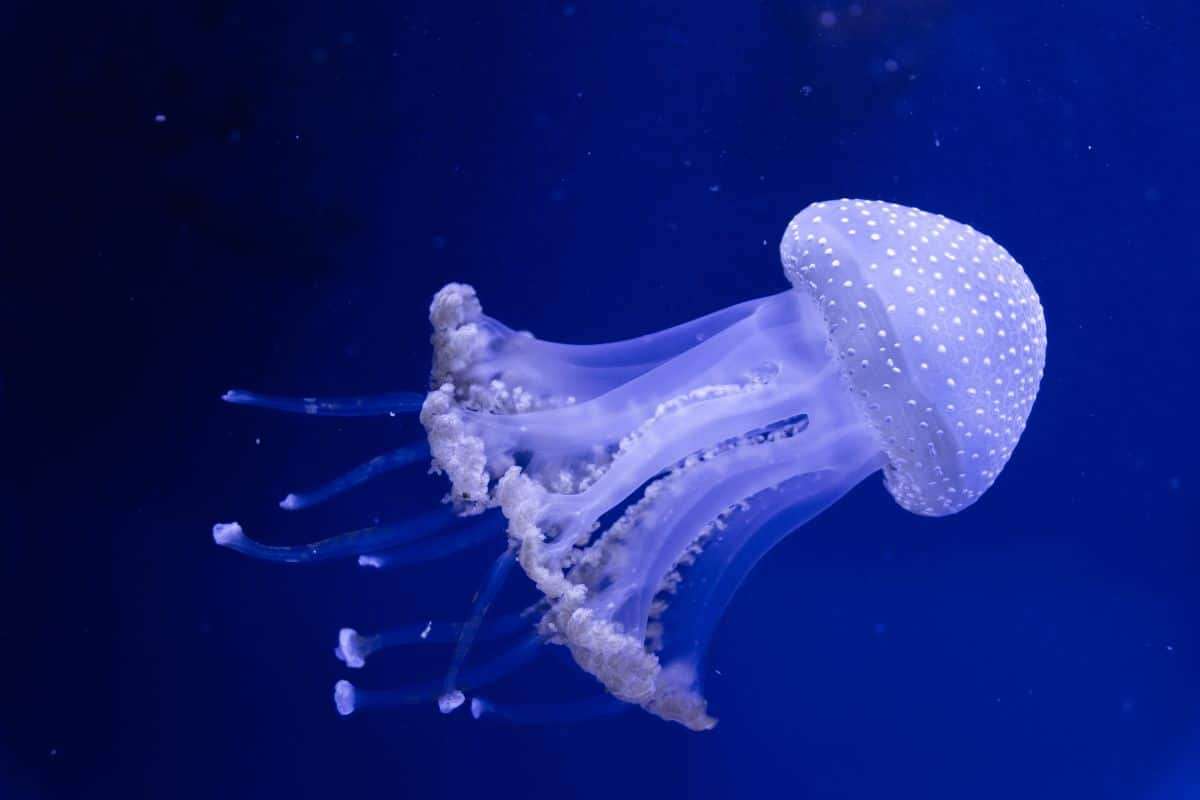
The giant phantom jellyfish (Stygiomedusa gigantea) remains one of the ocean’s most mysterious inhabitants. Its ghostly appearance and remarkable biology continue to fascinate marine researchers and ocean lovers, offering a rare glimpse into life far beneath the waves.
A Deep-Sea Giant Hidden from View
The giant phantom jelly was first recorded in 1899, yet encounters with this elusive creature have been few and far between. Only about 120 documented sightings have occurred, mainly because it dwells at extreme depths near 22,000 feet (6,700 meters), where high pressure and total darkness make exploration incredibly difficult.
Recent developments have improved our understanding. In 2022, Antarctic submersible missions captured footage showing these jellies swimming at much shallower depths, from 260 to 920 feet (80 to 280 meters). This suggests that seasonal light variations may influence the jelly’s vertical movements, following prey that migrates upwards in polar waters.

Physical Traits and Feeding Techniques
Reaching lengths of up to 33 feet (10 meters), the giant phantom jelly is among the largest invertebrate predators known. Its bell spans about 3.3 feet (1 meter) wide and supports four long, flowing arms used to capture food.
Distinct from many jellyfish species, it lacks stinging tentacles. Instead, it relies on its arms to coil around tiny creatures like plankton and small fish, directing them gently into its mouth. This strategy is well-suited to surviving in the nutrient-poor deep ocean environment.
Bioluminescence enhances its enigmatic presence. The jelly emits a soft orange-red light, which may serve functions like communication, confusing foes, attracting prey, or signaling mates. Given the deep ocean's light-absorbing nature, this subtle glow likely helps the jelly stay hidden.
Unconventional Reproductive Strategy
One of the most fascinating characteristics of the giant phantom jelly is its reproductive method. Unlike most jellyfish that reproduce externally, this species is viviparous, nurturing live young inside its body. The offspring emerge through the mother’s mouth when mature enough to survive independently. This rare reproductive approach distinguishes it from other jellyfish and highlights its uniqueness.
A Protective Partnership with Smaller Fish
Though typically solitary, the giant phantom jelly occasionally hosts smaller marine species. Researchers from the Monterey Bay Aquarium Research Institute observed pelagic brotula (Thalassobathia pelagica) sheltering beneath the jelly’s bell during a Gulf of California expedition. This symbiotic relationship benefits the jelly by removing parasites, while the fish gain a safe haven from predators.
Future Frontiers in Deep-Sea Research
Investigating the giant phantom jelly remains a daunting task due to its elusive habits and remote habitat. Advances in underwater robotics and submersibles have opened doors to exploring these deep-sea realms, yet much about this species remains a mystery. Unlocking its secrets could shed light on deep ocean biodiversity, ecological interactions, and survival mechanisms under extreme conditions.
Discovering giant phantom jellies closer to the ocean surface prompts new questions about the impact of environmental changes, like global warming, on their movement and habitat. As scientific efforts progress, these remarkable creatures reveal not only their own story but also the complex life web hidden in the ocean’s depths beneath the waves.
- Categories:
- Science










0 comments
Sign in to Comment